



Is It Safe to Reuse Plastic Takeout Containers?
author: Iris
2025-10-16
Understanding Plastic Takeout Containers
Plastic takeout containers are ubiquitous in the food industry, designed primarily for single-use to transport meals safely from restaurants to homes. Typically made from materials like polypropylene (PP) or polystyrene (PS), these containers are lightweight, durable for short-term use, and cost-effective. However, their composition raises questions about long-term safety when reused.
Imagine a typical situation: you order sushi or stir-fry, and the food comes in a takeout container made of clear or black plastic. These frequently include recycling marks on the bottom to identify the type of plastic they are. What makes these containers work, though, besides convenience? Although they are designed to tolerate temperatures ranging from refrigeration to short microwaving, they can eventually lose their integrity due to frequent exposure to heat, detergents, and food acids.
From an expertise standpoint, plastic takeout containers are not all created equal. Some are treated with additives to enhance flexibility or clarity, while others might contain trace chemicals from manufacturing. Reusing them without understanding these nuances could lead to unintended consequences. For instance, if a container shows signs of warping after one use, it's a red flag that its structure is compromised.
To visualize the variety, here's an illustration of common recycling symbols found on plastic takeout containers.

These symbols, often embossed on the base, guide users on recyclability and material type, but they also hint at reuse potential.
The Recycling Symbols and What They Mean
One of the first steps in assessing the safety of reusing plastic takeout containers is decoding the recycling symbols. These triangular icons with numbers inside, known as Resin Identification Codes (RIC), were introduced in 1988 by the Society of the Plastics Industry to facilitate sorting for recycling. However, they don't directly indicate safety for food contact or reuse.
Let's break it down in detail. Number 1 represents PET (Polyethylene Terephthalate), commonly used in water bottles but rarely in takeout containers due to its brittleness under heat. Number 2 is HDPE (High-Density Polyethylene), found in milk jugs and some sturdy takeout boxes; it's generally considered safe for limited reuse as it has low leaching potential. Avoid heating it excessively, though, as it can release odors.
Number 3, PVC (Polyvinyl Chloride), is flexible but often contains phthalates, making it unsuitable for food reuse. Number 4, LDPE (Low-Density Polyethylene), appears in squeeze bottles and some lids; it's food-safe but not ideal for hot contents. Number 5, PP (Polypropylene), is a star in plastic takeout containers—think of those microwaveable ones from Chinese restaurants. It's heat-resistant up to 250°F and dishwasher-safe, making it a better candidate for reuse.
Number 6, PS (Polystyrene), is used in foam containers; it's lightweight but can leach styrene, a potential carcinogen, especially when heated. Finally, Number 7 encompasses "Other" plastics, like polycarbonate, which might contain BPA. For plastic takeout containers, sticking to Numbers 2, 4, and 5 is advisable for any reuse attempts.
To make this clearer, here's a table summarizing the common types:
| Resin Code | Material | Common Uses in Takeout | Reuse Safety Level | Notes |
| 1 (PET) | Polyethylene Terephthalate | Clear salad boxes | LOW | Brittle; avoid heat. |
| 2 (HDPE) | High-Density Polyethylene | Opaque containers | Medium-High | Durable; low chemical leach. |
| 5 (PP) | Polypropylene | Microwaveable trays | High | Heat-resistant; dishwasher-safe. |
| 6 (PS) | Polystyrene | Foam clamshells | Low | Leaches styrene; not for hot food. |
| 7 (Other) | Various(e.g., Polycarbonate) | Specialty boxes | Variable | Check for BPA; use cautiously. |
This table, based on industry standards, highlights why not all plastic takeout containers are suitable for repeated use. Understanding these codes empowers consumers to make safer choices.

Potential Health Risks from Reusing Plastic Takeout Containers
Reusing plastic takeout containers isn't inherently dangerous, but it comes with risks that accumulate over time. The primary concerns revolve around chemical leaching and bacterial contamination. Let's examine these in depth.
First, when materials from the plastic seep into food, chemical leaching takes place. This process is accelerated by wear, heat, and acidity. For instance, trace chemicals may be transferred if acidic tomato sauce is microwaved in a used plastic takeout container. Research indicates that frequent use may result in the shedding of microplastics, which are microscopic particles that get into the digestive tract. Even durable containers deteriorate over the course of months.
BPA (Bisphenol A) and phthalates are notorious culprits. BPA, once common in polycarbonates, mimics estrogen and is linked to hormonal disruptions, increased blood pressure, type 2 diabetes, and cardiovascular issues. Although many modern plastic takeout containers are BPA-free, older ones or those from unregulated sources might still contain it. Phthalates, used to soften plastics, correlate with infertility, diabetes, and neurodevelopmental disorders.
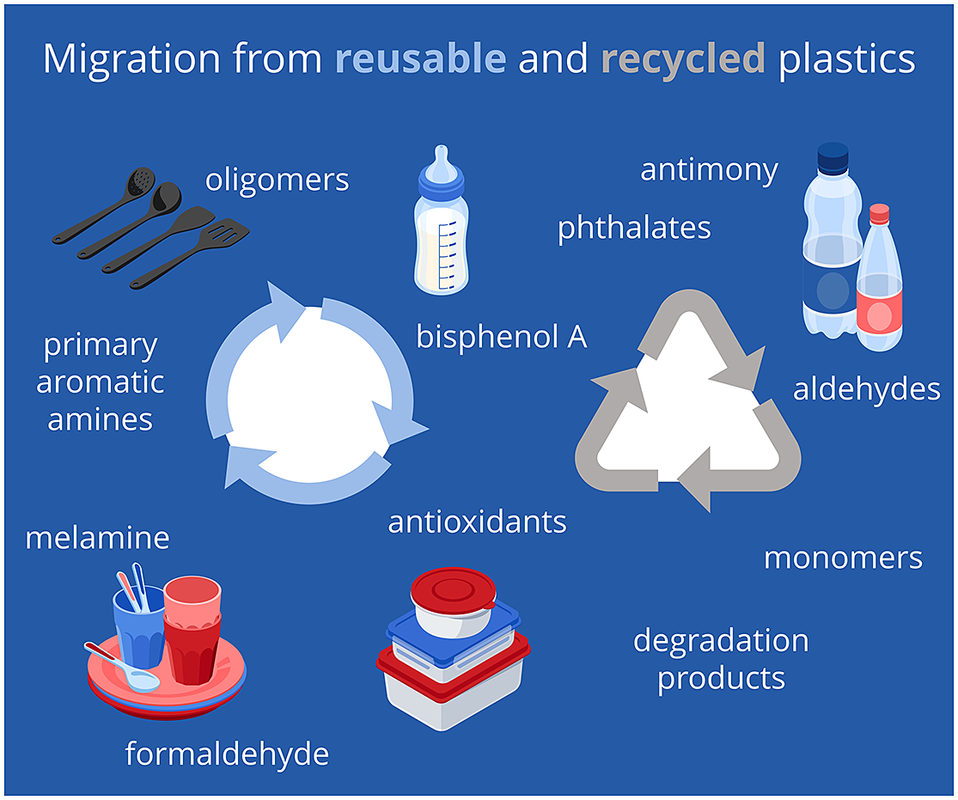
Visualize the migration process: chemicals like antimony, aldehydes, and monomers can leach from reusable plastics, as depicted in this diagram.
Inadequate cleaning also increases the risk of germs. Food residues can lurk in the cracks of plastic takeout containers, which can harbor Salmonella or E. coli. Reuse might result in foodborne diseases if it is not fully cleaned. To prevent heat damage that makes cracking worse, experts advise hand washing fragile plastics instead of using dishwashers.
In one study, scientists discovered that certain containers kept biofilms—sticky bacterial layers—even after washing. Families with small children or those with impaired immune systems should be especially concerned about this.
FDA Guidelines on Reusing Plastics
The U.S. Food and Drug Administration (FDA) provides authoritative guidance on plastics in food contact. While they don't explicitly ban reusing plastic takeout containers, they emphasize that single-use items should be treated as such unless designed for multiple uses. FDA regulations require that recycled or reusable plastics meet strict safety standards to prevent contaminant migration.
For recycled plastics in food packaging, the FDA evaluates processes to ensure no harmful substances leach. They recommend using only food-grade plastics and avoiding those previously used for non-food items. Recent updates support reusable containers in food service, but with caveats: they must be durable and cleanable.
In practice, for plastic takeout containers, the FDA advises checking for damage and limiting reuse to a few months to minimize risks. They also caution against microwaving unless the container is labeled microwave-safe.
| Practice | Safe? | Reason | Recommendation |
| Microwaving in a PP container | Yes, if labeled | Heat-resistant material | Limit to short durations. |
| Storing acidic foods long-term | No | Accelerates leaching | Use glass instead. |
| Dishwasher cleaning | Variable | High heat may warp | Hand-wash with mild soap. |
| Reusing foam PS containers | No | Leaches styrene | Discard after one use. |
| Freezing in HDPE | Yes | Low-temperature stable | Ensure a tight seal. |
This table distills expert advice for everyday application.
How to Safely Reuse Plastic Takeout Containers
To reduce the hazards, take these specific precautions if you choose to reuse plastic takeout containers. Check for the recycling code first, giving 5 (PP) priority due to its durability. To avoid bacterial accumulation, wash right away with hot, soapy water, making sure to scour every crevice. Steer clear of rough sponges that could harm the surface and provide bacterial homes.
Instead of storing hot or greasy foods, use them for dry items like pasta or almonds. Food should be moved to a glass plate before being microwaved. Keep track with a marking on the bottom and limit reuse to two to three months. To prevent overuse, experts advise alternating containers.
Creative safe reuses include organizing pantry items or crafting, as shown here.
:max_bytes(150000):strip_icc()/SPR-ways-to-reuse-plastic-containers-8706330-3a262770e34b4b1db726f628d4efd7a6.jpg)
For non-food uses, they're great for storing craft supplies or as seedling pots, extending their life without health risks.
When to Discard Plastic Takeout Containers
Knowing when to say goodbye is crucial. Signs include discoloration, odors, cracks, or warping—these indicate degradation and potential leaching. If a container has held raw meat or dairy, discard it after one use to avoid cross-contamination.
From an environmental perspective, proper disposal means recycling where possible. Most plastic takeout containers with codes 1, 2, or 5 are recyclable, but check local guidelines. Tossing them prematurely wastes resources, but safety comes first.
Alternatives to Plastic Takeout Containers
For those wary of risks, alternatives abound. Glass containers are inert, non-leaching, and infinitely reusable. Silicone bags offer flexibility without chemicals. Stainless steel is durable for hot foods. Bamboo or cornstarch-based compostables are eco-friendly single-use options.
Compare materials in this table:
| Material | Pros | Cons | Reuse Potential | Environmental Impact |
| Plastic (PP) | Cheap, lightweight | Potential leaching | Medium | High pollution if not recycled. |
| Glass | Non-toxic, durable | Heavy, breakable | High | Recyclable, low impact. |
| Silicone | Flexible, heat-safe | Expensive | High | Long-lasting, but not biodegradable. |
| Stainless Steel | Rust-proof, strong | Conducts heat | High | Recyclable, minimal waste. |
| Compostable | Eco-friendly | Single-use often | Low | Biodegradable. |
Opting for these can reduce reliance on plastic takeout containers while maintaining safety.
How to Avoid Pitfalls When Purchasing Chinese Food Take-Out Boxes?
Chinese Takeout Box Material Showdown: Biodegradable PLA vs Traditional PP
Related Article

You searched for 4 oz Chinese take out boxes — but what you actually need may not be a paper box at all. The folded paper container with the wire handle looks iconic, but for 4 oz portions of sauce, dressing,
4 oz Chinese Take Out Boxes Alternative — Clear PP Portion Cups
Looking for plastic to-go containers with lids in bulk? Every container we ship includes a matching lid — not as an optional add-on,
Plastic To-Go Containers with Lids Wholesale | Bulk PP Food Boxes
SEND MESSAGE