



Are Clear Plastic Portion Cups Safe for Freezer and Microwave Use?
author: Iris
2025-12-09
I. Comparison of Basic Characteristics of PP and PET Materials
1.1 Basic Characteristics of PP Material
PP (polypropylene) is a high-performance thermoplastic synthetic resin, a colorless, translucent, lightweight general-purpose plastic with excellent chemical resistance, heat resistance, electrical insulation, mechanical properties, and wear resistance. PP material has a melting point of up to 167℃, and its regular operating temperature range is -6℃ to 120℃. Modified PP materials can have an even wider operating temperature range of -18℃ to 110℃.
An important characteristic of PP material is its glass transition temperature (Tg), which is usually between -13℃ and -1℃. This means that below 0℃, the PP material gradually loses its flexibility and becomes more rigid and brittle. However, the embrittlement temperature of PP material is -35℃; significant embrittlement only occurs below -35℃.
From a safety perspective, PP material is the only plastic material permitted for microwave heating, known as "No. 5 plastic." PP material does not contain plasticizers or harmful substances such as bisphenol A (BPA) and has high chemical stability. Under normal use conditions, PP material exhibits excellent resistance to acids, alkalis, and oils, and does not release harmful substances.
An important characteristic of PP material is its glass transition temperature (Tg), which is usually between -13℃ and -1℃. This means that below 0℃, the PP material gradually loses its flexibility and becomes more rigid and brittle. However, the embrittlement temperature of PP material is -35℃; significant embrittlement only occurs below -35℃.
From a safety perspective, PP material is the only plastic material permitted for microwave heating, known as "No. 5 plastic." PP material does not contain plasticizers or harmful substances such as bisphenol A (BPA) and has high chemical stability. Under normal use conditions, PP material exhibits excellent resistance to acids, alkalis, and oils, and does not release harmful substances.
1.2 Basic Characteristics of PET Material
PET (polyethylene terephthalate), commonly known as polyester resin, is a crystalline saturated polyester. It is a milky white or light yellow, highly crystalline polymer with advantages such as high transparency, good barrier properties, non-toxicity, odorless, and good hygienic safety. The glass transition temperature (Tg) of PET material is approximately 70-80℃, and the melting temperature is approximately 250-260℃.
PET material has relatively poor heat resistance; the maximum operating temperature usually does not exceed 70℃, and some sources indicate 60-65℃. When the temperature exceeds 70℃, PET material will deform and may release harmful substances. However, PET material performs well in low-temperature environments, with a cold resistance temperature of up to -20℃.
From a safety perspective, PET material is safe for food packaging at room temperature, but its chemical and physical stability may be affected in high-temperature environments. PET material may retain trace amounts of antimony catalyst during the production process, and may release substances such as acetaldehyde at high temperatures.
PET material has relatively poor heat resistance; the maximum operating temperature usually does not exceed 70℃, and some sources indicate 60-65℃. When the temperature exceeds 70℃, PET material will deform and may release harmful substances. However, PET material performs well in low-temperature environments, with a cold resistance temperature of up to -20℃.
From a safety perspective, PET material is safe for food packaging at room temperature, but its chemical and physical stability may be affected in high-temperature environments. PET material may retain trace amounts of antimony catalyst during the production process, and may release substances such as acetaldehyde at high temperatures.
1.3 Performance Comparison of Two Materials
| Performance Indicator | PP Material | PET Material |
| Heat Resistance Temperature | 120-130℃ (conventional), 140℃ (modified) | 60-70℃ |
| Cold Resistance Temperature | -18℃ to -20℃ | -20℃ |
| Glass Transition Temperature | -13℃ to -1℃ | 70-80℃ |
| Melting Point | 167℃ | 250-260℃ |
| Microwave Oven Suitability | The only plastic material suitable for microwave heating | Not suitable for microwave heating |
| Main Advantages | High temperature resistance, microwaveable, and good chemical stability | High transparency, good barrier properties, and high mechanical strength |
| Main Disadvantages | Easily brittle at low temperatures, opaque | Poor heat resistance, releases harmful substances at high temperatures |
As can be seen from the comparison table, PP material is significantly superior to PET material in terms of heat resistance, while PET material has advantages in transparency and barrier properties.
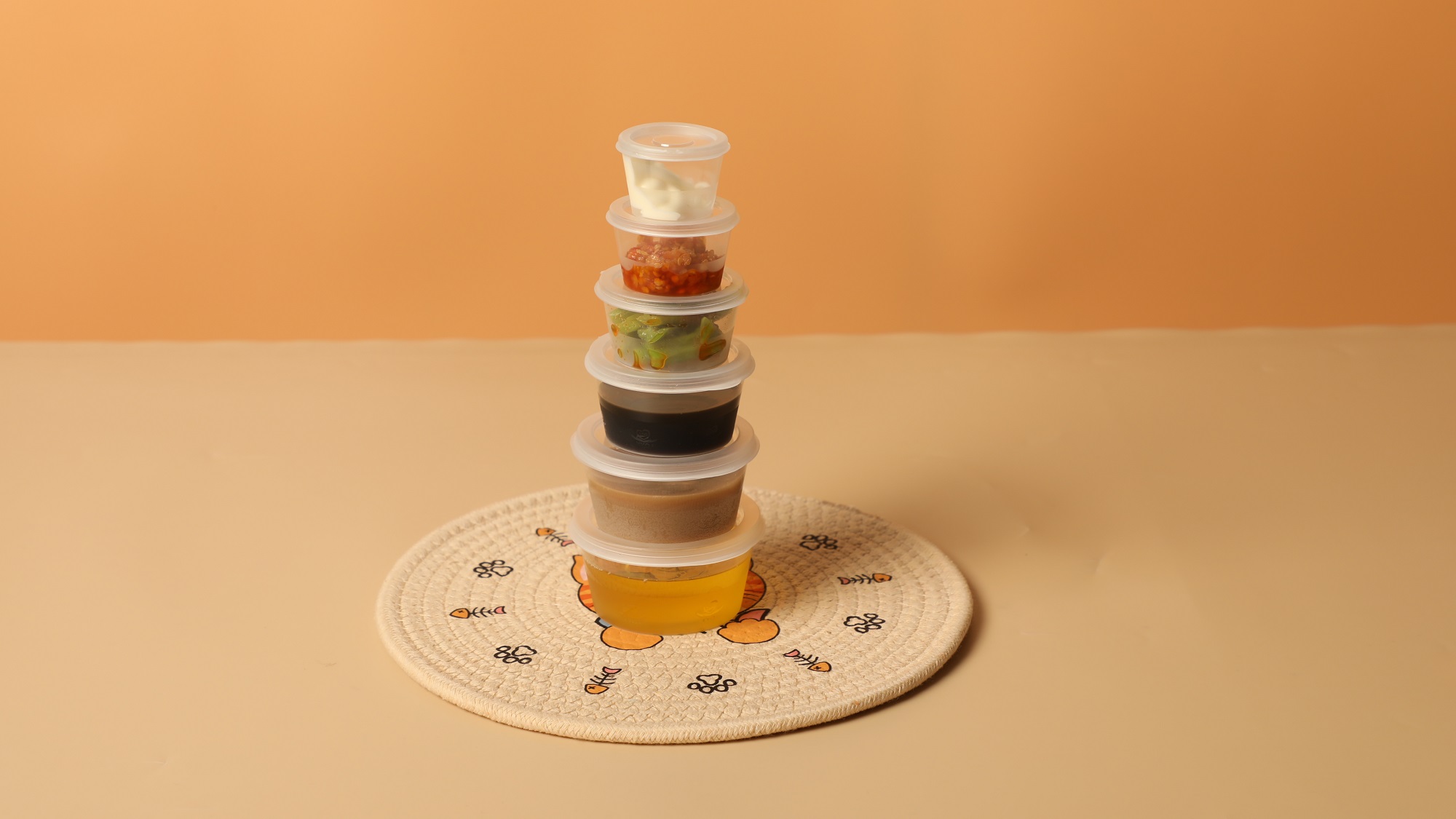
II. Safety Analysis in Freezing Conditions
2.1 Performance of PP Material in Freezing Environments
The performance of PP material in freezing environments is mainly affected by its glass transition temperature. Since the glass transition temperature of PP is between -13℃ and -1℃, when the temperature is below 0℃, the PP material gradually loses its flexibility, and its impact strength decreases.
However, actual test data shows that modified PP material can maintain structural integrity in -18℃ freezing tests, and remains undeformed after thawing and microwave heating to 100℃, proving its suitability for both refrigeration and heating. The effective freezing performance of standard PP material is usually limited to around -20℃; exceeding this temperature will cause it to become brittle.
In low-temperature environments of -20℃ to -40℃, PP material may crack or break due to impact or pressure. This is mainly because low temperatures reduce the toughness of the material, making it more susceptible to fracture under external force.
It is worth noting that PP material does not release harmful substances in freezing environments. PP material itself does not contain harmful substances such as plasticizers and bisphenol A, and its chemical properties are stable at low temperatures. Therefore, disposable PP clear plastic portion cups can be safely used for frozen storage, but the following points should be noted:
Avoid prolonged use in environments below -20℃
Handle with care to avoid violent impact
Choose products of qualified quality to ensure sufficient material thickness
Observe for signs of embrittlement or cracking, and replace immediately if any are found.
However, actual test data shows that modified PP material can maintain structural integrity in -18℃ freezing tests, and remains undeformed after thawing and microwave heating to 100℃, proving its suitability for both refrigeration and heating. The effective freezing performance of standard PP material is usually limited to around -20℃; exceeding this temperature will cause it to become brittle.
In low-temperature environments of -20℃ to -40℃, PP material may crack or break due to impact or pressure. This is mainly because low temperatures reduce the toughness of the material, making it more susceptible to fracture under external force.
It is worth noting that PP material does not release harmful substances in freezing environments. PP material itself does not contain harmful substances such as plasticizers and bisphenol A, and its chemical properties are stable at low temperatures. Therefore, disposable PP clear plastic portion cups can be safely used for frozen storage, but the following points should be noted:
Avoid prolonged use in environments below -20℃
Handle with care to avoid violent impact
Choose products of qualified quality to ensure sufficient material thickness
Observe for signs of embrittlement or cracking, and replace immediately if any are found.
2.2 Performance of PET Material in Freezing Environments
PET material performs relatively well in freezing environments. The cold resistance temperature of the PET material can reach -20℃, and it can maintain good physical properties within this temperature range. PET material performs well in low-temperature environments and is suitable for packaging refrigerated or frozen foods.
However, PET material exhibits a certain degree of brittleness at even lower temperatures. When the temperature drops below its glass transition temperature (70-80℃), the molecular chain movement ability of PET is significantly reduced, and the material becomes more rigid and brittle. At low temperatures between -20℃ and -40℃, PET plastic containers may crack or break due to impact or pressure.
It is important to note that PET material does not cause cancer under freezing conditions. Most mineral water bottles and beverage bottles on the market are made of PET. This material is stable in freezing environments and will not decompose into carcinogens or release "plasticizers" or "bisphenol A" under normal use.
Modified PET material, by adding special toughening agents to the original PET base, can increase the low-temperature impact strength of the material by 40%, and the elongation at break at -20℃ remains above 30% (compared to only 15% for ordinary PET), effectively avoiding the problem of low-temperature embrittlement.
Therefore, disposable PET clear plastic portion cups are safe to use in freezing environments above -20℃, but the following should still be noted:
Temperature should be controlled above -20℃
Avoid strong impacts and pressure
Choose products of qualified quality
Observe for any signs of embrittlement or cracking
However, PET material exhibits a certain degree of brittleness at even lower temperatures. When the temperature drops below its glass transition temperature (70-80℃), the molecular chain movement ability of PET is significantly reduced, and the material becomes more rigid and brittle. At low temperatures between -20℃ and -40℃, PET plastic containers may crack or break due to impact or pressure.
It is important to note that PET material does not cause cancer under freezing conditions. Most mineral water bottles and beverage bottles on the market are made of PET. This material is stable in freezing environments and will not decompose into carcinogens or release "plasticizers" or "bisphenol A" under normal use.
Modified PET material, by adding special toughening agents to the original PET base, can increase the low-temperature impact strength of the material by 40%, and the elongation at break at -20℃ remains above 30% (compared to only 15% for ordinary PET), effectively avoiding the problem of low-temperature embrittlement.
Therefore, disposable PET clear plastic portion cups are safe to use in freezing environments above -20℃, but the following should still be noted:
Temperature should be controlled above -20℃
Avoid strong impacts and pressure
Choose products of qualified quality
Observe for any signs of embrittlement or cracking
2.3 Material Selection Recommendations for Freezing Scenarios
Based on the above analysis, the material selection recommendations for freezing scenarios are as follows:
Prioritize PP material because:
PP material has a wider temperature range (-18℃ to 110℃), making it more adaptable
PP material can be directly microwaved after freezing without changing containers
PP material has better chemical stability and will not release harmful substances
Limitations of PET material:
Only suitable for freezing environments above -20℃
Cannot be directly microwaved after freezing; needs to be transferred to another container
More sensitive to impact and pressure; requires careful use
Prioritize PP material because:
PP material has a wider temperature range (-18℃ to 110℃), making it more adaptable
PP material can be directly microwaved after freezing without changing containers
PP material has better chemical stability and will not release harmful substances
Limitations of PET material:
Only suitable for freezing environments above -20℃
Cannot be directly microwaved after freezing; needs to be transferred to another container
More sensitive to impact and pressure; requires careful use
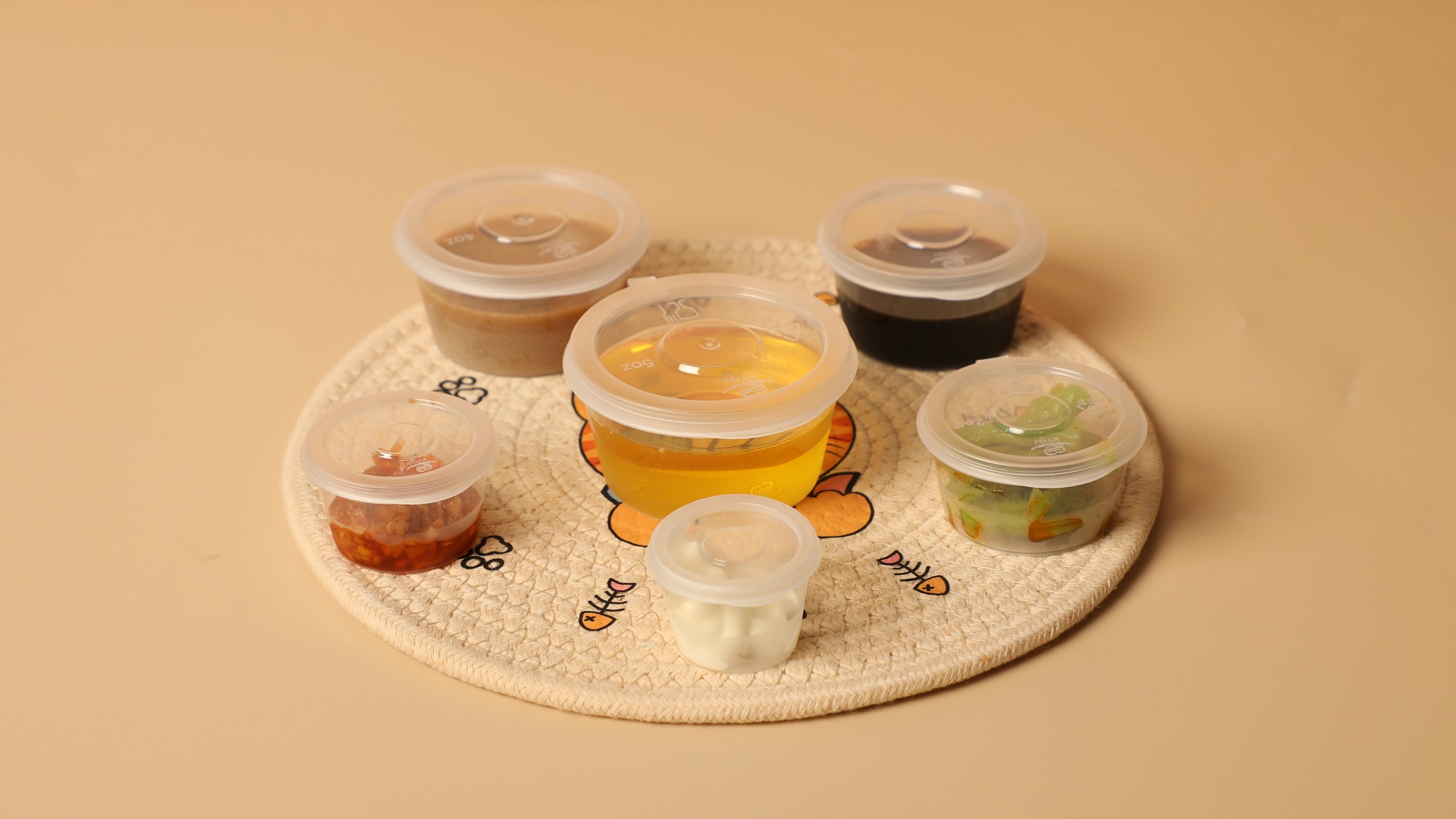
III. Safety Analysis of Microwave Oven Use Scenarios
3.1 Safety of PP Material in Microwave Ovens
PP material is the only plastic material allowed for microwave heating, and is known as "No. 5 plastic". The heat resistance temperature of the PP material is approximately 100-140℃, which can withstand the temperature changes during microwave heating without releasing toxic substances. Food-grade PP material is inexpensive, non-toxic, and odorless, with a working temperature range of -30 to 140℃. It can be used for both microwave heating and low-temperature refrigeration in the freezer. PP material has a melting point of over 160℃, making it perfectly safe for direct microwave heating.
When using disposable PP clear plastic portion cups in a microwave oven, the following safety points should be noted:
Temperature control: Ordinary PP softens at 110-120℃, while modified PP can withstand approximately 140℃. Therefore, temperature and time should be controlled during heating to avoid localized overheating.
Special risks of high-oil and high-sugar foods: Special attention should be paid when heating high-oil and high-sugar foods, as these foods have low water content and are prone to exceeding temperature limits during heating. For example, the temperature of fried dough sticks can reach 180℃ when they are taken out of the pan, and the sugar threads of candied foods can reach over 150℃. When heating these high-oil and high-sugar foods in a microwave oven, the local temperature may exceed the limit that polypropylene can withstand.
Container integrity: Ensure that the disposable PP clear plastic portion cups are free of scratches, cracks, or deformation. If these occur, they should be replaced immediately, as damaged containers may release more harmful substances during microwave heating.
Heating method: It is recommended to use low to medium power settings when microwaving clear plastic portion cups to minimize the risk of melting or warping. High temperatures can cause the plastic to overheat and potentially release harmful chemicals.
When using disposable PP clear plastic portion cups in a microwave oven, the following safety points should be noted:
Temperature control: Ordinary PP softens at 110-120℃, while modified PP can withstand approximately 140℃. Therefore, temperature and time should be controlled during heating to avoid localized overheating.
Special risks of high-oil and high-sugar foods: Special attention should be paid when heating high-oil and high-sugar foods, as these foods have low water content and are prone to exceeding temperature limits during heating. For example, the temperature of fried dough sticks can reach 180℃ when they are taken out of the pan, and the sugar threads of candied foods can reach over 150℃. When heating these high-oil and high-sugar foods in a microwave oven, the local temperature may exceed the limit that polypropylene can withstand.
Container integrity: Ensure that the disposable PP clear plastic portion cups are free of scratches, cracks, or deformation. If these occur, they should be replaced immediately, as damaged containers may release more harmful substances during microwave heating.
Heating method: It is recommended to use low to medium power settings when microwaving clear plastic portion cups to minimize the risk of melting or warping. High temperatures can cause the plastic to overheat and potentially release harmful chemicals.
3.2 Risks of PET material in microwave ovens
PET material should absolutely not be used for microwave heating, mainly for the following reasons:
- Temperature limitations: The heat resistance temperature of the PET material is only 60-70℃, far below the temperature requirements for microwave heating. During microwave heating, the food temperature can rise rapidly, exceeding the heat resistance limit of PET plastic, leading to container deformation or damage.
- Chemical stability risks: Increased temperature can cause PET molecular chains to break, resulting in the migration of oligomers and monomers into the food. Studies have shown that when the temperature exceeds 60℃, trace amounts of terephthalic acid and ethylene glycol may be released from PET. Although these substances have low acute toxicity, long-term ingestion may have adverse effects on health. Harmful Substance Release: At high temperatures, PET plastic may release harmful chemicals such as phthalates (plasticizers) and antimony (catalyst residue from the manufacturing process). These substances can migrate into food, posing potential risks to human health.
- Risk of Physical Deformation: Uneven heating in a microwave oven can cause localized overheating of the bottle, leading to deformation or perforation, resulting in leakage of contents or burn risks.
- Antimony Migration Risk: Antimony compounds are commonly used as catalysts in PET production. At high temperatures, the rate of antimony migration increases, and scratches on the bottle surface after aging can also facilitate the release of trace amounts of substances. Microwave heating can cause food to reach temperatures exceeding the boiling point, with even higher temperatures in oily areas. The container must be sufficiently heat-resistant; deformation is a warning sign, and use should be stopped immediately if deformation occurs.
3.3 Safety Recommendations for Microwave Oven Use
Based on the above analysis, the following safety recommendations are provided for microwave oven use:
Correct Use of PP Material:
Correct Use of PP Material:
- Look for the "No. 5 PP" label: Ensure that the material is PP and check if the product is clearly marked "microwave-safe."
- Remove the lid before heating: Always remove the lid before heating, as the lid may not be made of PP material and could be PET or PS, which are not heat-resistant.
- Control heating time: It is recommended to use short, incremental heating times. Set a short time initially, check the food after heating, and gradually increase the time if further heating is needed.
- Avoid high-fat and high-sugar foods: Avoid using PP disposable clear plastic portion cups to heat high-fat and high-sugar foods. If necessary, pay special attention to temperature control.
- Choose appropriate power: Use low to medium power settings to avoid overheating the plastic.
Prohibition of PET Material Use:
- Absolutely no microwave heating: PET disposable portion cups should absolutely not be placed in a microwave oven.
- Avoid high-temperature contact: Even without microwaving, avoid using them to hold food exceeding 70℃.
- Single-use only: PET material is designed for single use; repeated use is not recommended.
- Observe carefully: If deformation, discoloration, or other changes are observed, stop using the product immediately.
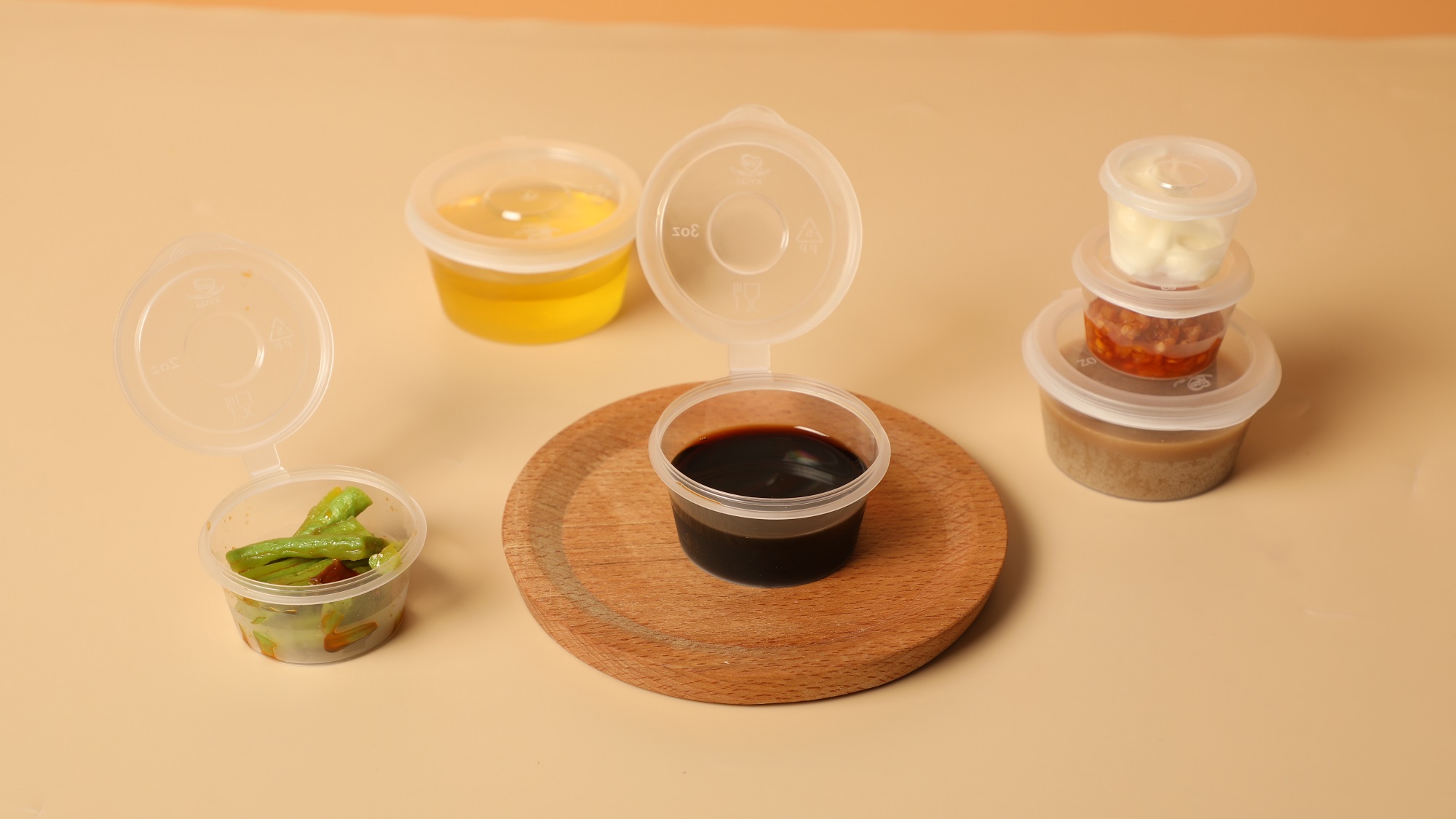
IV. Risk Assessment of Hazardous Substance Release
4.1 Release of Hazardous Substances from PP Material
PP material is safe and non-toxic under normal use conditions, mainly reflected in the following aspects:
- Absence of harmful additives: PP material itself does not contain harmful substances such as plasticizers and bisphenol A (BPA), and has high chemical stability. During the processing of plastic food containers, since polypropylene itself is sufficiently soft, manufacturers have no need to add phthalates.
- Safety at high temperatures: PP material does not decompose into bisphenol A, a chemical substance harmful to the human body, at high temperatures. PP has excellent chemical stability and does not react with most chemical substances except strong oxidizing agents, making it particularly safe for food packaging.
- Migration control: According to FDA standards, the total migration of PP materials and products in various food simulants shall not exceed 10 mg/dm², ensuring that substances migrating into food under normal use conditions do not harm human health.
Risks under specific circumstances:
Under high-temperature microwave treatment, some PP containers may release trace amounts of aldehyde compounds (such as formaldehyde), but usually within safe limits.
When PP material comes into contact with high-temperature oily foods, it accelerates the migration of harmful substances such as additives and oligomers. Common organic substances include phthalates, which are harmful to the human body.
Studies show that when containing high-temperature foods such as braised pork (78℃) and hot and sour soup (85℃), polypropylene food containers release approximately 12,000 microplastic particles per square centimeter within 15 minutes.
Under high-temperature microwave treatment, some PP containers may release trace amounts of aldehyde compounds (such as formaldehyde), but usually within safe limits.
When PP material comes into contact with high-temperature oily foods, it accelerates the migration of harmful substances such as additives and oligomers. Common organic substances include phthalates, which are harmful to the human body.
Studies show that when containing high-temperature foods such as braised pork (78℃) and hot and sour soup (85℃), polypropylene food containers release approximately 12,000 microplastic particles per square centimeter within 15 minutes.
4.2 Release of Hazardous Substances from PET Material
The harmful substances that PET material may release during use mainly include:
- Antimony: Trace amounts of antimony may remain as a catalyst during the production of PET. Studies have found that when PET plastic bottles are filled with 4% acetic acid, 10% ethanol, and 20% ethanol, respectively, the migration of the harmful substance antimony in the bottle containing acetic acid is significantly higher than in the other two. Acidic solutions increase antimony migration by 200%.
- Acetaldehyde: PET may release acetaldehyde at high temperatures, but the content is extremely low and does not reach carcinogenic levels. According to testing standards, the acetaldehyde migration level should be ≤50 μg/L.
- Phthalates (plasticizers): PET materials may contain phthalate plasticizers added during the manufacturing process. These substances can interfere with the endocrine system, and their migration levels need to be tested to ensure they are below regulatory thresholds.
- Terephthalic acid and ethylene glycol: These are the monomer components of PET. According to relevant standards:
- Terephthalic acid migration: ≤7.5 mg/kg (Chinese standard) or ≤60 mg/kg (EU standard)
- Ethylene glycol migration: ≤30 mg/kg (Chinese standard) or ≤10 mg/kg (EU standard)
Influence of temperature on migration:
For every 10°C increase in temperature, the migration rate increases by 2.3 times.
A decrease of 1 pH unit accelerates antimony release by 40%.
When the temperature exceeds 60°C, trace amounts of terephthalic acid and ethylene glycol may be released from PET. Although these substances have low acute toxicity, long-term ingestion may have adverse health effects.
For every 10°C increase in temperature, the migration rate increases by 2.3 times.
A decrease of 1 pH unit accelerates antimony release by 40%.
When the temperature exceeds 60°C, trace amounts of terephthalic acid and ethylene glycol may be released from PET. Although these substances have low acute toxicity, long-term ingestion may have adverse health effects.
4.3 Safety Standards and Testing Requirements
To ensure food safety, various countries have established strict standards for food contact materials made of PP and PET:
Chinese Standard (GB 4806.7-2023):
Sensory test: Normal color, no odor
Overall migration: ≤10 mg/dm²
Specific migration: Specific limits for formaldehyde, acetaldehyde, heavy metals, etc.
EU Standard (EU No 10/2011):
Overall migration: ≤10 mg/dm²
Antimony migration limit: 0.04 mg/kg (for PET)
Lead migration limit: 0.01 mg/kg
US FDA Standard:
Overall migration: ≤10 mg/dm²
Additives must comply with the FDA-approved list and be used within the specified dosage range.
Chinese Standard (GB 4806.7-2023):
Sensory test: Normal color, no odor
Overall migration: ≤10 mg/dm²
Specific migration: Specific limits for formaldehyde, acetaldehyde, heavy metals, etc.
EU Standard (EU No 10/2011):
Overall migration: ≤10 mg/dm²
Antimony migration limit: 0.04 mg/kg (for PET)
Lead migration limit: 0.01 mg/kg
US FDA Standard:
Overall migration: ≤10 mg/dm²
Additives must comply with the FDA-approved list and be used within the specified dosage range.
4.4 Measures to Reduce the Release of Harmful Substances
To minimize the release of harmful substances, the following measures are recommended:
Choose qualified products: When purchasing, choose products with the "food contact use" label, production license mark (QS), and number.
Temperature control:
PP material: Avoid exceeding 120°C, especially when heating high-oil and high-sugar foods.
PET material: Absolutely avoid exceeding 70°C, and it is best to only use it for room temperature or refrigerated foods.
Usage:
Avoid prolonged high-temperature heating.
Avoid using sealed containers in the microwave.
Use low to medium power settings when heating.
Material selection:
Prioritize PP material for foods that require heating.
PET. The material is only suitable for food at room temperature or refrigerated food.
Avoid using containers with scratches, cracks, or deformation.
Pay attention to environmental factors:
Acidic foods can accelerate the migration of harmful substances; avoid using PET containers for such foods.
Oily foods can accelerate the leaching of plasticizers; choose PP material instead.
Avoid direct sunlight and high-temperature storage environments.
Choose qualified products: When purchasing, choose products with the "food contact use" label, production license mark (QS), and number.
Temperature control:
PP material: Avoid exceeding 120°C, especially when heating high-oil and high-sugar foods.
PET material: Absolutely avoid exceeding 70°C, and it is best to only use it for room temperature or refrigerated foods.
Usage:
Avoid prolonged high-temperature heating.
Avoid using sealed containers in the microwave.
Use low to medium power settings when heating.
Material selection:
Prioritize PP material for foods that require heating.
PET. The material is only suitable for food at room temperature or refrigerated food.
Avoid using containers with scratches, cracks, or deformation.
Pay attention to environmental factors:
Acidic foods can accelerate the migration of harmful substances; avoid using PET containers for such foods.
Oily foods can accelerate the leaching of plasticizers; choose PP material instead.
Avoid direct sunlight and high-temperature storage environments.
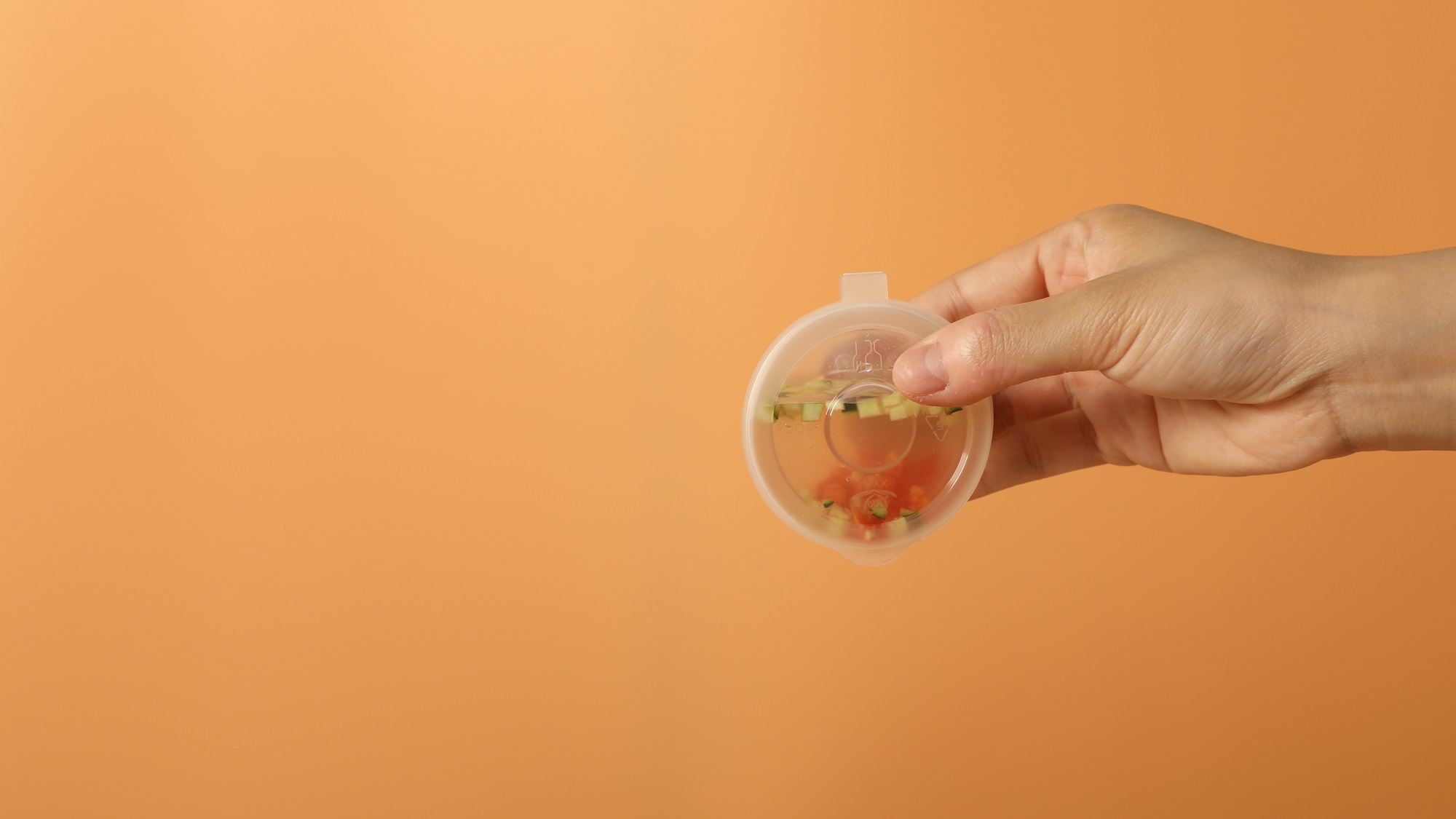
V. Usage Precautions and Risk Warnings
5.1 General Safety Precautions
Regardless of whether you are using PP or PET clear portion cups with lids, the following general safety precautions should be followed:
Check the product label:
Confirm that the product is marked with "for food contact" or "for food packaging" or similar wording, or has a spoon and chopsticks symbol printed on it.
Check the material identification: PP is "No. 5", PET is "No. 1".
Note any special usage requirements, such as "not for microwave use".
Check product integrity:
Choose products with a smooth, even surface, uniform color, clear contours, no mold spots, and no odor.
Check for bubbles, perforations, cracks, etc.
Avoid using containers that are deformed, scratched, or damaged.
Temperature control:
PP material: operating temperature not exceeding 120℃, freezing temperature not lower than -18℃
PET material: operating temperature not exceeding 70℃, freezing temperature not lower than -20℃
Avoid placing containers directly next to stoves or other high-temperature appliances to prevent deformation or even combustion.
Usage method:
It is recommended for single use; use as soon as possible after opening the packaging.
Avoid repeated use, especially for PET material.
Discard after use; do not store food for extended periods.
Check the product label:
Confirm that the product is marked with "for food contact" or "for food packaging" or similar wording, or has a spoon and chopsticks symbol printed on it.
Check the material identification: PP is "No. 5", PET is "No. 1".
Note any special usage requirements, such as "not for microwave use".
Check product integrity:
Choose products with a smooth, even surface, uniform color, clear contours, no mold spots, and no odor.
Check for bubbles, perforations, cracks, etc.
Avoid using containers that are deformed, scratched, or damaged.
Temperature control:
PP material: operating temperature not exceeding 120℃, freezing temperature not lower than -18℃
PET material: operating temperature not exceeding 70℃, freezing temperature not lower than -20℃
Avoid placing containers directly next to stoves or other high-temperature appliances to prevent deformation or even combustion.
Usage method:
It is recommended for single use; use as soon as possible after opening the packaging.
Avoid repeated use, especially for PET material.
Discard after use; do not store food for extended periods.
5.2 Special Precautions for PP Material
Microwave use:
Always remove the lid before heating, as the lid may not be made of PP material.
Use low to medium power settings to avoid overheating the plastic.
Control the heating time; it is recommended to use a "short time incremental" method.
High-risk foods:
Avoid high-oil and high-sugar foods, such as fried dough sticks, candied foods, etc.
The local temperature of these foods during heating may exceed the tolerance limit of PP.
If heating is necessary, pay special attention to temperature control and heating time.
Material confirmation:
Even if it is PP material, if it says "not for microwave use," do not use it in a microwave. Do not use the logo.
The lid or body may be made of a different material.
When choosing, ensure the entire container is made of PP material.
Long-term use risks:
PP containers have a lifespan of no more than 1 year, and should usually be replaced every 6-8 months.
Avoid cleaning with steel wool or hard brushes; use a soft sponge for hand washing.
Discard immediately if it turns yellow, becomes brittle, or becomes cloudy.
Always remove the lid before heating, as the lid may not be made of PP material.
Use low to medium power settings to avoid overheating the plastic.
Control the heating time; it is recommended to use a "short time incremental" method.
High-risk foods:
Avoid high-oil and high-sugar foods, such as fried dough sticks, candied foods, etc.
The local temperature of these foods during heating may exceed the tolerance limit of PP.
If heating is necessary, pay special attention to temperature control and heating time.
Material confirmation:
Even if it is PP material, if it says "not for microwave use," do not use it in a microwave. Do not use the logo.
The lid or body may be made of a different material.
When choosing, ensure the entire container is made of PP material.
Long-term use risks:
PP containers have a lifespan of no more than 1 year, and should usually be replaced every 6-8 months.
Avoid cleaning with steel wool or hard brushes; use a soft sponge for hand washing.
Discard immediately if it turns yellow, becomes brittle, or becomes cloudy.
5.3 Special Precautions for PET Material
Absolutely Prohibited:
Absolutely not for microwave heating.
Do not hold food or liquids exceeding 70℃.
Do not reuse, especially for hot water or hot food.
Storage Precautions:
Avoid direct sunlight and high-temperature storage environments.
Do not place near stoves.
Storage temperature should be in a cool place.
Special Substances:
Avoid holding acidic foods (such as vinegar, fruit juice, etc.), as acidic environments will accelerate antimony migration.
Avoid holding oily foods, as this will accelerate plasticizer leaching.
Do not hold alcoholic beverages.
Quality Inspection:
Check for deformation or cracks before each use.
Observe for any substance leaching.
Stop using it immediately if any abnormalities are found.
Absolutely not for microwave heating.
Do not hold food or liquids exceeding 70℃.
Do not reuse, especially for hot water or hot food.
Storage Precautions:
Avoid direct sunlight and high-temperature storage environments.
Do not place near stoves.
Storage temperature should be in a cool place.
Special Substances:
Avoid holding acidic foods (such as vinegar, fruit juice, etc.), as acidic environments will accelerate antimony migration.
Avoid holding oily foods, as this will accelerate plasticizer leaching.
Do not hold alcoholic beverages.
Quality Inspection:
Check for deformation or cracks before each use.
Observe for any substance leaching.
Stop using it immediately if any abnormalities are found.
5.4 Usage Suggestions for Special Scenarios
Takeaway Scenarios:
After receiving takeaway food, if heating is required, transfer the food to a PP material container.
Do not microwave directly in the original packaging.
Especially, transparent PET material food containers, absolutely cannot be heated.
Home Use:
Prepare dedicated PP material containers for microwave heating.
Use PET material containers for refrigerated or room-temperature food.
Store separately to avoid confusion.
Catering Businesses:
Clearly inform consumers of the material type and usage precautions.
Provide PP material containers for food that needs heating.
PET material containers should be labeled "Not for heating".
After receiving takeaway food, if heating is required, transfer the food to a PP material container.
Do not microwave directly in the original packaging.
Especially, transparent PET material food containers, absolutely cannot be heated.
Home Use:
Prepare dedicated PP material containers for microwave heating.
Use PET material containers for refrigerated or room-temperature food.
Store separately to avoid confusion.
Catering Businesses:
Clearly inform consumers of the material type and usage precautions.
Provide PP material containers for food that needs heating.
PET material containers should be labeled "Not for heating".
5.5 Risk Level Assessment
Based on the usage scenario and material type, the risk level assessment is as follows:
| Usage Scenario | PP Material | PET Material |
| Room temperature storage | Low risk | Low risk |
| Refrigeration (0-5℃) | Low risk | Low risk |
| Freezing (-20℃) | Medium risk (brittleness needs attention) | Medium risk (temperature needs attention) |
| Microwave heating | Medium risk (requires correct use) | High risk (prohibited) |
| High-temperature containment (>70℃) | Low risk (<120℃) | High risk (prohibited) |
Why Are PLA Takeout Containers Not Suitable for Hot Food?
What Are the Benefits of Biodegradable Food Takeout Boxes?
Related Article

You searched for 4 oz Chinese take out boxes — but what you actually need may not be a paper box at all. The folded paper container with the wire handle looks iconic, but for 4 oz portions of sauce, dressing,
4 oz Chinese Take Out Boxes Alternative — Clear PP Portion Cups
Looking for plastic to-go containers with lids in bulk? Every container we ship includes a matching lid — not as an optional add-on,
Plastic To-Go Containers with Lids Wholesale | Bulk PP Food Boxes
SEND MESSAGE