



Are the Inner Coatings of Custom-Printed Paper Cups Toxic?
author: Iris
2026-01-07
1. Overview of Disposable Paper Cup Inner Coatings
1.1 Coating Types and Material Composition
The inner coating of disposable custom-printed paper cups is crucial for waterproofing. Based on materials, it is mainly divided into three categories:
- Wax-coated cups: Early products, with edible paraffin wax coated on the inner wall, were only suitable for cold drinks. Paraffin wax has a melting point ≤60℃, and will melt and permeate when heated, affecting the taste and posing health risks.
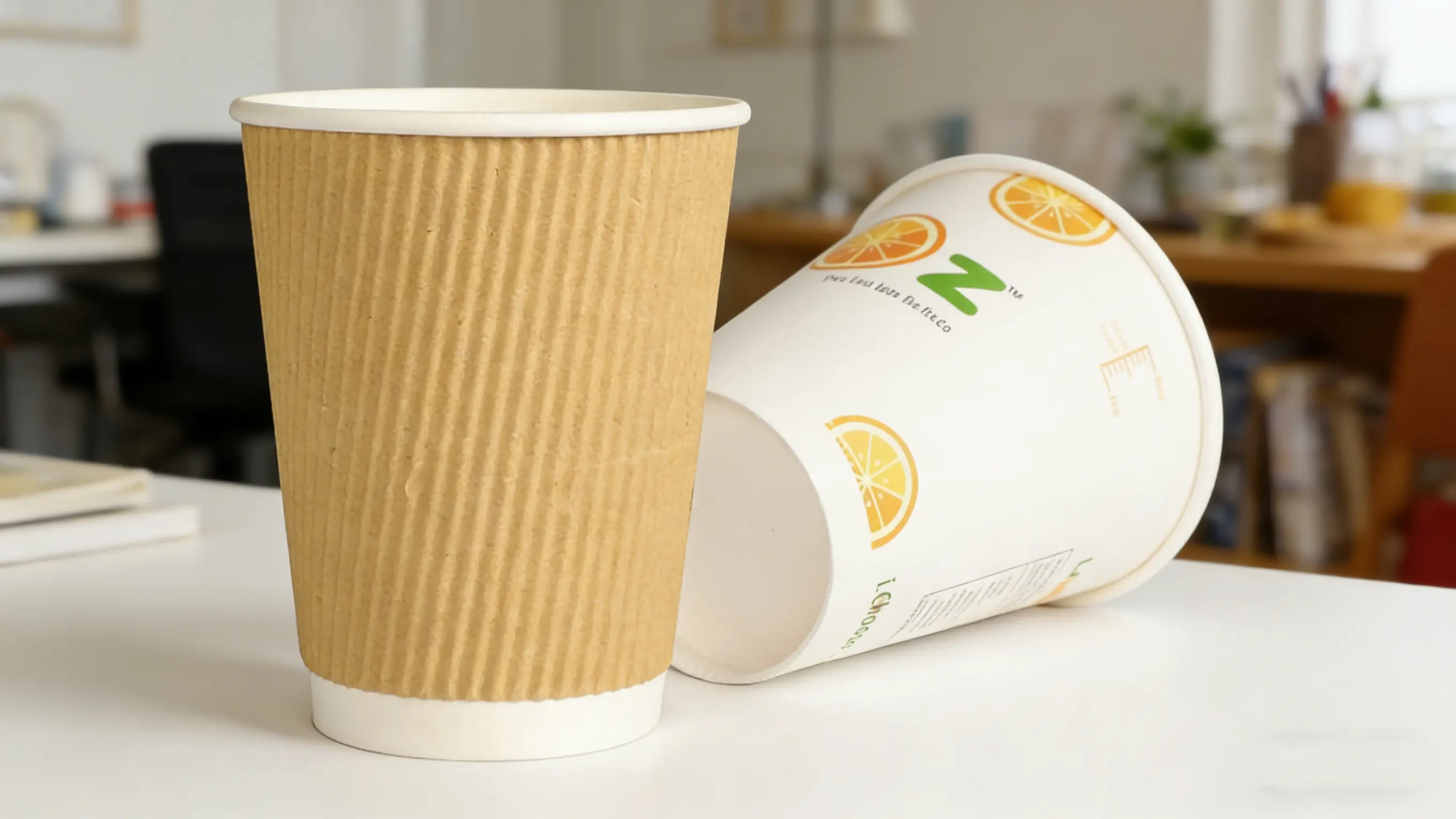
- Polyethylene (PE) coated cups: Currently, the mainstream product is a combination of PE with paper through cast film extrusion technology. Cold drink cups use a single layer of PE coating (12-15μm), while hot drink cups use a double layer (18-22μm), with an overall thickness of 15-20 microns, providing good waterproofing and oil resistance.
- Polylactic acid (PLA) coated cups: A new type of environmentally friendly product, made from fermented crops such as corn, using extrusion coating technology. It is biodegradable and also improves temperature resistance.
1.2 Production Process and Quality Control
- Production process: PE coating relies on cast film extrusion technology, requiring control of the oxidation of PE film into carbonyl compounds during hot melting or application; PLA coating uses extrusion coating technology, balancing biodegradability and temperature resistance, and is non-toxic, waterproof, oil-resistant, and heat-insulating.
- Quality control: According to the national standard GB/T 27590-2022 "custom-printed paper cups," biodegradable paper cups must use food-grade base paper, the ink must not migrate, and coated cups must pass a 95℃ hot water test. The inner PE film must comply with GB 4806.7, requiring potassium permanganate consumption ≤10mg/kg, heavy metal lead ≤1mg/kg, and total migration ≤10mg/dm².
1.3 Market Status and Mainstream Products
Currently, more than 90% of disposable custom-printed paper cups on the market use PE coating technology. The technology is mature, and the cost is low, but some inferior products may contain harmful components such as fluorescent whitening agents and bisphenol compounds, which are easily released when heated. PLA-coated custom-printed paper cups have become increasingly popular in recent years due to their environmentally friendly properties. For example, eSUN's PLA-coated biodegradable paper cups have been adopted by several airlines. However, the market still contains custom-printed paper cups made with recycled materials or inferior coatings, which may have uneven coatings, insufficient thickness, and potentially contain harmful substances, requiring careful selection.

2. Scientific Safety Assessment of Coatings
2.1 Chemical Stability of Coating Materials
Polyethylene (PE) coating: Chemically stable, does not release harmful substances under normal use, and complies with international food packaging regulations. PE has a melting point of 110-120℃, which is relatively safe at typical beverage temperatures (up to 100℃), but it softens above 85℃, reducing its barrier properties and potentially leading to the migration of trace substances. Studies show that under 70℃/8h conditions, the migration of Al and Mg from coated custom-printed paper cups into a 3% acetic acid solution was 0.074-0.180 mg/kg and 0.064-2.209 mg/kg, respectively, with significantly lower migration at 40℃/12h.
Polylactic acid (PLA) coating: A bio-based, environmentally friendly material, safe and odorless, safer than PE coatings, but with poor heat resistance. Its glass transition temperature is approximately 60℃; above 60℃, it softens, deforms, or even dissolves, making it unsuitable for hot drinks. At high temperatures, PLA coating materials are prone to degradation, posing a high migration risk and easily producing odors.
Polylactic acid (PLA) coating: A bio-based, environmentally friendly material, safe and odorless, safer than PE coatings, but with poor heat resistance. Its glass transition temperature is approximately 60℃; above 60℃, it softens, deforms, or even dissolves, making it unsuitable for hot drinks. At high temperatures, PLA coating materials are prone to degradation, posing a high migration risk and easily producing odors.
2.2 Safety under Different Temperature Conditions
High-temperature conditions: Greatly affected by temperature, time, and the nature of the liquid. Studies show that pouring 85℃ hot water into a paper cup for 15 minutes releases approximately 25,000 microplastic particles; above 50℃, the migration of bisphenol A increases significantly, and the release rate from custom-printed paper cups in boiling water is 54 times faster than at room temperature. The temperature at which bisphenol A migration increases sharply varies for different paper cup materials: cellophane 50-55℃; biodegradable paper cups and parchment paper 65-70℃, and coated paper 70-75℃.
Room temperature and low-temperature conditions: Higher safety. At 40℃/12h, the migration amounts of Al and Mg from coated custom-printed paper cups into 3% acetic acid solution were 0.077-0.212 mg/kg and 0.065-0.862 mg/kg, respectively, which were lower than under high-temperature conditions. PE-coated cups showed no significant chemical changes when filled with cold or warm water at room temperature, and the migration amount was extremely low; PLA-coated cups exhibited stable performance at low temperatures, but long-term storage may affect their performance.
Room temperature and low-temperature conditions: Higher safety. At 40℃/12h, the migration amounts of Al and Mg from coated custom-printed paper cups into 3% acetic acid solution were 0.077-0.212 mg/kg and 0.065-0.862 mg/kg, respectively, which were lower than under high-temperature conditions. PE-coated cups showed no significant chemical changes when filled with cold or warm water at room temperature, and the migration amount was extremely low; PLA-coated cups exhibited stable performance at low temperatures, but long-term storage may affect their performance.
2.3 Substance Migration Research and Detection Results
Microplastic Release Study: A study conducted in August 2024 by the Jiang Chao laboratory at the Institute of Life Sciences, Zhejiang University, found that microplastics released from disposable custom-printed paper cups after hot water brewing accumulate in specific tissues in the body, exhibiting toxicity to reproduction and metabolism, affecting fetal development and maternal physiology. They were detected in 12 tissues and organs of the mother rat and in the fetus, preferentially depositing in the fetus, placenta, and kidneys. Daily consumption of 3.3 cups could alter the cecal microbiome, metabolic function, and immune health.
Chemical Substance Migration Detection: Bisphenol A (BPA) migrates from custom-printed paper cups into various liquids, including distilled water and acidic simulants. According to national standards and EU directives, BPA was detected using high-performance liquid chromatography with fluorescence detection, with a detection limit of 10 μg/kg, a linear range of 0.05-50 mg/kg, and a spiked recovery rate of 88%-95%.
Other Harmful Substance Detection: Analysis of new risk projects for PLA-coated custom-printed paper cups showed that 3-chloro-1,2-propanediol (3-MCPD) was detected in 5 batches of PLA-coated custom-printed paper cups and 5 batches of base paper, but not in the PE film. There are differences in the migration of harmful substances among different coating materials.
Chemical Substance Migration Detection: Bisphenol A (BPA) migrates from custom-printed paper cups into various liquids, including distilled water and acidic simulants. According to national standards and EU directives, BPA was detected using high-performance liquid chromatography with fluorescence detection, with a detection limit of 10 μg/kg, a linear range of 0.05-50 mg/kg, and a spiked recovery rate of 88%-95%.
Other Harmful Substance Detection: Analysis of new risk projects for PLA-coated custom-printed paper cups showed that 3-chloro-1,2-propanediol (3-MCPD) was detected in 5 batches of PLA-coated custom-printed paper cups and 5 batches of base paper, but not in the PE film. There are differences in the migration of harmful substances among different coating materials.
2.4 Safety of Additives and Processing Aids
Plasticizers: Tributyl acetylcitrate (ATBC) is a commonly used non-toxic plasticizer, odorless, with lower toxicity than traditional tributyl citrate (TBC). It has good solubility, oil resistance, light resistance, and mold resistance, and is approved by the US FDA. My country also recommends its use in packaging materials. It does not contain benzene rings, does not interfere with endocrine function, and is a food-contact grade material, gradually replacing traditional phthalate plasticizers. Other additives: Production may involve anti-deformation additives (such as adding 5%-8% calcium carbonate to the pulp to improve stiffness; excessive amounts can cause the paper to become brittle) and sizing agents (modified cellulose fibers added at the wet end to enhance hydrophobicity), all of which must comply with food safety standards.

3. Authoritative Agency Standards and Regulatory Requirements
3.1 Chinese National Standards and Regulations
GB/T 27590-2022 "custom-printed paper cups": Published on July 11, 2022, implemented on February 1, 2023, replacing GB/T 27590-2011. It stipulates that the fluorescent whitening agent content in the paper cup base material pulp shall be ≤5.0 mg/kg, and printing is prohibited within 15 mm of the cup rim and 5 mm of the cup bottom; the ink must comply with GB 9685; the label must include information such as product name, material, standard number, production license number, shelf life, and operating temperature range.
GB 4806.8-2022 "National Food Safety Standard for Paper and Paperboard Materials and Products for Food Contact": Published on June 30, 2022, implemented on June 30, 2023, replacing GB 4806.8-2016. It modifies the scope, terminology definitions, and raw material requirements, clarifying that products must comply with GB 4806.1, fluorescent whitening agents are prohibited, and there should be no migration of harmful substances.
GB 4806.8-2022 "National Food Safety Standard for Paper and Paperboard Materials and Products for Food Contact": Published on June 30, 2022, implemented on June 30, 2023, replacing GB 4806.8-2016. It modifies the scope, terminology definitions, and raw material requirements, clarifying that products must comply with GB 4806.1, fluorescent whitening agents are prohibited, and there should be no migration of harmful substances.
3.2 International Standards and Foreign Regulatory Requirements
US FDA regulations: Disposable custom-printed paper cups are considered food contact materials (FCMs). The paper base material must comply with 21 CFR 176.170, the PE/PLA coating must comply with 21 CFR 177.1520 (PE) or 21 CFR 177.1330 (PLA), the printing ink must comply with 21 CFR 175.300, the adhesive must comply with 21 CFR 175.105, and the BPA migration amount must be ≤0.6 μg/g. EU Regulations: Based on the core framework of (EC) No 1935/2004, paper and cardboard materials are regulated according to ResAP (2002) 1, prohibiting the migration of harmful substances from food contact materials, and ensuring they do not alter food composition or affect sensory properties. The BPA migration limit is 0.05 mg/kg, which is stricter than the US standard.
3.3 Latest Standard Updates and Regulatory Trends
2024-2026 Standard Updates: China's new national standard in 2025 will reduce the BPA migration limit from 0.6 mg/kg to 0.05 mg/kg, a 92% reduction, making it stricter than the EU standard; from 2026 onwards, legitimate manufacturers will be required to display "migration curve charts" on product detail pages, clearly presenting data on BPA, formaldehyde, and heavy metals.
Regulatory Trends: Countries are strengthening regulations, with trends including lowering limits for harmful substances, expanding the scope of regulation (such as including coatings of metal cans and thermos cups), strengthening information disclosure (publishing migration data), and promoting the use of environmentally friendly materials (such as PLA).
Regulatory Trends: Countries are strengthening regulations, with trends including lowering limits for harmful substances, expanding the scope of regulation (such as including coatings of metal cans and thermos cups), strengthening information disclosure (publishing migration data), and promoting the use of environmentally friendly materials (such as PLA).

4. Health Risk Assessment and Research Conclusions
4.1 Short-Term Health Impact Assessment
Acute Toxicity and Irritation Reactions: Qualified custom-printed paper cups, when used normally, do not cause acute toxicity or irritation reactions and meet safety standards; however, substandard custom-printed paper cups (such as those coated with industrial paraffin) can damage the nervous and hematopoietic systems. Poor-quality printing inks can detach when heated, and benzene-containing inks are carcinogenic and may enter the body at high temperatures.
Allergic Reactions and Short-Term Symptoms: Some people may be allergic to coating components, experiencing skin allergies and respiratory irritation. Sensitive groups such as children and pregnant women need to be especially careful.
Allergic Reactions and Short-Term Symptoms: Some people may be allergic to coating components, experiencing skin allergies and respiratory irritation. Sensitive groups such as children and pregnant women need to be especially careful.
4.2 Long-Term Health Impact Studies
Chronic Toxicity and Carcinogenic Risk: Bisphenol A (BPA), as an environmental estrogen, may interfere with the endocrine system with long-term intake, increasing the risk of breast cancer and prostate cancer. It can also penetrate the placental barrier, affecting pancreatic development and increasing the risk of metabolic disorders in adulthood. It may also reduce male sperm quality and fertility.
Microplastic Ingestion Effects: Long-term ingestion of microplastics released from custom-printed coffee paper cups can alter the cecal microbiome, metabolic function, and immune health, increasing the risk of neurodegenerative diseases and miscarriage. Microplastics can also enter the fetus through the placenta, harming fetal health.
Endocrine Disrupting Effects: Substances such as bisphenol A and phthalates can disrupt the endocrine system, potentially leading to precocious puberty and intellectual disability in children, male infertility, menstrual disorders in women, and increased risk of obesity and reduced immune function.
Microplastic Ingestion Effects: Long-term ingestion of microplastics released from custom-printed coffee paper cups can alter the cecal microbiome, metabolic function, and immune health, increasing the risk of neurodegenerative diseases and miscarriage. Microplastics can also enter the fetus through the placenta, harming fetal health.
Endocrine Disrupting Effects: Substances such as bisphenol A and phthalates can disrupt the endocrine system, potentially leading to precocious puberty and intellectual disability in children, male infertility, menstrual disorders in women, and increased risk of obesity and reduced immune function.
4.3 Risk Differences Among Different Populations
Special Populations: Pregnant women and fetuses are highly susceptible to the effects of microplastics and bisphenol A, easily leading to developmental abnormalities and premature birth; children and adolescents have immature immune and endocrine systems and are sensitive to harmful substances; the elderly have decreased metabolic and immune functions, resulting in a higher risk of harmful substance accumulation; sensitive individuals such as those with allergies and asthma may experience more severe reactions.
General Population: Under normal usage frequency (1-2 cups per day), the risk is low when using qualified custom-printed paper cups. Ji Junhui, a researcher at the Institute of Chemistry, Chinese Academy of Sciences, pointed out that the daily exposure to microplastics does not reach dangerous levels, and there is no need for excessive panic. However, long-term heavy use (more than 5 cups per day) or using substandard products significantly increases the risk.
General Population: Under normal usage frequency (1-2 cups per day), the risk is low when using qualified custom-printed paper cups. Ji Junhui, a researcher at the Institute of Chemistry, Chinese Academy of Sciences, pointed out that the daily exposure to microplastics does not reach dangerous levels, and there is no need for excessive panic. However, long-term heavy use (more than 5 cups per day) or using substandard products significantly increases the risk.
4.4 Comprehensive Risk Assessment Conclusion
Safety Level: Safe Level (★★★★★): Meets national standards, uses food-grade PE/PLA coating, and is used at room temperature for short periods (≤3 cups per day); Caution Level (★★★☆☆): Meets national standards, but involves high-temperature use, long-term heavy use (more than 5 cups per day), or containing acidic or oily beverages;
Risk Level (★☆☆☆☆): Does not meet national standards, uses recycled materials or industrial-grade coatings, and has odor or quality problems.
Authoritative Conclusions: The State Administration for Market Regulation requires coffee paper cups to have a QS mark, and consumers should choose products with clear production information; the Institute of Chemistry, Chinese Academy of Sciences, believes that daily exposure to microplastics is safe; the Institute of Life Sciences, Zhejiang University, suggests reducing use, as 3.3 cups per day may affect health.
Overall Safety Recommendations: Choose products with a QS mark and conforming to national standards; avoid high-temperature and prolonged use, and do not use for acidic or oily beverages; use ≤3 cups per day, and special populations should avoid using them as much as possible; prioritize PE-coated cups and avoid wax-coated cups; rinse with warm water before use, do not store beverages for a long time, and do not reuse.
Risk Level (★☆☆☆☆): Does not meet national standards, uses recycled materials or industrial-grade coatings, and has odor or quality problems.
Authoritative Conclusions: The State Administration for Market Regulation requires coffee paper cups to have a QS mark, and consumers should choose products with clear production information; the Institute of Chemistry, Chinese Academy of Sciences, believes that daily exposure to microplastics is safe; the Institute of Life Sciences, Zhejiang University, suggests reducing use, as 3.3 cups per day may affect health.
Overall Safety Recommendations: Choose products with a QS mark and conforming to national standards; avoid high-temperature and prolonged use, and do not use for acidic or oily beverages; use ≤3 cups per day, and special populations should avoid using them as much as possible; prioritize PE-coated cups and avoid wax-coated cups; rinse with warm water before use, do not store beverages for a long time, and do not reuse.

5. Practical Advice and Purchasing Guide
5.1 Identification Methods for Safe Custom-Printed Paper Cups
Check product labeling and certification: Confirm the presence of a QS mark and production license number; ensure compliance with national standards such as GB/T 27590-2022 and GB 4806.8-2022; ensure complete and clear product information (name, material, production date, etc.); check for the indicated temperature range (e.g., "recommended for liquids ≤90℃").
Check appearance and quality: Do not choose overly white custom-printed paper cups (may contain fluorescent agents), choose those closer to the natural color of wood; check for no peculiar smell (such as ink or plastic smell); the cup body should be firm and not soft; the printing should be clear, and the pattern should be within the specified area (no printing within 15mm of the cup rim and 10mm of the cup bottom).
Material identification: PE-coated cups have a smooth inner wall without a greasy feeling and can hold hot drinks; wax-coated cups have a greasy inner wall and are only suitable for cold drinks (≤60℃); PLA-coated cups are usually labeled "biodegradable" and "environmentally friendly," and are more expensive.
Check appearance and quality: Do not choose overly white custom-printed paper cups (may contain fluorescent agents), choose those closer to the natural color of wood; check for no peculiar smell (such as ink or plastic smell); the cup body should be firm and not soft; the printing should be clear, and the pattern should be within the specified area (no printing within 15mm of the cup rim and 10mm of the cup bottom).
Material identification: PE-coated cups have a smooth inner wall without a greasy feeling and can hold hot drinks; wax-coated cups have a greasy inner wall and are only suitable for cold drinks (≤60℃); PLA-coated cups are usually labeled "biodegradable" and "environmentally friendly," and are more expensive.
5.2 Correct Usage and Precautions
Temperature control and usage scenarios: PE-coated cups are suitable for beverages ≤85℃, with a maximum tolerance of 95℃; PLA-coated cups are suitable for beverages ≤60℃; wax-coated cups are suitable for cold drinks ≤50℃. Do not use for alcoholic beverages (prone to leakage), foods above 100℃ (such as hot oil), or microwave heating (unless labeled as microwave-safe).
Usage time and storage recommendations: Finish hot drinks within 1-2 hours, and do not soak for more than 4 hours; do not store beverages for a long time. After opening, store in a well-ventilated and dry place, seal promptly, and avoid direct sunlight and proximity to heat sources.
Special usage suggestions: Before filling with hot beverages, preheat with a small amount of hot water and check for deformation or leakage; custom-printed paper cups are for single use only and should not be reused; do not fill hot beverages to the brim to prevent spills and burns.
Usage time and storage recommendations: Finish hot drinks within 1-2 hours, and do not soak for more than 4 hours; do not store beverages for a long time. After opening, store in a well-ventilated and dry place, seal promptly, and avoid direct sunlight and proximity to heat sources.
Special usage suggestions: Before filling with hot beverages, preheat with a small amount of hot water and check for deformation or leakage; custom-printed paper cups are for single use only and should not be reused; do not fill hot beverages to the brim to prevent spills and burns.
5.3 Safety Suggestions for Special Scenarios
Suggestions for different beverages: Use PE-coated hot beverage cups for hot coffee/tea, temperature ≤85℃, and consume within 2 hours; use waxed cups or PE-coated cups for cold drinks/carbonated beverages, and open carefully; for acidic beverages (orange juice, etc.), choose high-quality PE-coated cups and consume within 1 hour, as high temperatures will accelerate the corrosion of the PE coating.
Use in special environments: Only use custom-printed paper cups marked "microwave safe" in a microwave oven; choose sturdy custom-printed paper cups for outdoor use to prevent wind damage and burns, and dispose of them properly after use.
Suggestions for special groups: Pregnant women should avoid using custom-printed paper cups as much as possible and use stainless steel or glass cups instead. If necessary, choose high-quality products, avoid prolonged use at high temperatures, and mainly use them for warm water; children should use dedicated drinking cups instead of coffee paper cups. If custom-printed paper cups must be used, choose those without printing or with printing far from the rim, and parents should supervise to prevent burns; elderly people should choose sturdy, easy-to-grip custom-printed paper cups, control the water temperature, and consider those with anti-slip designs.
Use in special environments: Only use custom-printed paper cups marked "microwave safe" in a microwave oven; choose sturdy custom-printed paper cups for outdoor use to prevent wind damage and burns, and dispose of them properly after use.
Suggestions for special groups: Pregnant women should avoid using custom-printed paper cups as much as possible and use stainless steel or glass cups instead. If necessary, choose high-quality products, avoid prolonged use at high temperatures, and mainly use them for warm water; children should use dedicated drinking cups instead of coffee paper cups. If custom-printed paper cups must be used, choose those without printing or with printing far from the rim, and parents should supervise to prevent burns; elderly people should choose sturdy, easy-to-grip custom-printed paper cups, control the water temperature, and consider those with anti-slip designs.
6. Summary
Safety of coating materials: Food-grade PE coating is relatively safe under normal use (≤85℃, short-term), but prolonged use at high temperatures carries the risk of microplastic release and chemical migration; PLA coating is environmentally friendly and safe, but has poor heat resistance (≤60℃), and easily degrades and produces odors at high temperatures; waxed cups are only suitable for cold drinks.
Temperature and time effects: Risk is low at ≤60℃; there is some risk with PE-coated cups at 60-85℃; the risk increases significantly at >85℃. Hot beverages should be consumed within 1-2 hours, and no more than 4 hours.
Health risks: Short-term use of qualified custom-printed paper cups (≤3 cups per day) poses a low risk for the general population; long-term heavy use (>5 cups per day) carries the risk of endocrine disruption and microplastic accumulation, and the risk is higher for special groups.
Temperature and time effects: Risk is low at ≤60℃; there is some risk with PE-coated cups at 60-85℃; the risk increases significantly at >85℃. Hot beverages should be consumed within 1-2 hours, and no more than 4 hours.
Health risks: Short-term use of qualified custom-printed paper cups (≤3 cups per day) poses a low risk for the general population; long-term heavy use (>5 cups per day) carries the risk of endocrine disruption and microplastic accumulation, and the risk is higher for special groups.
How to Choose a Long-Term Partner for the Take Out Box Manufacturing?
Global Trends in Paper Cup Environmental Policies
Related Article

You searched for 4 oz Chinese take out boxes — but what you actually need may not be a paper box at all. The folded paper container with the wire handle looks iconic, but for 4 oz portions of sauce, dressing,
4 oz Chinese Take Out Boxes Alternative — Clear PP Portion Cups
Looking for plastic to-go containers with lids in bulk? Every container we ship includes a matching lid — not as an optional add-on,
Plastic To-Go Containers with Lids Wholesale | Bulk PP Food Boxes
SEND MESSAGE