



Which Is Better, PP or PET?
author: Iris
2024-09-04
This is a topic of great concern. Today we will discuss this issue and see which one is better?
First, let's take a look at the characteristics of these two materials. PP material has excellent corrosion resistance, wear resistance and high temperature resistance, so it is widely used in the manufacture of high-temperature equipment and chemical containers. PET material has good transparency and mechanical properties and is widely used in bottle caps, food packaging and other fields.
However, compared with PP material, PET material is more environmentally friendly and recyclable. Bottles made of PET material can be recycled, while PP material is not easy to recycle. In addition, the manufacturing process of PP material requires a lot of chemical raw materials and energy, while PET material is relatively environmentally friendly.
Of course, for different application scenarios, choosing different materials is also exquisite. For example, in food packaging, PET material is more suitable because it is more environmentally friendly and will not pollute food. In the manufacture of chemical containers, PP material is better.
1 What Are the Characteristics of PET Material?
1.1 Bright colors, small color difference, and strong visual three-dimensional sense.
1.2 PET materials do not burst during processing, and rarely collapse.
1.3 It has good mechanical properties, the impact strength is 3 to 5 times that of other films, and it has good folding resistance. It is resistant to oil, fat, dilute acid, dilute alkali, and most solvents.
1.4 It has excellent high and low temperature resistance, can be used for a long time in the temperature range of 120℃, can withstand high temperature of 150℃ for short-term use, and can withstand low temperature of -70℃, and its mechanical properties are little affected by high and low temperatures.
1.5 The gas and water vapor permeability is low, that is, it has excellent gas, water, oil and odor barrier properties. It has high transparency, can block ultraviolet rays, and has good gloss. It is non-toxic, odorless, hygienic and safe, and can be directly used for food packaging.
1.6 It has good electrical insulation performance and is less affected by temperature, but has poor corona resistance. It has good stability in temperature, weather resistance, and chemical resistance, low water absorption, and is resistant to weak acids and organic solvents, but not resistant to hot water immersion and alkali.

2 What Are the Properties of PP
2.1 Physical Properties
Non-toxic, odorless, tasteless, milky white, highly crystalline, with a density of only 0.9-0.91g/cm3, and good stability to water.
2.2 Thermal Properties
It has good heat resistance, and its products can be sterilized at temperatures above 100°C. Without external forces, it will not deform at 150°C. The brittle temperature is -35°C, and it will become brittle below -35°C. Its cold resistance is not as good as polyethylene.
2.3 Chemical Stability
It has good chemical stability. In addition to being corroded by concentrated sulfuric acid and concentrated nitric acid, it is relatively stable to various other chemical reagents, but low molecular weight aliphatic hydrocarbons, aromatic hydrocarbons and chlorinated hydrocarbons can soften and swell polypropylene. At the same time, its chemical stability increases with the increase of crystallinity, so polypropylene is suitable for making various chemical pipes and accessories, and has good anti-corrosion effect.
2.4 Electrical Properties
It has a high dielectric constant, and as the temperature rises, it can be used to make heated electrical insulation products. Its breakdown voltage is also very high, suitable for use as electrical accessories, etc. It has good voltage resistance and arc resistance, but it has high static electricity and is prone to aging when in contact with copper.

3 Advantages of PET Material
3.1 Corrosion Resistance
PET material has very strong corrosion resistance, is not affected by acidic and alkaline substances, and will not deteriorate due to moisture.
3.2 Water Resistance
PET material has good water resistance, which can prevent moisture from damaging the material.
3.3 Aging Resistance
PET material has strong aging resistance, strong durability and long service life.
3.4 Flame Retardancy
PET material has good flame retardancy and can maintain its performance characteristics in high temperature environment.
3.5 Good Electrical Insulation
PET material has good electrical insulation, which can effectively prevent current leakage and breakdown.
3.6 Easy Processing
PET material is easy to process, and can be cut, hot pressed, cold pressed and other processing processes without the use of special processing equipment, which is convenient and quick to use.

4 Advantages of PP Material
4.1 Good Temperature Resistance
PP material has a wide operating temperature range and can be used between -30℃ and 140℃. It has excellent temperature resistance and is particularly suitable for use as an external device or in a high-temperature working environment.
4.2 Corrosion Resistance
PP material has excellent corrosion resistance and is not corroded by a variety of harmful gases and liquids. It is very suitable for use in places with various corrosive media.
4.3 Wear Resistance
PP material has good wear resistance, low surface hardness, is easily rubbed, and can resist the friction of high-speed rotating parts, giving it a longer service life.
4.4 Low Density
PP material has a low density, which reduces the weight of the component and can reduce the weight of the equipment.
4.5 Insulation
PP material has good insulation, which can effectively prevent the propagation of electromagnetic waves and protect the equipment from electromagnetic interference.
So, which is better, PP or PET? In fact, there is no absolute answer to this question, and it needs to be selected according to actual needs. However, we should always keep in mind the concept of environmental protection and try to choose more environmentally friendly materials. Generally speaking, PET is stronger, more durable, and more heat-resistant than PP. If you need to make durable products, such as bottles and jars, PET may be more suitable. In addition, PET is more transparent than PP, which makes it more advantageous when making transparent or translucent products. However, PP also has its advantages. It is softer and lighter than PET, and is easier to process and shape. If you need to make soft and light products, such as bags and clothing, PP may be more suitable.
Expoalimentaria 2024
Why Use Paper Drinking Cups?
Related Article

Your food needs to be seen. Your customers need to heat it. Most containers force you to choose one or the other. Clear PP to-go containers are the only packaging that lets you do both without compromise — transparent enough to display fresh ingredients in a deli case, and microwave-safe enough that customers never need to transfer food to a different container.
Clear PP To-Go Containers — Showcase Your Food, Microwave Safe
Learn the 7 key factors for choosing a takeaway packaging wholesale supplier — compliance, pricing transparency, quality, delivery, custom branding, and long-term value. Includes evaluation scorecard and red flags checklist.
Meal Prep Boxes for Business: A Wholesale Buyer's Complete Guide

Learn the 7 key factors for choosing a takeaway packaging wholesale supplier — compliance, pricing transparency, quality, delivery, custom branding, and long-term value. Includes evaluation scorecard and red flags checklist.
How to Choose the Right Takeaway Packaging Wholesale Supplier: 7 Key Factors
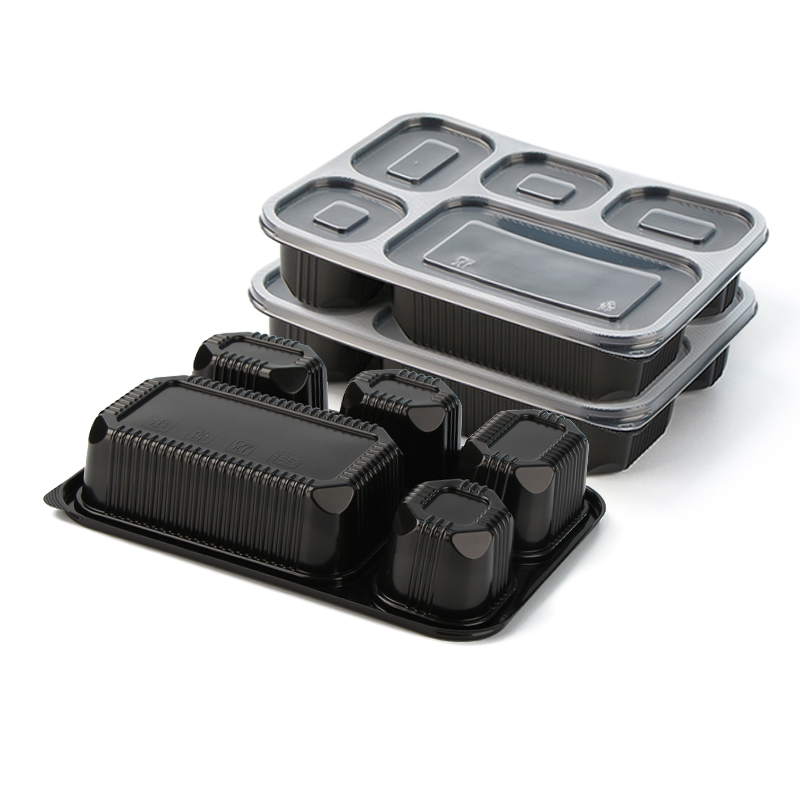
As the food delivery, takeout, and quick-service restaurant (QSR) industries continue to grow globally, choosing the right disposable food container has become a critical decision for foodservice businesses. Safety, durability, cost efficiency, and compliance are no longer optional — they are essential.
Why Choose Yangrui Disposable Food Containers?
SEND MESSAGE