



Can Paper Packaging Replace Plastic Packaging?
author: Iris
2025-11-13
In 2023, the advancement of the EU's draft Packaging and Packaging Waste Regulation (PPWR) sent shockwaves through the global packaging industry. This proposal, published on November 30, 2022, underwent more than two years of discussion and revision before being formally adopted by the European Council on December 16, 2024, becoming the new regulatory framework replacing the 1994 Packaging and Packaging Waste Directive. The PPWR, centered on harmonizing packaging management standards among EU member states, builds new regulations around three main directions: waste reduction, high-quality recycling, and the use of recycled materials. Its stringent requirements and circular orientation for plastic packaging have not only reshaped the European packaging market landscape but also sparked deep reflection globally on the "paper-plastic alternative" debate and the future of sustainable packaging, particularly in areas like recyclable take-out food containers that are increasingly demanded for eco-friendly food service.
Core Requirements and Revision Highlights of the Appropriate PPWR
The PPWR is not simply a continuation of the old directive; rather, it constructs a full life-cycle packaging management system through eight core revisions. Its core objectives have been further refined from the original framework, forming a quantifiable and actionable policy framework. For instance, in the food delivery sector, recyclable take-out food containers must align with these standards to minimize waste.
Quantitative Upgrade of the Three Core Objectives
- Preventing Packaging Waste: Clearly requires packaging volume and weight to be reduced to the minimum necessary for function, prohibits redundant packaging that only increases perceived volume, and sets mandatory reuse targets—40% of transport and sales packaging must be reused by 2030, and 10% for combination packaging, with further increases expected by 2040. Recyclable take-out food containers can play a key role here by being designed for multiple uses in catering.
- Promoting High-Quality Closed-Loop Recycling: Proposes phased recyclability requirements; from January 1, 2030, all packaging must meet recycling design standards, and from January 1, 2035, it must meet large-scale recyclability requirements, ensuring the economy and efficiency of the recycling process. This directly impacts recyclable take-out food containers, pushing for materials that integrate seamlessly into recycling streams.
- Increasing the Use of Recycled Plastics: Sets differentiated recycling component targets for different types of packaging; single-use plastic bottles must have a recycled component ratio of 65% by 2040, and other plastic packaging must also meet corresponding recycled material usage requirements according to their category. Alternatives like recyclable take-out food containers made from paper could complement this by reducing reliance on plastics.

Key Revisions to the Regulations
In addition to the core objectives, the PPWR has introduced several significant provisions. Regarding hazardous substance control, it adds restrictions on perfluoroalkyl and polyfluoroalkyl substances (PFAS) in food contact packaging; products exceeding the threshold will be prohibited from the market, affecting even recyclable take-out food containers if not compliant. Regarding packaging restrictions, starting in 2030, six categories of products will be banned, including single-use plastic group packaging, pre-packaged fresh fruits and vegetables weighing less than 1.5 kg, and single-use condiment packaging in the hotel and catering industry—opening opportunities for recyclable take-out food containers in these sectors. Regarding labeling management, it requires packaging to clearly indicate material composition and recycling ratios; reusable packaging must provide collection point information via QR code; and compostable packaging must clearly indicate its environmental attributes, which is crucial for promoting recyclable take-out food containers. Furthermore, the regulations introduce an Extended Producer Responsibility (EPR) system, requiring manufacturers to bear the costs associated with packaging collection, sorting, and recycling, and to retain a compliance statement for 5-10 years for verification, incentivizing shifts toward recyclable take-out food containers.
Behind these revisions lies a stark environmental reality: globally, plastic packaging accounts for 40% of total plastic waste, but the recycling rate is only 14%, with large amounts of plastic waste entering soil and oceans, causing ecological damage. As a pioneer in environmental policy, the EU achieved a 41% recycling rate for plastic packaging in 2022, an improvement from 39.7% in 2021, but still falling short of the circular economy target. Slovakia, with a 60% recycling rate, became the benchmark within the EU, while the UK's plastic packaging recycling rate reached 52.5% in 2023, demonstrating differentiated regional progress. In contrast, adopting recyclable take-out food containers could boost these rates in food service.
Industry Controversy: Heated Debate on Paper-Plastic Substitution
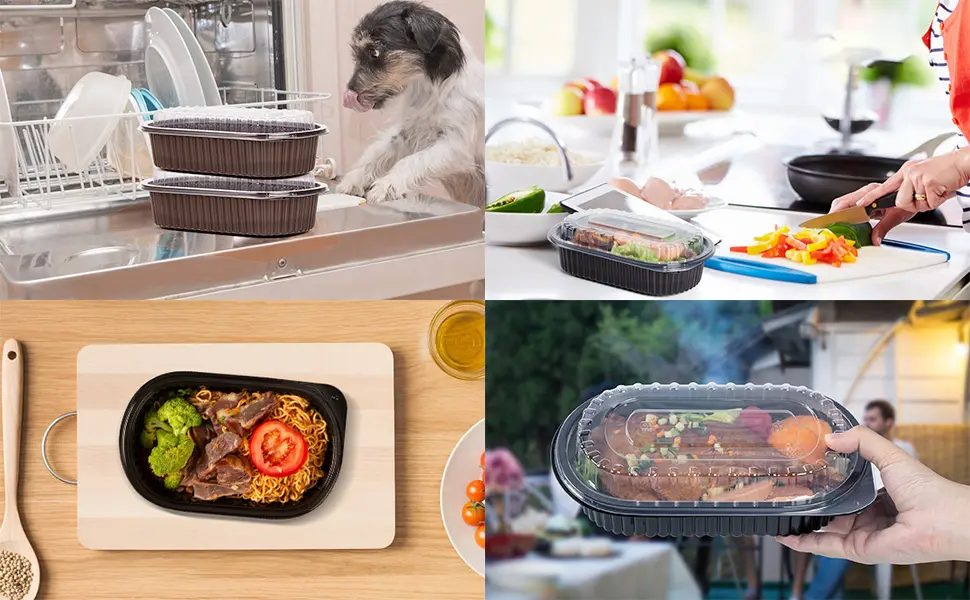
PPWR's decision to promote recycled plastics as a core strategy has sparked intense debate within the industry. Supporters argue that the functional advantages of plastic packaging are irreplaceable, and recycling is the optimal solution at present; opponents insist that priority should be given to promoting higher-recyclable materials, such as paper packaging, to drastically reduce plastic use, especially in everyday items like recyclable take-out food containers.
Core Evidence Supporting Paper Packaging Substitution
The high recycling efficiency of paper packaging is the strongest argument. In the EU, the recycling rate of paper packaging has long been stable at around 90%, far exceeding the 41% of plastic packaging, making it the best-performing category in terms of recycling among all packaging materials. Globally, the average recycling rate of paper packaging exceeds 65%, while China's plastic packaging recycling rate is only 12%. Even for PET beverage bottles, which have relatively good recycling performance, the 8.7% recycling rate of flexible packaging plastics is still significantly lower than that of paper packaging. Paper-based recyclable take-out food containers exemplify this efficiency in practical applications.
The environmental advantages of paper packaging also lie in its degradation performance. Its natural cellulose components can degrade rapidly in the natural environment, unlike plastics, which can persist and cause pollution over a long period. At the same time, paper packaging, like plastic, has the advantage of low density, reducing loading weight and fuel consumption during transportation. Data shows that the energy consumption for transporting 1 ton of paper packaging is 60% lower than that of glass packaging and 40% lower than that of metal packaging, demonstrating a significant carbon reduction effect due to its lightweight advantage—benefits that extend to recyclable take-out food containers for meal delivery.
Market data shows that paper packaging has achieved large-scale application in multiple fields. In 2024, the Chinese sustainable packaging market reached 385 billion yuan, with paper packaging accounting for over 45%, recycled paper usage reaching 65%, and its application in the food and beverage industry reaching 42%, making it the mainstream choice for sustainable packaging, including recyclable take-out food containers. These data have led some industry insiders to believe that PPWR should increase its support for paper packaging rather than focusing on plastic recycling, to avoid squeezing the market space for high-recyclable materials like recyclable take-out food containers.
Justification for a Plastic Recycling-Oriented Approach
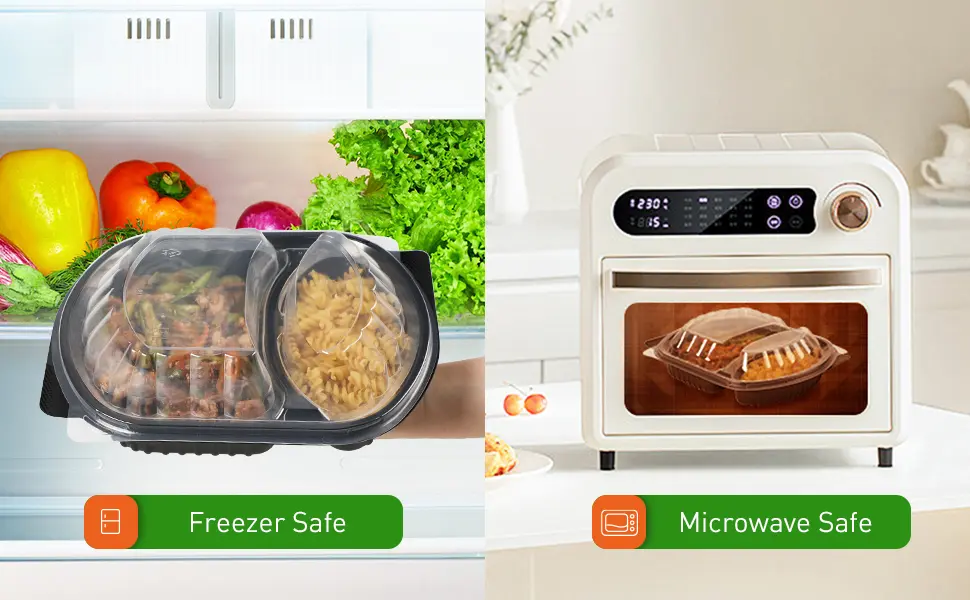
Those supporting the PPWR policy direction emphasize the irreplaceable function and recycling potential of plastic packaging. Plastic packaging possesses excellent barrier properties, mechanical strength, and chemical stability, performing exceptionally well in food preservation—fresh produce packaged in plastic has a loss rate more than 30% lower than that packaged in paper, and the leakage rate for liquid products is only 0.5%, far lower than the 8% of paper packaging. In terms of energy consumption, producing 1 ton of plastic packaging requires approximately 3.2 tons of standard coal, while producing 1 ton of paper packaging requires as much as 8.5 tons of standard coal, and wastewater discharge during paper production is 5-8 times that of plastic production. However, hybrid solutions with recyclable take-out food containers could bridge these gaps.
More importantly, there is enormous room for improvement in the recycling of plastic packaging. A report by the World Economic Forum and the Ellen MacArthur Foundation shows that by optimizing recycling systems and upgrading technology, the global plastic packaging recycling rate could increase from the current 14% to 70%, meaning that most plastic packaging can reduce its environmental impact through recycling. Based on this potential, the European Union has made promoting recycled plastics a core strategy, attempting to build a circular plastic supply chain through policy guidance, rather than simply eliminating it—yet recyclable take-out food containers offer a parallel path.
Limitations of Paper Packaging Substitution
Although paper packaging has environmental advantages, at the current technological level, completely replacing plastic packaging still faces significant bottlenecks. These limitations cannot be resolved in the short term and are a major reason why PPWR has not made paper-plastic substitution a core strategy, even for recyclable take-out food containers.
The Core Shortcoming of Insufficient Barrier Performance
The porous structure of paper packaging makes its air permeability and moisture absorption far higher than that of plastic. This characteristic poses a fatal flaw for perishable foods and sensitive products. Data shows that untreated paper packaging offers only 1/50th the oxygen barrier properties and 1/30th the water vapor barrier properties of plastic packaging. Bread packaged in paper has an average shelf life of 3 days, while plastic packaging can extend it to 7-10 days. For nuts, paper packaging results in a 40% higher rate of oil oxidation compared to plastic packaging, directly impacting product quality. Innovations in recyclable take-out food containers aim to address this with better coatings.
To compensate for this deficiency, the industry commonly employs coating technology or adds barrier layers, but this introduces new environmental problems. Currently, most barrier coatings used in paper packaging are polymer materials, which increase recycling difficulty—when coated paper packaging is recycled and repulped, fiber recovery rates decrease by 20-30%, and the strength and whiteness of recycled paper are significantly reduced. Although biodegradable coating technology made some progress in 2024, with the domestic production rate of PLA (polylactic acid) coatings exceeding 70%, the cost is 50-80% higher than traditional coatings, and the separation difficulty remains unresolved, limiting large-scale application in recyclable take-out food containers.

Disadvantages in Mechanical Performance and Life Cycle Costs
The shortcomings in the mechanical performance of paper packaging are particularly prominent in transportation and usage scenarios. Its tear strength is only 1/10 that of plastic packaging, its compressive strength is only 1/8, and its wet strength is significantly lower. In environments with humidity exceeding 60%, the strength loss of paper packaging can reach over 50%. This results in a breakage rate of up to 12% for paper packaging of liquid products and frozen foods, compared to only 1.8% for plastic packaging. Recyclable take-out food containers must overcome these for wider adoption.
Insufficient mechanical performance directly limits the number of times paper packaging can be reused. Data shows that plastic packaging can be reused an average of 5-8 times, while paper packaging shows significant damage after only 2-3 uses, making it difficult to guarantee packaging functionality. From a life cycle environmental impact perspective, paper packaging needs to be reused at least 6 times to offset the high energy consumption and high emissions in its production process. However, the current actual number of reuses is far from reaching this level, resulting in a reduction in its overall environmental benefits, though recyclable take-out food containers designed for durability could improve this.
Furthermore, the raw materials for paper packaging rely on forest resources. Although the proportion of recycled paper is constantly increasing, virgin pulp still accounts for about 35%. With tightening global forest protection policies and increased volatility in pulp prices, international wood pulp prices rose 15% year-on-year in 2024, further increasing the production cost of paper packaging and making it 30-40% more expensive than ordinary plastic packaging, thus lacking competitiveness in cost-sensitive markets like those using recyclable take-out food containers.
The Future of Sustainable Packaging: Diversified Collaboration Rather Than Single Substitution
PPWR's policy guidance reveals the core development logic of sustainable packaging—abandoning the "either/or" substitution mentality and building a diversified collaborative system based on material characteristics. In 2024, the global sustainable packaging market reached hundreds of billions of US dollars, with the Chinese market reaching 385 billion yuan, a year-on-year increase of 16.2%. It is projected to exceed 800 billion yuan by 2028, with a compound annual growth rate maintained between 18% and 20%. This rapidly growing market is exhibiting a distinct characteristic of diversified material collaborative development, including greater use of recyclable take-out food containers.
What Does "Food-Grade PP" Mean in a Take-Out Food Container?
Global Microwavable Take-Out Food Containers Compliance Risk Analysis Report
Related Article

You searched for 4 oz Chinese take out boxes — but what you actually need may not be a paper box at all. The folded paper container with the wire handle looks iconic, but for 4 oz portions of sauce, dressing,
4 oz Chinese Take Out Boxes Alternative — Clear PP Portion Cups
Looking for plastic to-go containers with lids in bulk? Every container we ship includes a matching lid — not as an optional add-on,
Plastic To-Go Containers with Lids Wholesale | Bulk PP Food Boxes
SEND MESSAGE