



How to Choose the Right Material for Plastic Microwave Takeout Boxes?
author: Iris
2025-08-14
1. Why Do Microwaves Cause Lunch Boxes to Deform?
Different lunch box materials exhibit different heat resistance during microwave heating. If the material itself lacks heat resistance, the box may soften, deform, or even release harmful substances during heating. When purchasing lunch boxes, it's important to understand the principles of microwave heating and the differences between different materials to make the right choice.
Microwave Heating Principles and Heating Changes in Plastics
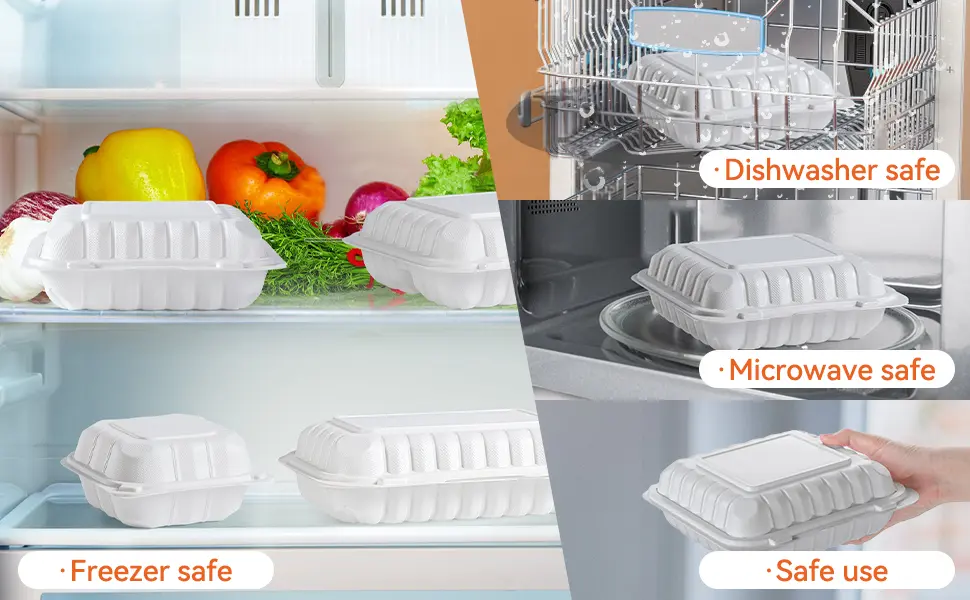
Microwaves generate heat by rapidly vibrating water molecules in food. This process is closely related to the material used for the lunch box. For example, heat-resistant PP reusable Chinese takeout boxes retain their shape after microwave heating, while less heat-resistant PET easily deforms or even melts in high temperatures. Therefore, choosing the right lunch box is crucial. Check the bottom of the box for the microwave mark. Of course, for safety, ask the manufacturer for relevant safety certificates.
Heat Deformation Temperature and Heat Resistance Limit
The heat resistance of plastic lunch boxes is generally determined by the maximum temperature the material can withstand. PP can withstand temperatures up to around 120°C, making it ideal for microwave heating. PET can withstand temperatures around 70°C and will easily deform above this. PS, on the other hand, has a lower heat resistance of around 60°C, so PS containers are not typically used for microwave heating. Reusable Chinese takeout boxes made of PP can be heated repeatedly. When purchasing containers, it's best to check the material label and avoid those with low heat resistance.
Common Mistake: Using Non-Microwave-Safe Containers for Heating
Many people try to save time by simply placing their takeout containers in the microwave. This is dangerous because these containers are not necessarily microwave-safe. Furthermore, transparent beverage cups and disposable plastic salad boxes are not heat-resistant and can release harmful substances at high temperatures. If frequent reheating is required, it's recommended to choose containers labeled "Microwave Safe." They are durable, safe, and can reduce waste from disposable containers.

3. How to Choose a Safe and Environmentally Friendly Microwaveable Takeout Box?
Do not just look at the appearance when choosing lunch boxes, to use the peace of mind, but also to look at the heat resistance and environmental protection. You can choose different materials for different needs.
Look for Products with the “Microwave Safe” Logo
This is the easiest way to judge. As long as the box says “Microwave Safe” or has a heat-resistant logo on it, whether it is a disposable box or a reusable Chinese takeout box, it means that it has been tested to be heat-resistant and safe for the microwave. When buying microwave takeout boxes, it is better to give priority to those with the safety label.
Compostable Takeout Boxes - Heat Resistant and Environmentally Friendly
If you want to microwave and be eco-friendly at the same time, you can consider compostable takeout boxes, such as treated pulp boxes or PLA boxes that can be heated up in a short period of time. However, please note that eco-friendly materials are usually not as heat-resistant as PP, so be careful when heating at high temperatures for a long time.
Long-Term Use - Choose a High-Quality Reusable Chinese Takeout Box
If you need to reheat meals frequently, a high-quality reusable Chinese takeout box is a more cost-effective choice. Reusable Chinese takeout boxes are made of heat-resistant PP, glass, ceramic, and other materials that are not afraid of repeated reheating, and can also reduce the waste of disposable lunch boxes, saving money and environmental protection.
Where to Buy?
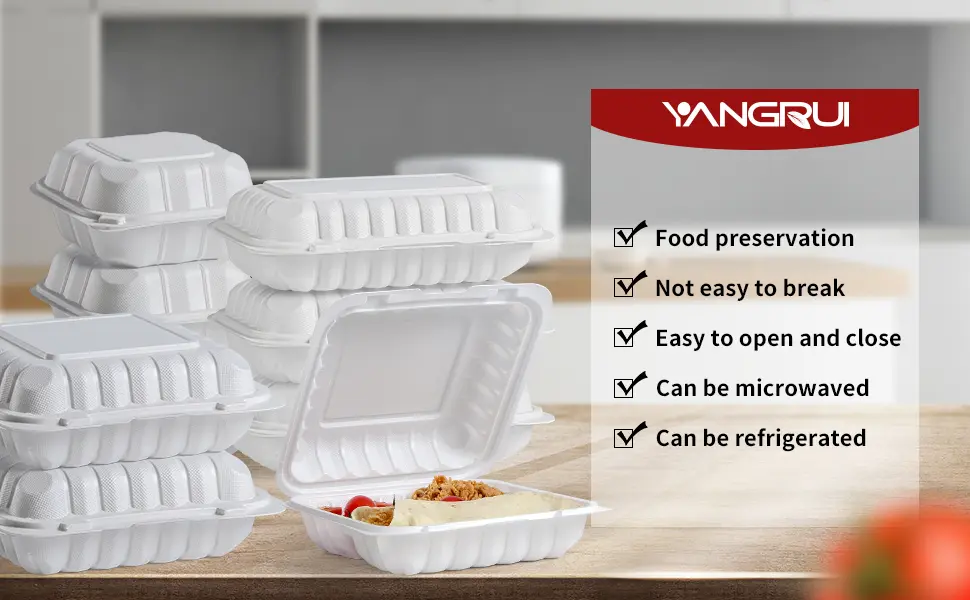
Huizhou Yangrui Printing and Packaging Co., Ltd. has over 11 years of export experience and provides heat-resistant PP and environmentally friendly PLA microwave lunch boxes suitable for restaurants, takeout, and home use.
Contact information:
Phone: +86-159 8949 1653
Email: sales@yrpak.com
Email: sales@yrpak.com
References
- FDA. “Food Contact Substances (FCS) Regulations.”
- LFGB – German Food, Articles of Daily Use and Feed Code.
- Singh, S., & Sharma, A. (2022). Plastics and Microwave Safety: A Review. Journal of Food Packaging Science, 15(4), 120-134.
- European Bioplastics. PLA in Food Packaging Applications.
2. Comparison of the Heat Resistance of Common Takeout Box Materials
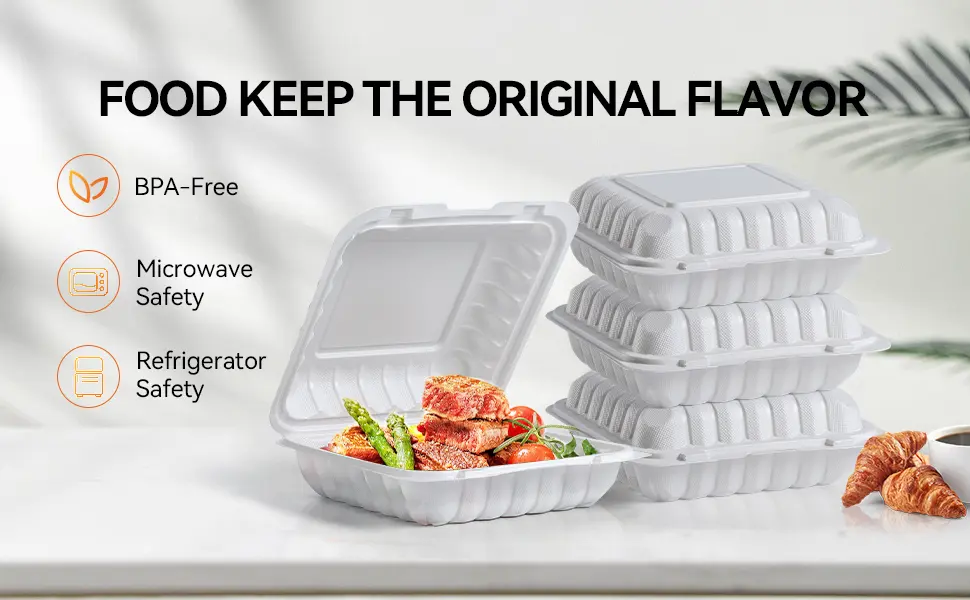
There are quite a few lunch box materials on the market, each with its own advantages and disadvantages. Figure out whether they are heat-resistant or not, and you can avoid heating cartwheels.
PP (Polypropylene) - The First Choice for Microwave Heating Safety
PP is the heat-resistant champion in the microwave lunch box, can withstand up to 120 ℃, is not easily deformed, and also does not easily produce harmful substances. Many good reusable Chinese takeout boxes are made of PP, which can be heated over and over again and is leak-proof. It is very stable in microwave takeout boxes and is the first choice for those who want a safe and durable lunch box.
PET - Highly Transparent but Not Heat Resistant
PET lunch box is transparent and suitable for salads, desserts, and cold meals, and looks very advanced. However, its heat-resistant temperature is only about 70℃, and it is easy to deform in the microwave oven. If you want to use it as a reusable Chinese takeout box, PET is not suitable; it is more suitable for cold food.
PS (Polystyrene) - Brittle, Poor Heat Resistance
PS lunch box is very light and cheap, often used for takeout, but not when it is hot, it will soften and deform at around 60℃, and sometimes it may release harmful substances. So, PS basically can't be used as a microwave takeout box, is more unsuitable for long-term use of a reusable Chinese takeout box, not safe, and not durable.
PLA (Polylactic Acid) - Eco-Friendly but with Limited Heat Resistance
PLA is an eco-friendly material made from corn starch and other plant materials, which is commonly used in compostable takeout boxes. It can decompose under the right conditions and is good for the environment, but the heat-resistant temperature is only 50-60℃, and it is easy to deform when heated for too long. It is suitable for cold food and room temperature food, but not suitable for microwave heating for a long time.
Pulp Molding - Water and Oil-Proof Treatment Is Required Before Heating
Pulp lunch box is made of plant fiber, which can also be degraded, and is a kind of compostable takeout box. However, for microwave heating, it must be treated with waterproof and oilproof treatment, and it is best to heat it only for a short time. It is environmentally friendly, but heat resistance is not as good as PP, daily meals can be, but long-term high-temperature heating is not recommended.
4. Buying Advice and Guide to Avoid Pitfalls
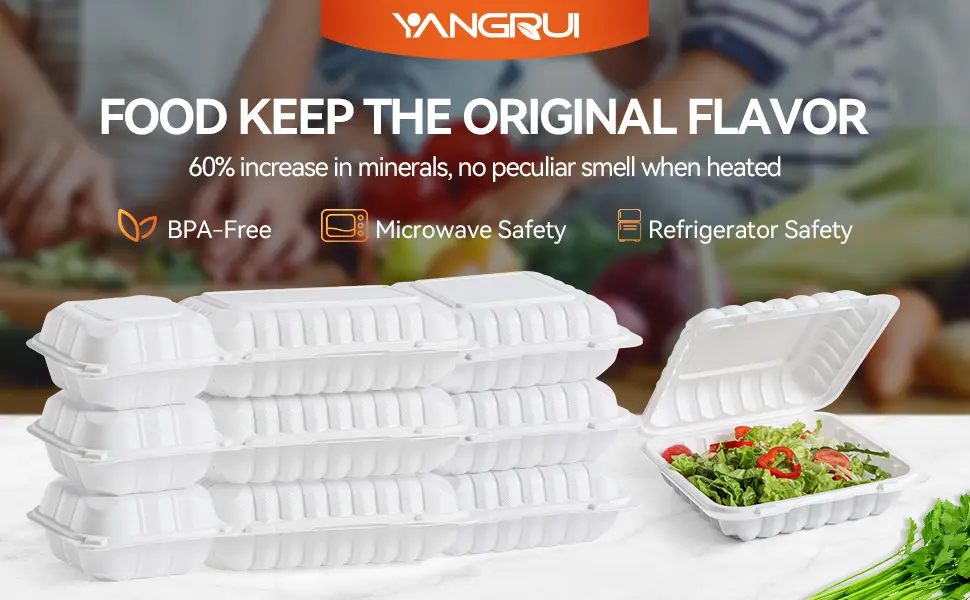
There are actually a lot of small pitfalls in buying lunch boxes, and if you don't pay attention to them, it's easy to buy products that are not heat-resistant or environmentally friendly.
Don't Replace Microwaveable Lunch Boxes with Takeaway Clear Drink Cups
Many people take clear plastic drink cups or salad boxes to heat up, which can easily deform or cause problems. Don't save a little money; these are not microwave takeout boxes, with poor heat resistance and not safe enough.
Avoid Low-Quality Plastic or Unmarked Products
There are a lot of low-priced plastic takeout boxes on the market, but many of them don't have heat-resistant labels or quality certificates. If you buy such a box, it may soften, leak soup, or even produce a bad smell once it is heated in the microwave. Choose a reusable Chinese takeout box with the “Microwave Safe” logo for peace of mind.
Focus on Certification, Material, And Brand Reputation
In addition to material and heat resistance, you should also look at the qualification and reputation of the manufacturer. A certified takeout box is not only safe and durable, but also more environmentally friendly. Don't be greedy to buy low-quality products, which are not safe and may not pay off.
Are Colored Plastic Takeout Containers Destroying Recycling Systems? Experts Call for a Decolorization Campaign
Analysis of 4 Kinds of Processes of Custom Chinese Take-Out Boxes
Related Article

You searched for 4 oz Chinese take out boxes — but what you actually need may not be a paper box at all. The folded paper container with the wire handle looks iconic, but for 4 oz portions of sauce, dressing,
4 oz Chinese Take Out Boxes Alternative — Clear PP Portion Cups
Looking for plastic to-go containers with lids in bulk? Every container we ship includes a matching lid — not as an optional add-on,
Plastic To-Go Containers with Lids Wholesale | Bulk PP Food Boxes
SEND MESSAGE