



Common Problems and Solutions in Mini Takeout Box Printing
author: Iris
2026-01-20
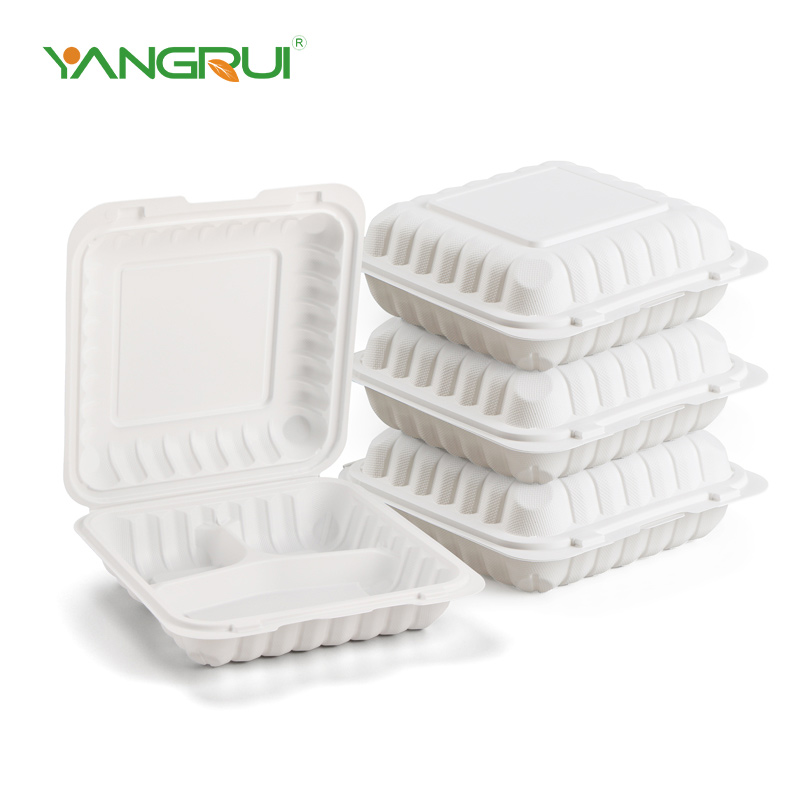
I. Introduction
With the booming development of the food delivery economy and increasing environmental awareness, the plastic food container printing industry faces a dual challenge of technological challenges and market demands. According to industry data, the global packaging printing market is worth US$187 billion, with plastic packaging accounting for 35%; in the Chinese market, food delivery orders account for over 60%, and the quality of food container printing directly impacts food safety, brand image, and consumer experience.
Plastic food container printing technology is complex, requiring resistance to high temperatures, contact with grease, and mechanical friction, while also complying with strict food safety regulations. However, current industry pain points are significant: approximately 65% of foamed plastic printed products experience pattern peeling within 3 months, and the peeling rate in the packaging field reaches 78%, leading to a 22% increase in product rework rate and annual losses exceeding hundreds of millions of yuan for enterprises.
This guide, from technical principles to practical applications, addresses core issues in plastic food container printing, such as ink adhesion, color management, wear resistance, and environmental compliance. Combining advanced domestic and international cases, it provides solutions for food container manufacturers and brands.
II. Basic Technology and Problem Classification of Plastic Food Container Printing
2.1 Material Characteristics and Printability of Plastic Mini Takeout Boxes
The quality of plastic food container printing depends on the physical and chemical properties of the substrate. Mainstream materials include polypropylene (PP), polyethylene terephthalate (PET), and polystyrene (PS). Their surface tension and chemical inertness directly affect ink adhesion.
- PP material: A commonly used food container substrate, with excellent temperature resistance (-20℃ to 120℃) and flexibility. However, its surface tension is only 30-32 mN/m, making it a non-polar polymer material with high chemical stability. Additives such as slip agents and antistatic agents added during synthesis form a barrier layer on the surface, reducing ink adhesion.
- PET material: Surface tension reaches 52-56 mN/m, with good transparency and gloss, and excellent printability. It can be screen printed and UV printed without special treatment. Its high surface polarity makes it far more compatible with ink than PP, enabling vibrant colors and fine patterns.
- PS material: Good rigidity and moldability, but with low surface energy, requiring appropriate pretreatment to achieve ideal printing results.
2.2 Common Printing Process Types and Characteristics
| Process Type | Technical Principle | Advantages | Disadvantages | Applicable Scenarios |
| Gravure Printing | Engraving grooves on the printing plate, transferring the pattern to the plastic film through pressure and ink | Thick ink layer (8-15μm), bright colors, clear patterns, rich layers, high ink transfer rate, suitable for mass production | Higher cost, longer plate-making cycle | High-end food container printing |
| Flexographic Printing | Using elastic relief plates, quantitatively transferring ink through an anilox roller, and completing the transfer by light pressure contact with the substrate | Thin ink layer (3-5μm), flexible drying methods (UV curing or hot air drying), low noise, low cost, and less wear on the plate | Printing quality is slightly inferior to gravure printing | Mid-to-low-end mini takeout boxes, simple pattern printing |
| Screen Printing | Using a screen printing plate and a squeegee to squeeze the ink through the graphic mesh onto the substrate | Thick ink layer, rich colors, strong opacity, can print fluorescent, luminous and other special effect inks, can achieve a three-dimensional effect | High plate-making cost, multi-color printing requires separate plate making, not suitable for high-precision complex images | mini takeout boxes requiring special effects or thick plate printing |
| UV Digital Printing | Using digital equipment to spray UV ink onto the surface of the plastic box, instantly curing with ultraviolet light | No plate making required, "print from one piece," suitable for small batches and personalized customization, resolution of 720dpi or higher, can print complex images | Abrasion resistance under extreme conditions needs improvement | Personalized customization, small-batch production of mini takeout boxes |
2.3 Classification System of Printing Problems
Based on production practice and quality accident analysis, plastic food container printing problems can be summarized into five major categories:
- Adhesion problems: The most common and serious problem, manifested as easy peeling and detachment of the ink layer. Approximately 30% of film printing quality complaints are related to this, which not only affects the appearance but may also cause food safety hazards.
- Color deviation problems: Large differences between printed colors and design drafts, and inconsistent colors between batches. This accounts for a major part of appearance defects in packaging printing and seriously affects the uniformity of brand image. Wear Resistance Issues: Printed patterns are prone to wear and fading during use, especially in areas of stress concentration such as edges and creases, potentially leading to the loss of important information such as expiration dates and usage instructions.
- Environmental Compliance Issues: With increasingly stringent regulations becoming a focus of the industry, standards such as GB 4806.14-2023 impose limits on harmful substances such as heavy metals and aromatic primary amines in inks. Companies must ensure their products comply with food safety and environmental standards.
- Other Process Issues: These include inaccurate registration, poor ink drying, blurry patterns, and dirt spots. While individual problems may have a minor impact, their accumulation can severely reduce the overall quality of the product.

III. Wear Resistance Issues of Printed Patterns and Solutions
3.1 Wear Resistance Testing Standards and Methods
The wear resistance of printed patterns is an important indicator for evaluating the quality of mini takeout boxes. The industry has a comprehensive system of testing standards. ASTM D5264-2020 specifies a standard procedure for evaluation using a friction testing machine. The main testing methods are as follows:
- Dry Friction Test: A dry friction medium (cotton cloth or rubber head) is used to reciprocate on the printed surface under standard pressure (usually 500g load) for 50-100 cycles to evaluate wear resistance in a non-liquid environment.
- Wet Friction Test: The friction head is wetted before testing to simulate a humid environment (such as cleaning or contact with liquids), evaluating wear resistance under the action of water and preventing color migration.
- Scratch Test: A standardized scratching tool (hardness pencil, steel needle, etc.) is used to apply a controllable force to detect the ability of the printed layer to resist mechanical scratching, simulating scratching damage during transportation, storage, and use.
- Taber Abrasion Test: A Taber abrasion tester is used to perform cyclic testing at a speed of 60 rpm. Different abrasives and loads can be selected. The wear rate is calculated by weighing the sample before and after testing to assess wear resistance.
3.2 Comparison of Abrasion Resistance of Different Ink Systems
The abrasion resistance of different ink systems varies significantly, depending on the film formation mechanism and formulation:
- Solvent-based inks: The ink film is formed through solvent evaporation and oxidative polymerization. They have high density and hardness. Inks containing chlorinated vinyl resin form a tough protective coating after curing, offering excellent abrasion resistance, but their poor environmental performance means they are gradually being replaced.
- UV inks: Especially LED-UV inks, achieve deep curing through precise spectral control. The ink film hardness reaches over 3H, with good chemical and weather resistance, and can withstand grease and acidic and alkaline substances, making them suitable for packaging surfaces that are frequently handled.
- Water-based inks: Previously, abrasion resistance was a weakness, but now, through special resin design and the addition of abrasion-resistant agents (forming a waxy protective layer), abrasion resistance has been significantly improved, reducing the coefficient of friction.
- Polyurethane inks: Representing high-end inks, the molecular chains form both hydrogen bonds and chemical bonds with the plastic substrate, providing strong adhesion to difficult-to-bond materials such as PP/PE. They also offer good flexibility and elasticity, preventing cracking when the substrate is bent, making them suitable for mini takeout boxes with flip-top or folded-edge designs.
3.3 Surface Protection Process Technology
To improve the abrasion resistance of printed patterns, the industry has developed various surface protection processes:
- Varnish coating: A transparent varnish is applied to the surface of the printed pattern to form a protective layer, improving abrasion resistance and gloss. Water-based varnishes are environmentally friendly but have weaker abrasion resistance; UV varnishes offer excellent abrasion and chemical resistance but are more expensive. Compatibility with the underlying ink and food safety requirements must be considered when choosing.
- Lamination process: A transparent film (BOPP, PET, CPP, etc.) is laminated onto the printed surface, providing comprehensive protection for the pattern while also improving packaging stiffness and barrier properties. However, this increases costs and affects recycling, so it should be chosen as needed.
- UV-curing varnish: A new development in surface protection technology, where ultraviolet light instantly cures to form a hard, transparent coating. The new generation of UV varnishes forms a three-dimensional network structure through special cross-linking agents, balancing hardness, flexibility, and abrasion resistance. UV varnishes with added nanoparticles can improve abrasion resistance by more than 30%. Special Effects Protection Processes: These include matte, wrinkle, and ice-flower effects, combining both protective and decorative functions. For example, the matte finish provides a non-glossy effect and increases slip resistance; the wrinkle effect creates a three-dimensional texture that disperses external forces and improves scratch resistance.
3.4 Impact of the Usage Environment on Printed Patterns
Plastic reusable Chinese takeout boxes are used in complex environments, posing significant challenges to printed patterns:
- High-temperature environment: When containing hot food (60-80℃) or during microwave heating, the thermal motion of ink molecules intensifies, intermolecular forces weaken, and wear resistance decreases. This can also accelerate the oxidative degradation of the ink, leading to color changes.
- Contact with grease: Edible oils can dissolve some ink components, especially inks containing solvent residues. Contact can cause swelling and migration, resulting in blurred patterns and color fading, posing food safety risks. Therefore, food packaging inks must pass grease resistance tests.
- Mechanical friction: Friction occurs during stacking, transportation, and opening and closing. Wear is more severe in areas of stress concentration such as edges and creases. Studies show that the wear rate at the edges is 3-5 times faster than on flat surfaces.
- Chemical corrosion: Acids, bases, and salts in food (such as foods containing vinegar or high-salt foods) can corrode the ink. Cleaning agents and disinfectants can also damage printed patterns.
3.5 Practical Case Study: A Comprehensive Solution for Improving the Abrasion Resistance of Food Container Printing
Case Study: Leak-Proof and Abrasion-Resistant Food Container Project for a Chain Mala Tang Restaurant Brand
After switching to leak-proof mini takeout boxes, the brand logo on the containers of this chain restaurant brand wore off after only a few uses, affecting the brand image. Analysis revealed that the high temperature (80-90℃), high oil content, and spicy and sour nature of the Mala Tang soup caused multiple types of damage to the printed pattern.
After switching to leak-proof mini takeout boxes, the brand logo on the containers of this chain restaurant brand wore off after only a few uses, affecting the brand image. Analysis revealed that the high temperature (80-90℃), high oil content, and spicy and sour nature of the Mala Tang soup caused multiple types of damage to the printed pattern.
Solution:
- Ink System Upgrade: Replaced ordinary solvent-based ink with a special temperature-resistant and oil-resistant ink. This ink uses polyurethane resin as the main component, with added temperature-resistant additives and anti-migration agents, maintaining stability at 90℃ and resisting grease.
- Surface Protection Process Optimization: Applied UV-curing varnish to the surface of the printed pattern, forming a 5-8 micron protective layer. This layer is resistant to temperatures up to 120℃, has good chemical resistance, and high transparency, without affecting the printing effect.
- Enhanced Substrate Pre-treatment: Plasma treatment was applied to the PP substrate to increase surface activity and roughness, enhancing ink adhesion and creating a mechanical anchoring effect. After treatment, the surface tension reached 42 mN/m.
- Improved Structural Design: The food container structure was redesigned, adding rounded corners and reinforcing ribs to the easily friction-prone edges to reduce direct friction damage to the printed pattern.
- Implementation Results: The new custom Chinese takeout boxes completely solved the leakage problem, and the abrasion resistance of the printed pattern was significantly improved. After soaking in 90℃ chili oil for 2 hours, there was no significant change in the pattern; after 100 friction cycles under a 500g load, the ink detachment rate was less than 5%. Customer complaint rate decreased by 67%, and repurchase rate increased by 23%.

IV. Environmental Compliance Issues and Solutions
4.1 Domestic and International Food Safety Regulations
Global attention to food safety and environmental protection is increasing, and regulations for the plastic food container printing industry are becoming stricter.
- China: GB 4806.14-2023 "National Food Safety Standard for Inks Used in Food Contact Materials and Products" was implemented on September 6, 2024. This is the first mandatory standard specifically for inks used in food contact materials, classifying inks into direct contact and indirect contact types, and implementing differentiated management. Direct contact ink raw materials must be substances that can be directly added to food, while indirect contact inks must use approved food contact materials and additives that comply with GB 9685 requirements. Regarding limits on harmful substances, heavy metals (on a dry weight basis) must meet the following limits: lead ≤10 mg/kg, mercury ≤10 mg/kg, cadmium ≤5 mg/kg, chromium ≤25 mg/kg, and arsenic ≤5 mg/kg; the total migration of aromatic primary amines must be "not detectable" (detection limit 0.01 mg/kg); the total migration of direct contact inks must be ≤10 mg/dm², and the potassium permanganate consumption must be ≤10 mg/kg.
- European Union: Regulation (EU) No 10/2011 sets strict migration limits for plastic materials and articles, with a bisphenol A migration limit of ≤1 μg/kg, and bisphenol A is prohibited in baby bottles.
- United States: The FDA regulates food contact materials through the CFR 21 Part 170-189 series of regulations, requiring all materials in contact with food to undergo safety assessments.
4.2 Environmental Performance Requirements and Testing of Inks
The environmental performance of inks is crucial for safe use, with migration control being the core aspect. They must also meet sensory requirements, and testing methods have been standardized.
- Migration control: Chemical substances in inks (heavy metals, aromatic primary amines, plasticizers, antioxidants, etc.) may migrate into food. Environmentally friendly ink formulations should prioritize low-migration or non-migrating raw materials.
- Sensory requirements: After printing, the ink layer must be free from peeling, stickiness, abnormal odor, and impurities; the immersion liquid in the migration test for direct contact inks must not show abnormal coloration, turbidity, or precipitation.
Detection Methods:
- Heavy metal detection: Atomic absorption spectrometry (AAS) or inductively coupled plasma mass spectrometry (ICP-MS)
- Aromatic primary amine detection: High-performance liquid chromatography (HPLC) or gas chromatography-mass spectrometry (GC-MS)
- Total migration amount detection: The sample is immersed in a simulant under specific conditions to determine the total amount of migrated substances.
- Solvent residue detection: Quantitative analysis by gas chromatography (GC)
4.3 Clean Production Technology and Waste Treatment
Clean production is fundamental to environmental compliance, reducing pollution at the source, and waste treatment must meet regulatory requirements.
- Green transformation of ink systems: Water-based inks use water as the main solvent (≥60%), with low VOCs content; UV inks have almost no VOCs emissions, fast curing, and low energy consumption; water-based UV inks combine the advantages of both, offering both environmental friendliness and high performance.
- Clean production process transformation: Adopting a closed-loop ink circulation system to reduce volatilization and waste; installing a high-efficiency waste gas collection and treatment system to ensure VOCs emissions meet standards; using environmentally friendly cleaning agents; establishing a wastewater treatment system to ensure that production wastewater meets discharge standards.
- Waste treatment: Printing waste (waste ink, waste cleaning agents, waste rags, waste printing plates, etc.) is mostly hazardous waste and needs to be collected, stored, and disposed of separately. A waste management ledger should be established to record information such as the amount generated, treatment method, and destination.
4.4 Environmental Certification System and Compliance Cases
A comprehensive environmental certification system helps enterprises achieve sustainable development. Internationally recognized certifications include FSC (Forest Stewardship Council) certification, EU Ecolabel, China Environmental Labeling Product Certification (Ten-Ring Certification), and UL ECOLOGO certification.
Case Study: A Biodegradable Food Container Project by an Environmental Technology Company
A Suzhou environmental technology company launched a biodegradable paper takeaway food container. The requirement was to achieve clear printing on the biodegradable substrate, ensuring that the ink and substrate are compatible and degrade simultaneously, aligning with the "full-chain environmental protection" concept.
A Suzhou environmental technology company launched a biodegradable paper takeaway food container. The requirement was to achieve clear printing on the biodegradable substrate, ensuring that the ink and substrate are compatible and degrade simultaneously, aligning with the "full-chain environmental protection" concept.
Solution:
- Ink Selection: We use a special water-based printing ink that has passed SGS food contact testing, is free of heavy metals and aromatic primary amines, and contains water-based acrylic resin, pigments, deionized water, and environmentally friendly additives, meeting the requirements of GB 4806.14-2023.
- Process Optimization: The drying process is optimized, using low-temperature drying at 50-60℃ combined with hot air circulation to ensure sufficient ink curing without damaging the substrate; the ink rheological properties are adjusted to achieve uniform transfer on the rough, biodegradable paper surface.
- Degradation Performance Verification: Composting tests show that the printed mini takeout boxes degrade by more than 95% within 90 days under standard composting conditions, meeting the EN 13432 biodegradable packaging standard.
- Full-Chain Traceability: A full-chain traceability system is established from raw materials to finished products, with complete production records and test reports for each batch.
- Implementation Results: The project has achieved technological breakthroughs, providing a replicable environmentally friendly solution for the industry. The product is well-received by the market, especially by young consumers with strong environmental awareness. After large-scale production, the cost is reasonable, achieving a win-win situation for both environmental protection and economic benefits.

V. Summary and Suggestions
Key Findings Summary:
- Adhesion problems can be solved through surface treatment (corona treatment to increase surface tension to 38-42 mN/m), selection of special inks, and process control, achieving an adhesion level of 4B or higher.
- Color consistency requires full-process management; a digital color management system can control batch-to-batch color differences within ΔE 1.0.
- Improving wear resistance requires a combination of ink formulation, surface protection, and structural design; specific technical solutions are needed for high-temperature and grease-prone scenarios.
- Environmental compliance is the industry baseline; regulations such as GB 4806.14-2023 drive companies to establish a full-process quality and safety system.
- New technologies such as digital printing, intelligent detection, and green inks are both solutions to problems and new market opportunities.
Future Outlook:
The plastic food container printing industry is in a critical period of transformation and upgrading, with both environmental pressure and technological opportunities. By adhering to technological innovation, green development, and quality first, the industry will achieve high-quality development – in the future, mini takeout boxes will not only be guardians of food safety but also communicators of brand culture and practitioners of sustainable development. For those in the industry, only through continuous learning and innovative business practices can they establish themselves in the competitive market, collectively providing consumers with safe, environmentally friendly, and aesthetically pleasing products, and contributing to green development.
Analysis of the Advantages and Disadvantages of White Chinese Take out Containers Bulk
Sugarcane Pulp Food Containers Vs. Chinese Take out Containers Plastic
Related Article

You searched for 4 oz Chinese take out boxes — but what you actually need may not be a paper box at all. The folded paper container with the wire handle looks iconic, but for 4 oz portions of sauce, dressing,
4 oz Chinese Take Out Boxes Alternative — Clear PP Portion Cups
Looking for plastic to-go containers with lids in bulk? Every container we ship includes a matching lid — not as an optional add-on,
Plastic To-Go Containers with Lids Wholesale | Bulk PP Food Boxes
SEND MESSAGE