



Degradable vs. Recyclable Take-Out Boxes: An Eco-Friendly Alternative to Plastic Chinese Take-Out Boxes
author: Iris
2025-09-15
1. The Current Situation and Challenges of Traditional Plastic Take-Out Boxes
Traditional plastic Chinese take-out boxes offer the advantages of low cost and high durability, but they inevitably impose a certain burden on the environment. Under the influence of environmental regulations, many companies are seeking alternatives.
The Widespread Use of Plastic Chinese Take-Out Boxes
Traditional lunch boxes have long been a standard feature in the takeout and fast food industries. Their oil-resistant and shatter-resistant properties meet the demands of transportation and frequent use. With mature technology and a relatively affordable price tag, they are well-suited to various catering businesses and are ubiquitous in daily life. However, with the global advancement of green environmental protection, dual pressures from both the market and society have also emerged.
The Long-Term Impact of Plastic on the Environment
Although plastic is highly practical, it is not environmentally friendly. Most plastics take hundreds of years to fully decompose and are highly likely to cause soil pollution, increasing the environmental burden. Furthermore, if plastic microparticles enter the human body, they can pose health risks. In the long term, plastic degradation and environmental issues have become a serious issue. Given this situation, the development of biodegradable and recyclable lunch boxes is inevitable.
Policy Restrictions on Plastic Lunch Boxes
To reduce the continued pollution of plastic on the earth, many countries have introduced plastic bans or restrictions. Some countries have also mandated that the takeout industry gradually reduce the use of plastic Chinese take-out boxes. European and American markets are even stricter. For catering companies, the need for environmentally friendly lunch boxes is inevitable, and they need to find alternatives as soon as possible.

3. The Sustainable Value of Recycled Take-out Boxes
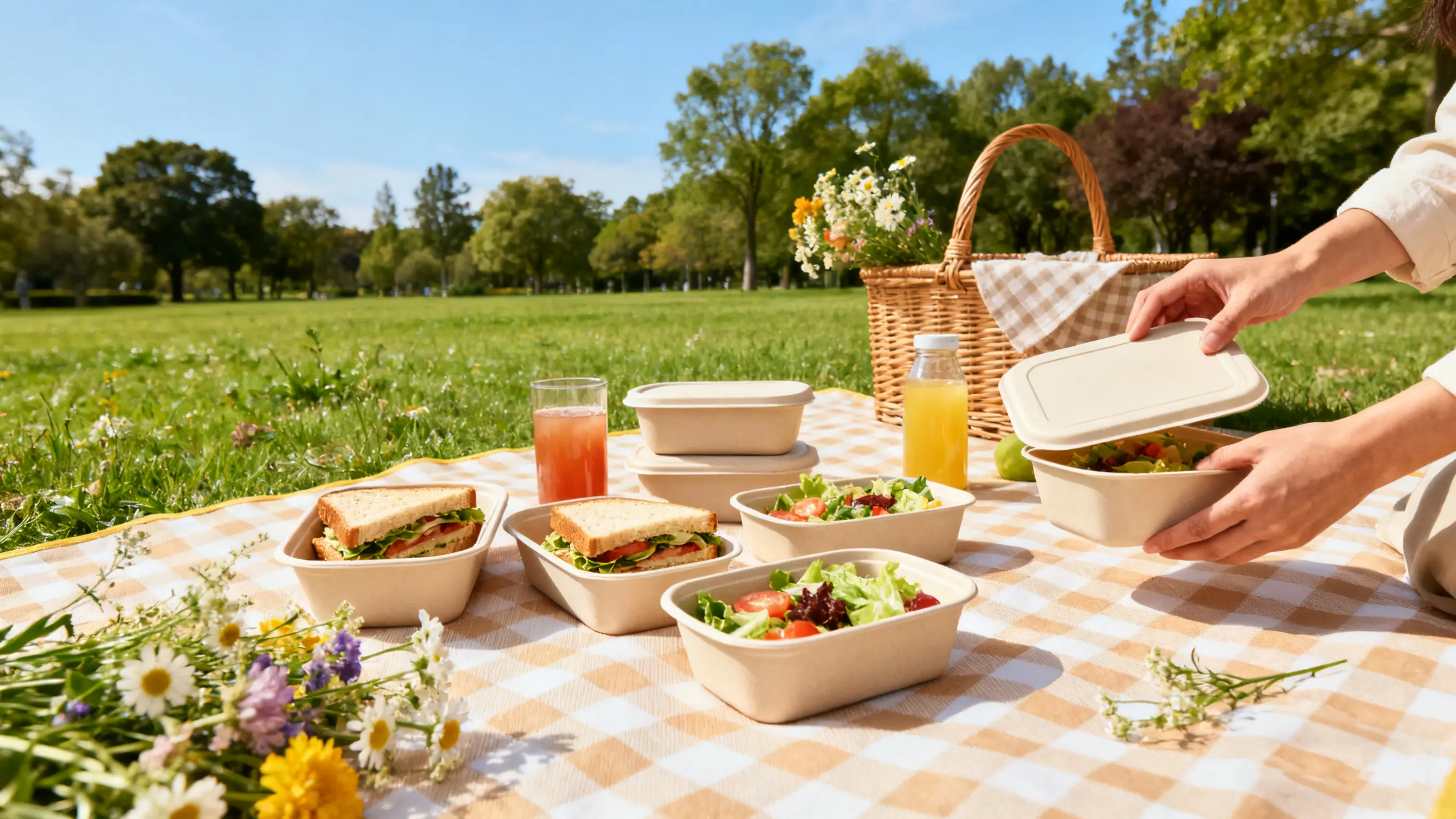
Compared to the previous type of take-out boxes, recycled take-out boxes strike a balance between cost-effectiveness and environmental performance. Their recyclability makes them a popular choice in the market.
Classification and Characteristics of Recyclable Materials
Common recycled take-out box materials include PET and PP. These are recyclable and can be recycled into new products through recycling systems, typically into rPET. These two types are common in everyday life. For example, transparent supermarket boxes for fruit, salads, and cold food are typically made of PET, due to their excellent transparency; while those for hot food and soup are made of PP, due to its greater heat resistance.
Market Advantages of Recycled Take-out Boxes
Their market advantages are more pronounced. First, their cost is close to that of traditional plastics, helping companies reduce the financial burden of transitioning to an environmentally friendly approach. Second, as recycling systems continue to improve in various countries, the recycling rate of recycled plastics is also increasing, effectively achieving resource regeneration. By using this technology, catering businesses can enhance their brand value and align with consumer trends toward green consumption.
Limitations
As the saying goes, no one is perfect. Just like reusable lunch boxes, while they offer certain economic and sustainable advantages, they currently have some limitations. For example, recycling requires consumers to sort their waste. If this sorting system is incomplete, a large number of lunch boxes will still end up in landfills or incineration, making them no different from traditional plastic lunch boxes. Furthermore, some cities lack comprehensive recycling processes, and recycling capacity varies widely. Therefore, when choosing suitable lunch boxes, businesses need to conduct a comprehensive assessment based on the local recycling environment before making a final decision.


Where to Buy?
Yangrui widely uses biodegradable and recyclable materials in its production to ensure that its products are both environmentally friendly and practical. Strictly adhering to international food-grade standards, all lunch boxes are ISO and FDA certified, ensuring they remain safe and reliable in both high-temperature and cold-chain environments, providing businesses with a diverse range of environmental solutions.
Contact Information:
Phone: +86-159 8949 1653
Email: sales@yrpak.com
Email: sales@yrpak.com
References
- European Bioplastics. (2024). Bioplastics Market Data.
- United Nations Environment Programme (UNEP). (2023). Single-Use Plastics: A Roadmap for Sustainability.
- PlasticsEurope. (2024). Recycling and Recovery of Plastics in Europe.
- Food and Drug Administration (FDA). (2023). Food Contact Materials Regulations.
- Ellen MacArthur Foundation. (2024). The New Plastics Economy: Rethinking the Future of Plastics.
2. Advantages and Limitations of Biodegradable Take-Out Boxes
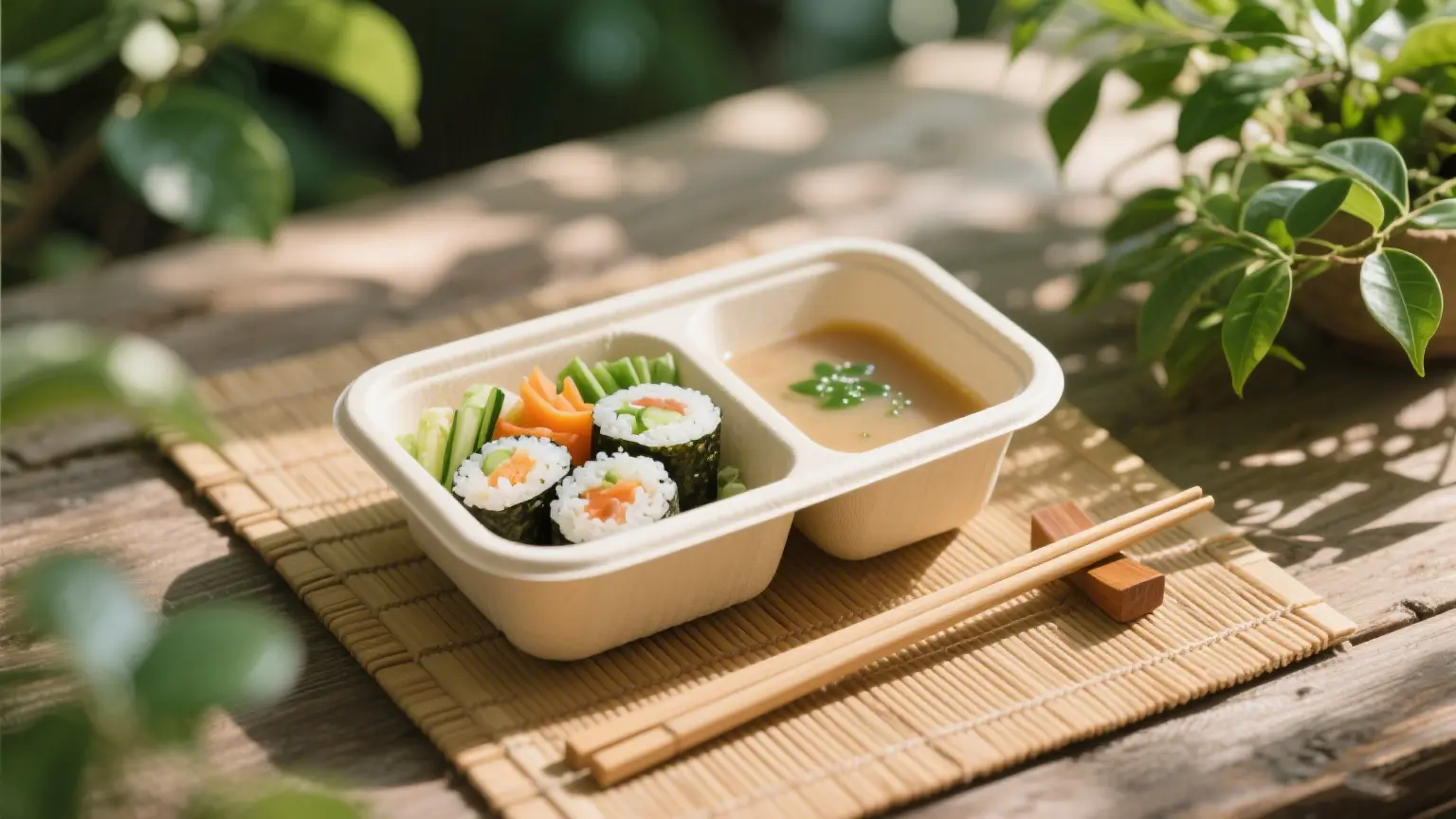
The natural decomposition ability of biodegradable take-out boxes makes them a viable, environmentally friendly alternative; however, their application also has certain limitations.
Degradable Principles and Common Materials
Biodegradable take-out boxes are typically made of materials such as PLA, pulp molding, and starch-based materials. These materials are decomposed by microorganisms in compost or in a suitable environment, ultimately converting into carbon dioxide and water. Compared to traditional plastics, the degradation cycle is reduced from hundreds of years to about one or two years, effectively reducing the impact on the environment. Of course, different materials have different degradation conditions. For example, PLA requires an industrial composting environment, while pulp can degrade naturally.
Environmental Advantages of Biodegradable Take-Out Boxes
They decompose quickly, preventing long-term accumulation from polluting soil and water sources. Furthermore, most of their raw materials are derived from renewable resources, reducing reliance on petrochemicals. For companies that prioritize environmental protection and brand image, using biodegradable take-out boxes can adapt to the market trend of environmental protection, promote a green image, and enhance consumer appeal.
Application Challenges
While environmental advantages are obvious, practical disadvantages are also evident. First, there's the cost issue. These lunch boxes are generally expensive, making them unsuitable for small and medium-sized businesses. Second, their application scenarios are limited. They can't store soup-heavy foods for long periods of time, and they can't be stored in high-temperature environments. Performance issues remain a challenge that needs to be addressed. Finally, not all regions have well-equipped composting facilities, making full degradation difficult.

4. How to Strike a Balance Between Environmental Protection and Cost?
Not all businesses are suitable for recycled or biodegradable take-out boxes. Finding the right lunch boxes for your brand requires a balance between environmental protection and cost.
Catering Business Selection Logic
For businesses seeking high volume and low costs, recycled take-out boxes are more suitable. For businesses prioritizing brand image and green values, biodegradable take-out boxes are more suitable. This also reflects the different target markets of different businesses, leading to different choices.
Cost, Supply Chain, and Brand Image Considerations
As mentioned earlier, price alone shouldn't be the sole consideration, but cost is always a core consideration for businesses. The former has manageable costs, making it suitable for daily, high-frequency use. While the latter, while more expensive, offers a corresponding value from brand recognition. Choosing the right supplier is also crucial. Only a stable supply chain can ensure stable, long-term business operations. Furthermore, in demonstrating environmental value, the use of eco-friendly packaging, in addition to the material itself, can also be a marketing highlight.
Replacing and Transitioning Plastic Chinese Take-Out Boxes
In the process of transitioning to an environmentally friendly approach, there's no need to completely replace plastic Chinese take-out boxes all at once. A gradual approach can be adopted. Introducing green lunch boxes in specific scenarios or within select stores can mitigate cost pressures and increase consumer acceptance of environmentally friendly packaging. A gradual, full-scale replacement can then be implemented.

Multi-Compartment vs. Single-Compartment: A Comprehensive Analysis of Hinged Take-Out Containers and Dine-In Takeout
What Are the Unique Properties of PS, PET, And PLA Takeout Food Boxes?
Related Article

You searched for 4 oz Chinese take out boxes — but what you actually need may not be a paper box at all. The folded paper container with the wire handle looks iconic, but for 4 oz portions of sauce, dressing,
4 oz Chinese Take Out Boxes Alternative — Clear PP Portion Cups
Looking for plastic to-go containers with lids in bulk? Every container we ship includes a matching lid — not as an optional add-on,
Plastic To-Go Containers with Lids Wholesale | Bulk PP Food Boxes
SEND MESSAGE