



2026 Coffee and Milk Tea Shop Selection Guide: PLA vs. rPET vs. Tea Paper Cups
author: Iris
2026-01-12
I. In-depth Analysis of the Environmental Performance of Three Environmentally Friendly Materials
1.1 PLA (Polylactic Acid)
PLA is made from plant-based raw materials through a process of "sugar fermentation to produce lactic acid - purification of lactide - polymerization." Under specific conditions, it can degrade into water and carbon dioxide. Technological breakthroughs have highlighted its advantages: continuous enzymatic catalytic polymerization technology reduces energy consumption by 60%, and purification reaches 99.9%; stereocomplex PLA (SC-PLA) has a melting point exceeding 210°C (standard PLA is 170°C), and can withstand high-temperature processing at 130°C.
However, PLA has limitations: it requires industrial composting environments for efficient degradation, and degrades slowly in natural environments; it relies on grain raw materials such as corn, posing a risk of "competing with food production"; and the supply chain is unstable – domestic production only meets 35% of demand, 60% of lactide relies on imports, and prices fluctuate by ±25%. In terms of carbon emissions, PLA-coated tea paper cups have a carbon emission intensity of 0.89-0.94 kg CO₂e/1000 cups, which is approximately 50% lower than traditional PE-coated paper cold drink cups (1.75-1.82 kg CO₂e/1000 cups) (data from the China Paper Association & Tsinghua University).
1.2 rPET (Recycled Polyethylene Terephthalate)
rPET is produced by recycling waste PET bottles, offering significant environmental benefits: 50-70% less energy consumption and 60% less carbon emissions compared to traditional PET production. Each ton saves 7.4 barrels of crude oil and reduces 5.5 tons of carbon emissions, while also reducing reliance on petroleum and plastic pollution.
In terms of performance, rPET treated with chemical recycling technology can reach virgin-grade standards. Some products have three times the abrasion resistance of ordinary fabrics, can withstand high temperatures of 130℃, and are antibacterial. In 2024, rPET packaging accounted for 30% of PET packaging in China, saving 2.5 barrels of oil per ton. However, its promotion is limited by the recycling system – domestic plastic recycling and sorting are crude, and the recycling rate is low. Furthermore, the raw materials affect color purity, making it difficult to meet high aesthetic requirements.
1.3 Tea Paper Cups
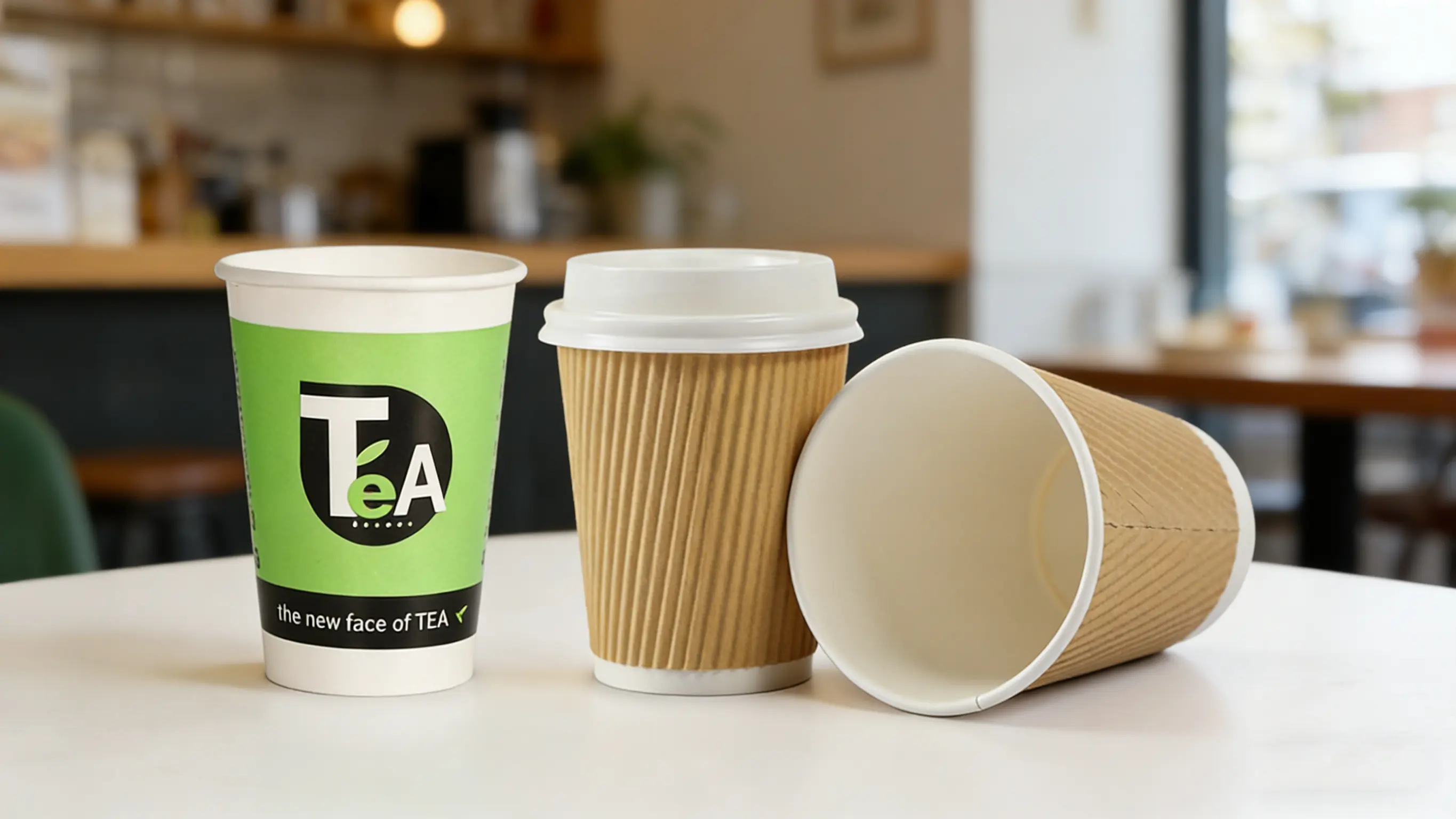
Tea paper cups achieve environmental upgrades through technological innovation: water-based coated paper cold drink cups have a life cycle carbon emission of 21.92 kg CO₂e/1000 cups, a 11.5% reduction compared to PE-coated tea paper cups (24.77 kg CO₂e), and are 100% recyclable and repulpable, solving the traditional lamination separation problem.
On the raw material side, non-wood fibers such as bagasse and bamboo pulp replace wood pulp, reducing the carbon footprint of tea paper cups by 31.2%; fluorine-free coating technology eliminates PFAS pollution, aligning with international standards. In addition, tea paper cups can naturally decompose within 3 months (500 times faster than plastic cups), and every 100,000 cups can reduce 1 ton of plastic waste (equivalent to planting 50 trees). However, waterproof performance depends on the coating, so careful selection of coating materials is necessary.
II. An Overview of Environmental Policies in the Coffee and Milk Tea Industry in 2026
2.1 Mandatory Requirements at the National Level
The 2026 plastic restriction policy will be fully implemented: Non-degradable plastic cups will be banned for dine-in services in all cities at or above the prefecture level nationwide, with simultaneous plastic restrictions in farmers' markets, hotels, and express delivery outlets; starting in 2025, a 0.1 yuan environmental tax will be levied on disposable cups (cost rising to 2 yuan), and the consumption tax is planned to include plastic packaging within its scope.
The "dual carbon" goals impose further constraints: The "14th Five-Year Plan for Circular Economy Development" requires the packaging industry to reach peak carbon emissions before 2030 and achieve carbon neutrality before 2060. Companies need to consider the carbon emissions throughout the entire life cycle of materials.
2.2 Differentiated Implementation by Local Governments
Local policies vary significantly: Hainan launched a three-month special action to ban plastics, making PLA the only compliant plastic material; Shanghai banned disposable plastic tableware/cups, with a maximum fine of 100,000 yuan for violations, and also introduced "10 measures for plastic reduction" to regulate takeaway packaging; Guangdong included a 30% reduction in takeaway packaging in its performance assessment, while simultaneously increasing the use of tape-free cardboard boxes for express delivery. Cross-regional brands need to develop regionalized packaging strategies.
2.3 Compliance Pressure from the International Market
The EU Packaging and Packaging Waste Regulation (PPWR) has become an export barrier: Lightweight plastic bags will be banned in 2030, requiring packaging to be labeled with ingredients and reusability (with QR codes), and more than 90% must be recyclable; food contact packaging is prohibited from exceeding threshold levels of PFAS, and the total concentration of lead, cadmium, mercury, and hexavalent chromium must be ≤100 mg/kg.
China is promoting mutual recognition of international standards and plans to align with the EU OK Biodegradable and US BPI standards before 2026 to assist companies in exporting.
III. The Real Dilemmas and Considerations for Coffee and Milk Tea Shops
3.1 Economic Considerations Under Cost Pressure
There are significant price differences among the three materials: ordinary plastic cups cost 0.2-0.5 yuan/piece, tea paper cups cost 0.3-0.6 yuan/piece, and PLA cups are twice the price of PP cups (0.38 yuan vs. 0.19 yuan). Taking Mixue Ice Cream & Tea as an example, the cost of a single cup of packaging is 0.32 yuan (cup 0.18 yuan + straw 0.08 yuan + bag 0.06 yuan), and switching entirely to PLA would double the cost.
However, in the long run, environmentally friendly packaging offers hidden benefits: Seven Fresh Coffee's bulk purchase of corn starch cup lids reduced the cost difference from 0.2 yuan to 0.05 yuan per unit; environmentally friendly packaging attracts female users aged 25-35, increasing the average transaction value by 15%; and it can save 15% in packaging costs over three years (including waste disposal and reduced fines), while technological advancements are also driving down material prices.
3.2 Challenges of Supply Chain Stability
The PLA supply chain faces the highest risks: there is a large domestic production gap and reliance on imports, leading to price fluctuations of ±25%; the rPET and paper cup supply chains are more stable – the PET recycling system is well-established, and there is sufficient domestic supply of paper pulp for packaging paper cups, which can also be reduced in cost through recycled pulp.
Company strategies include: Fuling Group setting up factories in the US, Mexico, and Indonesia to avoid tariffs; and signing long-term agreements with suppliers to secure supply.
3.3 Differentiation in Consumer Acceptance
Consumer preferences vary significantly: 91% prefer PLA cups (due to better feel), and in the high-end market, the acceptance rate for PLA cup lids + sugarcane pulp tea paper cups is 93.7% (national average 82.5%). However, there is a gap between perception and behavior: 68% are willing to pay a 15-20% premium for environmentally friendly tea paper cups, but actual purchases still depend on price; and only 45.7% can accurately list more than two types of environmentally friendly materials.
Companies can improve consumer awareness and trust by printing environmental labels on the cups and adding QR codes at the bottom of the cups (for tracing environmental information).
3.4 Impact on Brand Image and ESG Rating
In ESG ratings, "packaging materials and waste" account for 16.1% of the weight, and companies implementing ESG have 20% higher trust and loyalty than those that do not. Leading brands have already taken action: Heytea uses PLA straws to reduce carbon emissions by 40% (cost increase of 5-8%); Nayuki uses PLA straws entirely; and Mixue plans to invest in 130,000 tons of sustainable packaging in 2024.
However, ESG requires comprehensive efforts; for example, although Nayuki has issued an ESG report, its Wind rating is only BB (social dimension 4.22/10 points). Companies need to establish carbon footprint accounting systems, issue sustainability reports, and enhance credibility through FSC and GRS certifications.

IV. Differentiated Selection Strategies Based on Different Scenarios
4.1 Scalable Path for Chain Brands
Chain brands break through with scale advantages: Starbucks Europe launched mineral-based coated hot cups (home compostable + recyclable), controlling costs through bulk purchasing; Heytea introduced paper straws in 2019, simultaneously recycling plastic, leading the industry transformation.
Material selection adopts a "dual-track system": PLA is used in first-tier cities, while rPET/tea paper cups are selected based on policies in second- and third-tier cities; central factories handle unified procurement to ensure quality and cost control.
4.2 Flexible Response for Independent Small Shops
Independent small shops are advised to adopt a "hybrid strategy": use water cups/ceramic cups for dine-in (enhancing the experience), and select PLA/packaging paper cups for takeout based on customer needs; promote "bring-your-own-cup discounts" (Shanghai has the most such stores nationwide), and cooperate with local environmental organizations for packaging recycling.
In terms of procurement, they can form alliances with surrounding stores to negotiate prices and prioritize local suppliers to reduce costs.
4.3 Brand Strategy for High-End Positioning
High-end brands differentiate themselves through environmentally friendly plastics: using bio-based PLA antenna materials from Jiangnan University (reducing label degradation time from 400 years to 6 months); packaging tells an environmental story (such as FSC wood, ocean-recycled plastic); optimizing packaging texture (exquisite design, reusable cup sleeves), allowing consumers to accept the premium price.
4.4 Cost Balancing in the Mass Market
Mass-market brands can gradually transform: first replace straws and cup lids, then expand to cups; reduce costs through technologies such as water-based coated tea paper cups, and optimize design to reduce material usage; differentiate material selection regionally (e.g., PLA in Hainan, rPET in other regions); leverage economies of scale and customized solutions with suppliers to balance environmental protection and costs.

V. Summary
In the environmental transformation of the coffee and tea industry by 2026, PLA (environmentally friendly but high cost), rPET (good recyclability and stable), and tea paper cups (high cost-effectiveness) have no absolute optimal solution. Companies need to dynamically weigh policies, costs, and the market. In the future, technological cost reduction, stricter policies, and the rise of the circular economy will reshape the industry, and those who plan ahead will become leaders. Environmental protection is not a cost, but an investment in the future – under the dual carbon goals and consumption upgrades, green packaging will become a core competitive advantage for enterprises.
Payment Methods & Trade Terms: TT 30% Advance Payment vs. PayPal vs. Alibaba Trade Assurance
Tea Party Paper Cups vs. PLA Transparent Cups vs. PP Plastic Cups
Related Article

You searched for 4 oz Chinese take out boxes — but what you actually need may not be a paper box at all. The folded paper container with the wire handle looks iconic, but for 4 oz portions of sauce, dressing,
4 oz Chinese Take Out Boxes Alternative — Clear PP Portion Cups
Looking for plastic to-go containers with lids in bulk? Every container we ship includes a matching lid — not as an optional add-on,
Plastic To-Go Containers with Lids Wholesale | Bulk PP Food Boxes
SEND MESSAGE