



Plastic and Paper Cup Usage Guide
author: Iris
2026-01-16
I. Detailed Usage Scenarios for Plastic and Paper Cups
1.1 Home Usage Guide
In home settings, the suitability of plastic and bulk paper coffee cups depends on specific needs. For daily drinking, PP plastic cups are durable (can withstand 120°C high temperatures) and suitable for hot water, tea, or coffee, especially for families with children; paper cups are more suitable for temporary occasions, such as entertaining guests at home, reducing the amount of cleaning required.
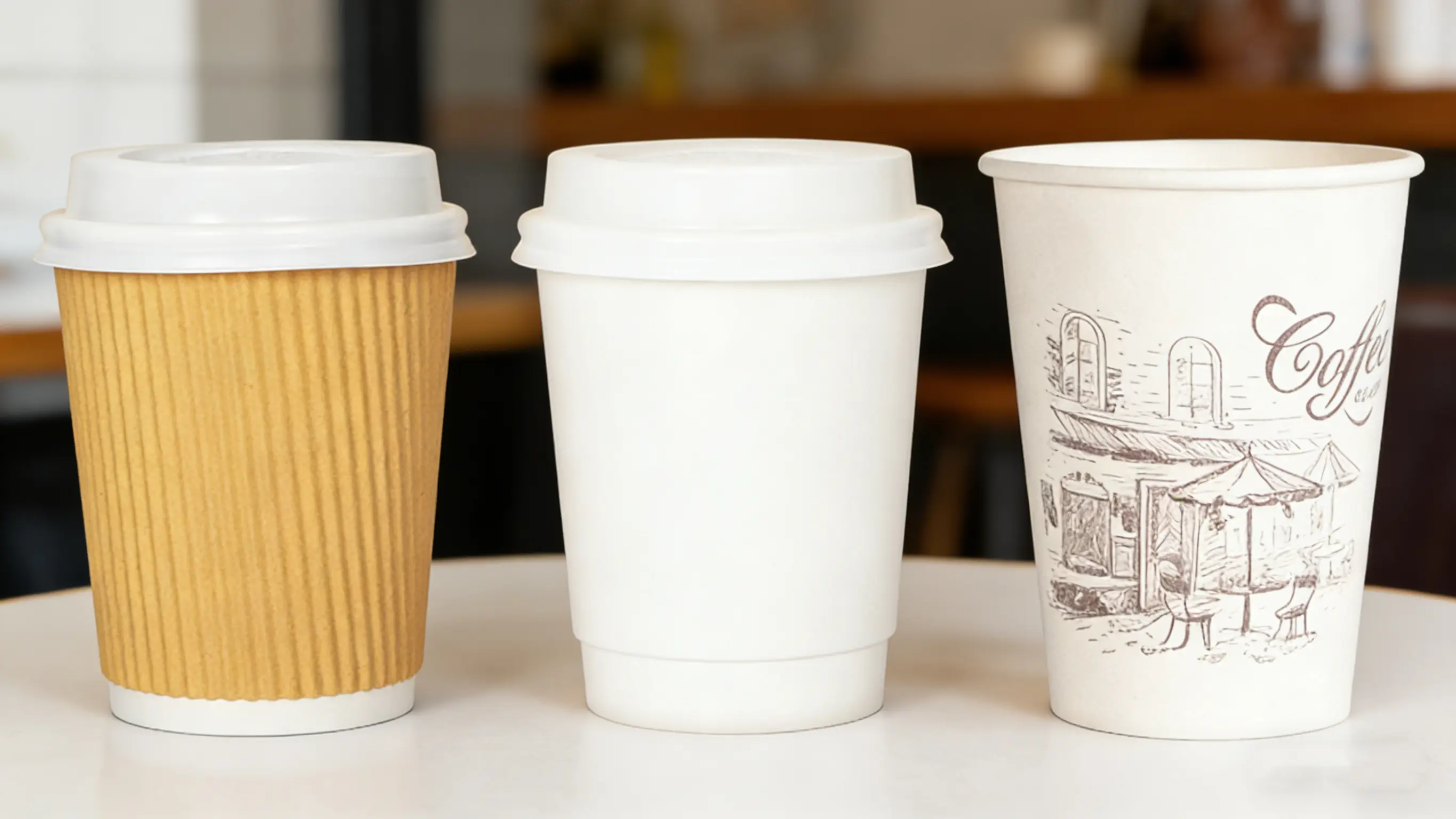
For home gatherings, double-layered paper cups are recommended for hot tea and coffee, providing insulation and a more upscale feel; plastic cups are suitable for cold drinks, being economical and less prone to deformation; for children's parties, thickened cartoon paper cups are preferred, with soft edges for added safety. In terms of storage, plastic cups offer better sealing and durability, suitable for long-term storage of homemade beverages and condiments; paper tea cups are only suitable for immediate consumption and not for long-term storage.
For children's use, safety is paramount. FDA-certified #5 PP cups (BPA-free, high-temperature resistant, and odorless) are recommended, paired with food-grade silicone straws. A capacity of 300-400ml is ideal, offering leak-proof, spill-proof, and high-temperature sterilization capabilities. For environmental protection, families should prioritize unlined, natural-colored paper cups, which can be shredded and used as compost after use. It's also recommended to keep reusable containers such as glass and ceramic cups on hand to reduce the consumption of disposable cups.
1.2 Office Usage Guide
Office settings require a balance of practicality, hygiene, and cost-effectiveness for cups. For daily drinking, reusable mugs are recommended for personal coffee consumption, being environmentally friendly and professional; thin plastic cups are sufficient for use with water dispensers, keeping costs low. In terms of material selection, 300ml spill-proof cups are recommended for office use, while 800ml large-capacity water bottles are suitable for home use.
For meeting receptions, paper cups with lids are suitable for temporary use, ensuring hygiene; for important meetings, plain, thickened paper cups are recommended to enhance professionalism. In the coffee and tea beverage scene, coffee chain brands require bulk paper coffee cups that are heat-resistant (120℃) and leak-proof, with an average monthly usage exceeding 50,000 cups per store; the milk tea industry solves the problem of hot drinks scalding hands through 0.3mm thickened cup walls and a double-layer insulation structure, serving over 2,000 stores of leading brands.
In terms of hygiene and cost control, bulk paper coffee cups are "use and discard," avoiding the hygiene risks of multiple people sharing cups and reducing cleaning blind spots on office desks; in terms of procurement costs, ordinary paper cups cost 0.1-0.5 yuan/piece, and bulk purchases are even cheaper. There is no need to invest in cleaning and disinfection equipment, and there is no need to worry about damage or loss, significantly reducing operating costs.
1.3 Usage Guide for Food and Beverage Service Scenarios
The food and beverage service industry has highly specialized needs for cups, with different types suitable for different business models. In the fast-food chain sector, bulk paper coffee cups are the first choice due to their convenience and cost advantages. For example, a well-known soy milk brand customized 250ml soy milk cups, reducing the breakage rate from 3% to 0.5% through a thickened cup bottom design, saving over 2 million yuan annually.
The coffee and tea beverage industry has higher requirements for cup performance: coffee takeaway paper cups need to be heat-resistant (120℃) and leak-proof; milk tea cups use 0.3mm thickened cup walls and a double-layer insulation structure to solve the problem of hot drinks scalding hands. In hotel and catering scenarios, a large number of bulk paper coffee cups are needed for serving coffee, tea, and juice at breakfast, reducing the workload of cleaning; at the same time, cups are matched according to the type of catering, such as glass cups in Western restaurants, ceramic cups in Chinese restaurants, and disposable cups in buffets.
In takeaway service scenarios, cups need to be both airtight and insulated. Plastic cups with sealing lids offer the best leak-proof effect and are suitable for takeaway packaging. In terms of cost-effectiveness, a box of standard No. 3 paper bowls costs about 35 yuan (450 pieces), with a single cost of less than 8 cents; a customized box of No. 3 paper bowls costs 43 yuan, with a single cost of less than 9 cents, making bulk customization more economical.
1.4 Usage Guide for Outdoor Activity Scenarios
The core needs for cups in outdoor activities are portability, durability, and suitability for the environment. For picnics and camping, outdoor barbecues are best suited for plastic cups with leak-proof lids, which are spill-proof and easy to carry; biodegradable corn fiber cups are a good choice for camping, offering an environmentally friendly option. Bulk paper coffee cups are suitable for picnics, camping, outdoor music festivals, and other scenarios, as they can be discarded after use, eliminating the need for cleaning.
For sports activities, professionally designed cups are needed. Plastic cups with grip grooves are more slip-resistant. It is recommended to choose large capacity cups of 600ml or more with a lanyard/clip design to free up your hands and ensure efficient hydration. For prolonged outdoor activities (such as hiking and camping), a 1000ml or larger 316 stainless steel sports cup (with handle and wide mouth) is recommended, offering sufficient capacity, easy cleaning, and both insulation and cooling capabilities.
In terms of environmental adaptability and portability, PP plastic cups are resistant to high and low temperatures and physical impact, making them more durable than bulk paper coffee cups; the new 2025 thickened bulk paper coffee cups are specially designed for outdoor use, lightweight, and easy to carry, and can be easily placed in a backpack or car. Regarding environmental protection, biodegradable corn fiber cups can naturally decompose after use. It is recommended to reduce the use of disposable cups and prioritize reusable containers such as stainless steel and titanium cups.

II. Multi-dimensional Performance Comparison Analysis
2.1 Environmental Performance Comparison
From a life cycle perspective, paper cups and plastic cups each have their own advantages and disadvantages in terms of environmental friendliness. In the raw material acquisition stage, paper cups use wood pulp (a renewable resource) as raw material, causing less environmental damage, and can be recycled to produce new paper cups; plastic cups use petrochemical products such as polyethylene and polypropylene as raw materials, requiring the consumption of a large amount of crude oil and chemicals during production, resulting in greater environmental pollution.
In terms of carbon footprint, paper cups have a 40% lower carbon footprint than plastic cups, but it should be noted that the carbon footprint of each traditional paper cup is approximately 12 grams of carbon dioxide equivalent, 40% of which comes from the plastic lining production process, weakening its environmental advantage. In terms of biodegradability, uncoated paper cups can decompose relatively quickly in suitable environments; most plastic cups are difficult to degrade, requiring decades or even longer, and may release microplastics.
Significant differences exist in the difficulty of recycling: Plastic cups have a relatively well-established recycling system, but some plastics still require landfilling or incineration; paper cups, due to their inner and outer polyethylene coating, are difficult to separate the paper from the plastic, and are easily contaminated by beverage residue, resulting in a recycling rate of less than 10.12%, far lower than that of plastic cups. Among emerging biodegradable materials, the penetration rate of biodegradable paper tea cups increased from 22% in 2020 to 38% in 2023, and is expected to exceed 50% in 2026. PLA bio-based material paper cups have an average annual compound growth rate of 27.3%, a relative degradation rate of over 90% within 180 days, and ultimately decompose into water, carbon dioxide, and biomass, without secondary pollution.
Significant differences exist in the difficulty of recycling: Plastic cups have a relatively well-established recycling system, but some plastics still require landfilling or incineration; paper cups, due to their inner and outer polyethylene coating, are difficult to separate the paper from the plastic, and are easily contaminated by beverage residue, resulting in a recycling rate of less than 10.12%, far lower than that of plastic cups. Among emerging biodegradable materials, the penetration rate of biodegradable paper tea cups increased from 22% in 2020 to 38% in 2023, and is expected to exceed 50% in 2026. PLA bio-based material paper cups have an average annual compound growth rate of 27.3%, a relative degradation rate of over 90% within 180 days, and ultimately decompose into water, carbon dioxide, and biomass, without secondary pollution.
2.2 Durability Comparison
- Material strength determines durability, and plastic cups have a clear advantage: PP plastic cups have high hardness and good texture, can withstand 100°C hot water, do not leak or deform, and have strong resistance to physical impact, making them suitable for multiple uses and long-distance transportation; paper cups are susceptible to moisture, softening, and damage, and are prone to deformation or even decomposition when containing hot drinks. Their sealing performance is limited, and there is a high risk of liquid spillage, making them only suitable for single use and not for long-distance transportation.
- In terms of service life, plastic cups can be reused 3-5 times before recycling, reducing usage costs and waste generation; paper cups are usually disposable and discarded after use. In terms of resistance to environmental factors, plastic cups are heat-resistant and highly stable, and the transparent material can clearly display the beverage; paper cups rely on plastic coating for waterproofing, and heat insulation needs to be improved through a double-layer structure (e.g., double-layer paper cups have better heat insulation, but at increased cost). Single-layer paper cups are prone to scalding when holding hot water and have weak load-bearing capacity.
- Differences in paper cup types also affect durability: single-layer paper cups are inexpensive and portable, but have poor heat insulation and are easily deformed; double-layer paper cups are lightweight, with heat insulation comparable to single-layer cups, and offer good value for money; double-PE paper cups have strong anti-leakage and anti-grease capabilities, can hold oily and soupy foods, do not condense water droplets on the outer wall, and have better heat resistance.
2.3 Cost-Benefit Comparison
- At the unit cost level, bulk paper coffee cups have a significant advantage: the unit price of ordinary paper cups is 0.1-0.5 yuan/piece, and the cost is even lower for bulk purchases; ceramic and glass cups not only have higher purchase costs but also require investment in cleaning and disinfection equipment, and have a breakage rate of 5%-10%, resulting in significantly higher operating costs than paper cups. Paper cups are more suitable for small and medium-sized businesses and short-term events.
- In terms of production and manufacturing costs, the raw material pulp for paper cups is stable in price and easily available, the production process is simple and efficient, and packaging and transportation costs are low (lightweight and small volume). For example, 170g/m² PE-coated paper costs approximately 7200 yuan/ton, and 1 ton of paper can produce 22,000 9-ounce coffee cups, with a market wholesale price of 0.10 yuan/piece and a gross profit of approximately 0.045 yuan/piece; the cost structure of plastic cups is more complex. In 2025, the production cost of traditional PE cups is approximately 0.12 yuan/piece, and biodegradable cups are 0.21 yuan/piece. This gap is expected to narrow to 0.15 yuan vs. 0.18 yuan by 2030.
- Long-term usage costs require comprehensive consideration: although plastic cups may have a higher initial unit price, they are reusable (10 repetitions reduce the carbon footprint by 75%), and have a low breakage rate, resulting in better long-term cost-effectiveness; the cost of biodegradable materials is showing a clear downward trend, with the cost of PLA/PBAT bio-based materials expected to decrease by 40%, and the unit price of biodegradable cups decreasing from 0.35 yuan/piece to 0.22 yuan/piece. Furthermore, the penetration rate of intelligent production lines will exceed 50%, and the gross profit margin of leading companies will increase to 28%. Crucially, the price of PLA has fallen back to 19,000 yuan/ton (approaching the level of PP resin). Coupled with the localization of BDO production and improved molding efficiency (injection molding cycle reduced to 5.2 seconds), it is expected that the comprehensive cost of biodegradable cups will be on par with traditional plastic cups by 2026.
2.4 Thermal Insulation Comparison
- The principle and effect of thermal insulation vary depending on the material: paper cups rely on air insulation between the cup body and the liquid, while plastic cups rely on the cup body's sealing to prevent heat loss. Experimental data show that under normal circumstances, plastic cups retain heat for 40-60 minutes, while paper cups retain heat for 20-30 minutes, due to the better sealing properties of plastic cups. However, some experiments (such as ice melting experiments) show that paper cups have better insulation, with the difference stemming from experimental conditions and cup structure.
- Cup structure significantly affects insulation: basic single-layer cups (plastic/paper) have high thermal conductivity and can only retain heat for a short time. For example, when 90℃ hot milk tea is poured into a single-layer paper cup, the cup wall temperature exceeds 50℃ after 10 minutes, and the beverage temperature drops to around 50℃ within 30 minutes (at an ambient temperature of 25℃). Double-layer structures (with a hollow air layer or corrugated paper interlayer) can effectively block heat transfer. The outer layer temperature of a double-layer plastic cup is 10-15℃ lower than that of a single-layer cup, and the insulation time of a corrugated paper cup is 20-30 minutes longer than that of a single-layer cup, with the beverage temperature still exceeding 40℃ after 1 hour (at an ambient temperature of 25℃).
- In terms of cold retention, plastic cups are superior: PET cups have smooth and dense walls, which slow down heat transfer better than most paper cups, making them suitable for cold drinks. Polystyrene (EPS foam) cups have extremely low thermal conductivity, and their cold retention performance is 3-5 times better than traditional plastic cups. When filled with iced drinks, the temperature only rises by 5-8℃ within 12 hours (at an ambient temperature of 25℃), making them suitable for outdoor picnics, trade shows, and other scenarios requiring cold beverage service.
2.5 Functional Comparison
- In terms of capacity specifications, both offer a wide range of options: bulk paper coffee cups come in small sizes (150-200ml, suitable for espresso and small hot drinks), medium sizes (250-350ml, for everyday hot drinks), and large sizes (400-500ml, for large milk tea and hot soup); disposable paper bowls (broadly considered paper cups) have a capacity of 500-1000ml, suitable for semi-solid foods such as porridge and noodles; plastic cups are available in sizes from 5.5 ounces (150ml) to 12 ounces (360ml), with standard heavy-duty cups at 500ml, large plastic cups at 640ml, paper cups at 660ml, and coffee plastic cups at 510ml, meeting different needs.
- Sealing performance is a key difference: plastic cups are more stable, resistant to high temperatures without deformation, and have good sealing performance; the transparent material also allows for showcasing the beverage. Paper cups rely on a plastic lining for waterproofing, resulting in limited sealing performance, and are prone to deformation and leakage when holding hot drinks. The lining also increases the difficulty of recycling and degradation.
- In terms of printing and customization, paper cups have a distinct advantage: they can be printed with brand logos, slogans, and event information, becoming a "mobile advertising medium," such as milk tea shop paper cups printed with IP images and new products, company meeting cups printed with company values, and public welfare event cups printed with environmental slogans; branded custom cups support personalized design of colors and patterns, with a minimum order quantity usually 5000-10000 pieces, suitable for chain restaurants, exhibitions, and other scenarios. In terms of special functional designs, paper tea cups have folding types (space-saving, suitable for outdoor use), spiral-sealed lids (leak-proof), and even "smart paper cups" with built-in sensors that can detect beverage temperature and sugar content, synchronizing data through an app, which will be suitable for fitness and medical scenarios in the future.
2.6 Safety Comparison
- Material certification is a basic guarantee: disposable tableware (plastic/paper) must meet production license standards, and the packaging must be marked with the QS mark, applicable temperature, and shelf life. It is recommended to choose products with uniform color and no impurities or odors; paper cups must clearly indicate whether they are suitable for hot drinks, and the triangular number at the bottom of plastic cups represents the material (e.g., PP is high-temperature resistant, PS is low-temperature resistant). Common disposable plastic cups are mostly made of PP or PS material, and should be selected according to needs. Regarding qualification rates and high-temperature safety, a 2024 sample test by the China Institute of Metrology and Quality Inspection showed that plastic cups had a qualification rate of 91.5% (failures were mostly due to plasticizer residue), and paper cups had a rate of 87.3% (the main problem being excessive fluorescent whitening agents). At high temperatures, the PE coating layer of paper coffee cups with lids may release trace amounts of volatile substances above 90°C, while PP plastic cups that meet national standards can safely withstand boiling water, making them safer for holding hot beverages.
- The risk of harmful substance migration needs attention: Lignin in paper cups may migrate into acidic beverages, and plastic cups need to be protected against Bisphenol A (BPA). Currently, food-grade PP materials have largely eliminated BPA, but low-cost PS cups still have additive risks. It is recommended to avoid using plastic cups to hold oily liquids (which accelerate the release of harmful substances). The safety of different plastic materials varies greatly: No. 1 PET (mineral water bottles) has poor heat resistance and is not suitable for repeated use or holding hot water; No. 5 PP (heat resistant to 120°C, microwaveable) is the safest; No. 6 PS (foam cups, releases styrene when heated, not suitable for hot drinks); No. 7 OTHER (such as PC, may contain BPA, not recommended). In addition, the printing ink on paper cups contains heavy metals and benzene substances. When stacked, the outer layer of ink may penetrate to the inner wall. It is recommended to choose products where the printing is on the outside of the cup and does not come into contact with the lips.

III. Selection Decision Framework and Recommendations
3.1 Comprehensive Evaluation Model
- Based on six dimensions: environmental friendliness, durability, cost-effectiveness, heat retention, functionality, and safety, a weighted scoring method is used to construct a model: users assign weights (1-10 points) to each dimension based on the characteristics of the scenario, and then calculate the weighted total score for plastic cups and paper cups. The one with the higher score is considered better.
- Environmental Friendliness: 30-40% weighting for environmentally themed events, government agencies, etc., prioritizing biodegradable paper cups (such as PLA bio-based paper cups);
- Durability: 25-35% weighting for scenarios requiring repeated use, such as daily home use and office personal use, where plastic cups are more suitable;
- Cost-Effectiveness: 20-30% weighting for large-volume scenarios such as fast-food restaurants and schools; bulk paper coffee cups have lower short-term costs, while plastic cups are more economical in the long run;
- Insulation: 15-25% weighting for temperature-sensitive scenarios such as coffee takeout and outdoor camping, choosing double-walled plastic cups or styrofoam cups as needed;
- Functionality: 15-20% weighting for scenarios such as brand promotion and conference reception; paper cups are suitable for printing promotional materials, while plastic cups are suitable for sealing needs;
- Safety: 20-25% weighting for all scenarios, prioritizing products with the QS mark, and choosing PP plastic cups for high-temperature beverages.
3.2 Scenario-Based Selection Suggestions
- Home Scenario: Use reusable PP plastic cups/glass cups for daily drinking water; for parties, use double-walled paper coffee cups with lids for hot drinks and plastic cups for cold drinks, and thicker paper cups for children; use uncoated natural-colored paper cups for guests; use sealed plastic containers for long-term storage.
- Office Scenario: Use reusable mugs/PP plastic cups for personal use; use paper cups with lids for conference receptions; use thin plastic cups for water dispensers; use double-walled insulated paper cups for coffee and tea.
- Food Service Scenario: Use customized paper cups for fast-food chains; for coffee and tea, choose heat-resistant paper cups for hot drinks and plastic cups for cold drinks; use plastic cups with sealing lids for takeout; match cups according to the scenario in hotels and restaurants.
- Outdoor Activities Scenario: Use bulk paper coffee cups/biodegradable cups for picnics and camping; use plastic cups with grip grooves for sports; use large-capacity stainless steel cups/insulated plastic cups for long-distance travel; choose biodegradable cups for environmental activities.
3.3 Special Circumstance Selection Guide
- Temperature-Sensitive Beverages: For beverages >90℃, choose PP plastic cups; for hot drinks between 60-90℃, choose double-walled paper cups/heat-resistant plastic cups; for cold drinks <10℃, choose plastic cups; for scenarios with frequent temperature changes, choose PP material. Special Groups: Children should use FDA-certified #5 PP cups with silicone straws; elderly people should use cups with wide openings and comfortable handles; people with allergies/pregnant women/children should choose environmentally friendly materials without chemical coatings.
- Special Environments: Use PP plastic cups in high-temperature environments; use double-walled insulated cups in low-temperature environments; avoid paper cups in high-humidity environments; choose shatterproof and portable plastic cups for outdoor use.
- Special Functions: Use custom-printed bulk paper coffee cups for brand promotion; choose smart sensor cups for health monitoring; use plastic containers for sealed storage; only use PP cups marked as microwave-safe for microwave heating.
3.4 Future Trends and Outlook
In terms of environmentally friendly materials, the cost of PLA/PBAT bio-based materials is expected to decrease by 40%, and the unit price of biodegradable cups will drop from 0.35 yuan/piece to 0.22 yuan/piece. The price of PLA will approach that of PP resin, and the comprehensive cost of biodegradable cups will be on par with traditional plastic cups by 2026. At the policy level, the domestic plastic restriction policy in 2026 will focus on "deepening governance + precise exemptions." The ban on ultra-thin plastic bags and non-degradable disposable tableware remains unchanged, while the ban on disposable plastic cups is postponed to 2030, but the scope of the ban will be expanded.
In terms of technological innovation, smart cups (with built-in sensors to detect temperature and sugar content) are gradually developing, and new materials such as PHA polyhydroxyalkanoates (biodegradable in seawater) are being adapted for pharmaceutical and cosmetic packaging; consumer attitudes are shifting towards "use only when necessary, and choose precisely when necessary," and the penetration rate of biodegradable paper coffee cups with lids will exceed 50% by 2026, with users more inclined to choose biodegradable or reusable products.
IV. Summary of Advantages and Disadvantages and Final Recommendations
4.1 Summary of Advantages and Disadvantages of Plastic Cups
Advantages: Strong durability (shatterproof, high temperature resistance, suitable for repeated use and long-distance transportation); high long-term cost-effectiveness (carbon footprint reduced by 75% after 10 uses); long insulation time (40-60 minutes); high safety (PP cups that meet national standards can withstand boiling water and are basically BPA-free); diverse functions (good sealing, transparent display of beverages). Disadvantages: Poor environmental performance (produced from petrochemical raw materials, high pollution, difficult to degrade); higher recycling difficulty (some require landfill or incineration); low-priced products have safety hazards (PS cups may release additives, not suitable for containing grease); inferior tactile feel compared to paper cups, limited design options.
4.2 Summary of Paper Cup Advantages and Disadvantages
Advantages:
- Better environmental performance: Made from wood pulp (a renewable resource), with a 40% lower carbon footprint than plastic cups; biodegradable paper cups have a relative degradation rate of over 90% within 180 days, eventually decomposing into harmless substances, resulting in a low environmental burden.
- Good heat insulation and safety: Double-layered paper cups have good heat insulation, preventing burns when holding hot drinks; the material is mainly paper pulp, without the bisphenol A risk of plastic cups, and qualified products have a lower risk of chemical migration.
- Low cost: The unit price of ordinary paper cups is 0.1-0.5 yuan/cup, and the cost is even lower for bulk purchases, requiring no investment in cleaning equipment, suitable for short-term, high-frequency use scenarios (such as parties and meetings).
- High printing and promotional value: The cup body can be customized with printed brand logos and slogans, becoming a "mobile advertising carrier," suitable for chain restaurants, corporate promotions, and other scenarios, with low communication costs.
- Convenient to use: Disposable, no cleaning required, reducing cleaning workload and avoiding hygiene risks associated with multiple users, suitable for temporary receptions, outdoor events, etc.
Disadvantages:
- Poor durability: Easily affected by moisture, softens, and breaks; easily deforms or even leaks when holding hot drinks; can only be used once, not suitable for long-distance transportation or long-term storage.
- Difficult to recycle: The polyethylene coating on the inner and outer layers makes it difficult to separate the paper and plastic, and it is easily contaminated by beverage residues, resulting in a recycling rate of less than 10.12%, far lower than that of plastic cups.
- Limited heat retention: Single-layer paper cups only retain heat for 20-30 minutes, and hot drinks can easily cause burns; although double-layered paper cups can improve this, the cost increases, and they are still not as good as plastic cups or insulated cups.
- Limited functionality: Relies on plastic coating for waterproofing, weak sealing performance, prone to leakage; cannot be reused, and the coating increases the difficulty of degradation, partially conflicting with its environmental attributes.
- Potential chemical risks: The PE coating layer may release trace amounts of substances at temperatures above 90℃, some low-priced products may contain fluorescent whitening agents, and heavy metals in the printing ink may also permeate into the inner wall.
4.3 Final Selection Recommendations
General Principles
Follow the principle of "avoid using disposable cups unless necessary, and precisely match the cup to the situation when necessary": Prioritize reusable containers such as glass cups, ceramic cups, and stainless steel cups to reduce the consumption of disposable products; if disposable cups are necessary, make a comprehensive judgment based on situational needs, safety standards, and environmental considerations.
Precise Selection Based on Scenarios
| Scenario Type | Core Needs | Recommended Choice | Notes |
| Daily Home Use | Durable, Safe, Eco-friendly | Reusable PP plastic cups, glass cups | FDA-certified #5 PP cups + silicone straws for children |
| Family Gatherings | Convenient, Hygienic, Low Cost | Double-walled paper cups for hot drinks, plastic cups for cold drinks | Uncoated paper cups for guests to reduce pollution |
| Office Personal Use | Eco-friendly, Professional, Reusable | Mugs, reusable PP plastic cups | Avoid sharing to reduce hygiene risks |
| Office Meetings | Formal, Hygienic, Convenient | Plain, thickened paper cups with lids | Low cost for bulk use, no cleaning required |
| Food Service/Takeout | Leak-proof, Brand Display, Low Cost | Customized paper cups for fast food, plastic cups with sealing lids for takeout | High-temperature resistant double-walled paper cups for coffee/tea |
| Outdoor Activities | Portable, Durable, Suitable for the Environment | Sports plastic cups with grips, biodegradable cups for camping | 316 stainless steel insulated cups for extended outdoor use |
| High-Temperature Drinks (>90℃) | Safe, High-temperature resistant | PP plastic cups that meet national standards | Avoid paper cups to prevent the release of substances from the coating |
Regardless of the type of cup chosen, "reusing" is the core principle for maximizing environmental protection and cost-effectiveness – even disposable plastic cups, if reused 3-5 times before recycling, can significantly reduce the carbon footprint and resource consumption, minimizing the burden on the environment while meeting needs.
Is Transparency in Plastic Take-Out Chinese Container Factories Becoming a Competitive Advantage?
The Influence of Color on Heat Absorption in PP Plastic Chinese Take-Out Containers
Related Article

You searched for 4 oz Chinese take out boxes — but what you actually need may not be a paper box at all. The folded paper container with the wire handle looks iconic, but for 4 oz portions of sauce, dressing,
4 oz Chinese Take Out Boxes Alternative — Clear PP Portion Cups
Looking for plastic to-go containers with lids in bulk? Every container we ship includes a matching lid — not as an optional add-on,
Plastic To-Go Containers with Lids Wholesale | Bulk PP Food Boxes
SEND MESSAGE