



Tea Party Paper Cups vs. PLA Transparent Cups vs. PP Plastic Cups
author: Iris
2026-01-12
1. Introduction
1.1 Current Status and Development Trends of the Disposable Cup Market
The global disposable plastic cup market is projected to reach US$28.65 billion by 2025, with a compound annual growth rate of 2.5%. The market structure shows significant differentiation: traditional PP material cups still dominate, accounting for approximately 58% of the market share in 2025; PLA biodegradable cups, driven by policy and technological breakthroughs, will see their share rise to 35%, with a compound annual growth rate of 18.5%, far exceeding the 2.3% growth rate of traditional materials.
Geographically, Europe has the most mature biodegradable cup market, with a penetration rate of 42% in 2025, followed by North America (25%) and Asia Pacific (18%). The Chinese market is performing exceptionally well, with an average annual growth rate of 35% in demand for biodegradable cups, mainly driven by environmental KPI assessments from platforms such as Meituan and Ele.me.
Technologically, the cost of PLA/PBAT bio-based materials is expected to decrease by 40%, driving the unit price of biodegradable cups down from 0.35 yuan/cup to 0.22 yuan/cup; the penetration rate of intelligent production lines will exceed 50%, and the gross profit margin of leading companies will increase to 28%. It is estimated that by 2030, the biodegradable cup market size will exceed 80 billion yuan, accounting for 39% of the global disposable cup market, achieving a leap from a supplementary product to a mainstream choice.
1.2 Overview of Three Cup Materials
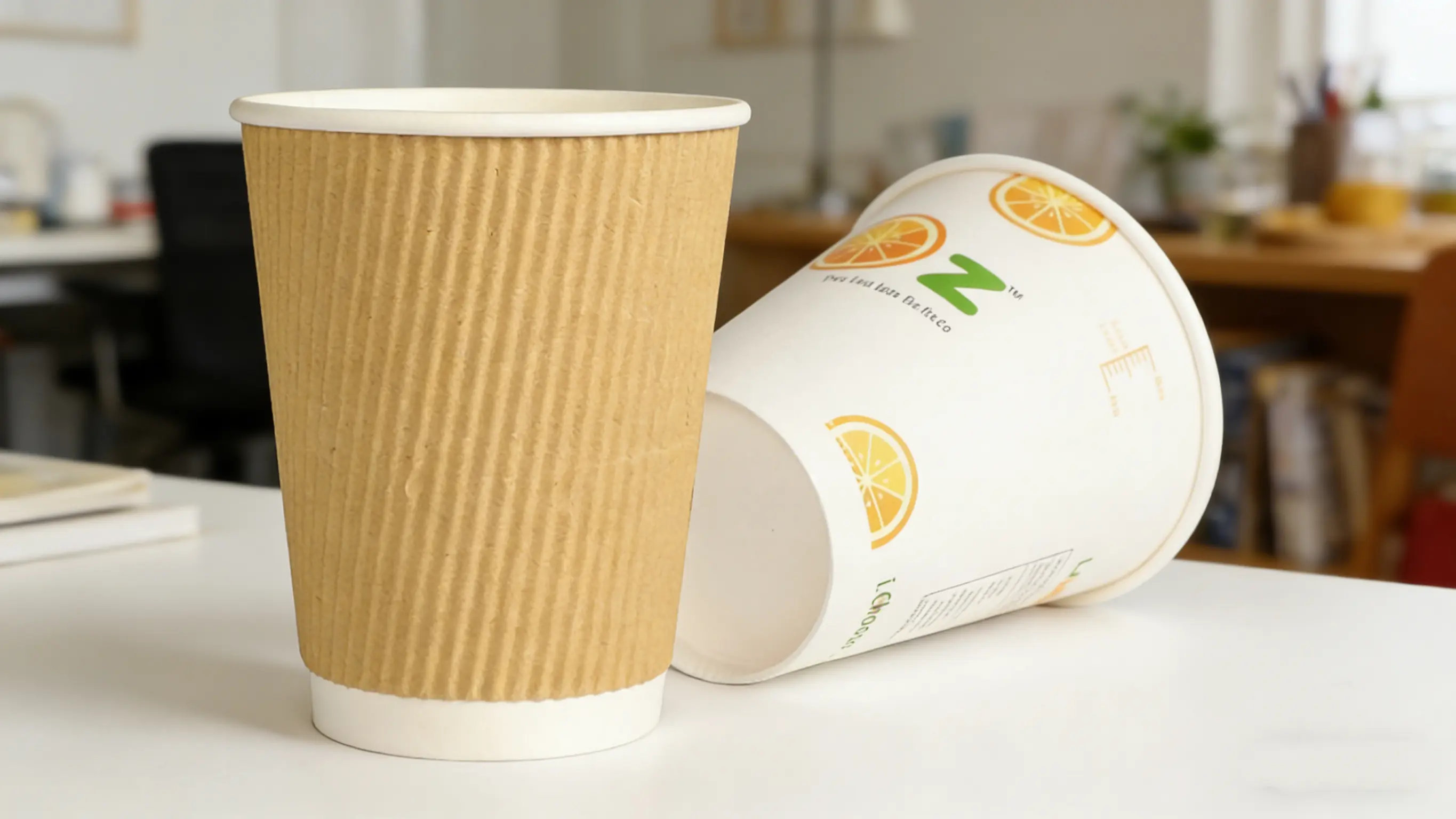
- Tea party paper cups: The main body is made of wood pulp or grass pulp paper, and the surface needs to be coated with polyethylene (PE) or polypropylene (PP) to improve water resistance. They have good heat insulation and printability, and their performance depends on the coating material.
- PLA transparent cups: The core raw material is polylactic acid (PLA). PLA is obtained by fermenting plant resources such as corn starch and sugarcane to produce lactic acid, which is then polymerized. It has excellent biodegradability, biocompatibility, and processability, with a light transmittance of 90-95%, but poor heat resistance.
- PP Plastic Cups: Made from a semi-crystalline thermoplastic polymer produced by the polymerization of propylene monomers. They exhibit excellent heat resistance (melting point 130-171°C), chemical resistance, and mechanical strength. Under normal use, they do not release harmful substances and are widely used in the food packaging industry.

2. Comparison of Material Basic Characteristics
2.1 Paper Cup Material Characteristics
The main body of the paper cup is made of 100% virgin food-grade wood pulp paper, with a basis weight of 170-210 gsm and a whiteness of ≥80%. The lamination technology is crucial: PE lamination offers good flexibility and moisture resistance, suitable for most beverage tea party paper cups; PP lamination has better heat resistance and chemical resistance, suitable for hot beverage customized paper coffee cups.
The production process is mature, covering paper forming, lamination treatment, and printing. According to the latest national standard GB/T 27591-2025, the stiffness requirement for tea party paper cups has been increased from ≥40N in the old standard to ≥50N to enhance the pressure resistance when holding hot beverages.
2.2 PLA Transparent Cup Material Characteristics
PLA is a white or light yellow transparent granule with a molecular formula of (C₃H₄O₂)ₙ and a density of 1.25-1.28 g/cm³. The production process includes plant extraction of starch, saccharification to produce glucose, fermentation to produce high-purity lactic acid, and chemical polymerization to produce polylactic acid.
PLA has excellent mechanical properties: elastic modulus of 3000-4000 MPa, tensile strength of 40-60 MPa, and light transmittance of 90-95%. However, the molecular main chain lacks flexible methylene chain segments (-CH₂-), resulting in low elongation at break (4-10%) and impact strength (20-60 J/m), exhibiting hard and brittle characteristics.
Thermal properties are sensitive to temperature: glass transition temperature (Tg) is 55-60°C, and melting point is 176°C; after the temperature exceeds the critical value, the mechanical strength of low-crystallinity PLA drops sharply, transforming from a hard and brittle plastic to a soft and weak rubbery state.
2.3 Characteristics of PP Plastic Cup Material
PP is produced by the polymerization of propylene monomers, with the molecular formula (C₃H₆)ₙ. It is a semi-crystalline thermoplastic polymer, appearing translucent and glossy, with a smooth and relatively hard texture. Its density is approximately 0.9 g/cm³ (the lowest density among major plastics), combining lightness and high strength.
Its core performance advantages are significant: outstanding heat resistance, with a melting point of 130-171℃, making it the only plastic suitable for microwave ovens; strong chemical resistance, stable against most acids and bases; balanced mechanical strength and toughness, not easily broken, and no harmful substances are released under normal use. It is widely used in food packaging and the medical device fields.
2.4 Comparison of Material Physical and Chemical Properties
| Characteristic | Paper Cup (with coating) | PLA Transparent Cup | PP Plastic Cup |
| Density | 1.2-1.4 g/cm³ | 1.25-1.28 g/cm³ | 0.9 g/cm³ |
| Transparency | Opaque | 90-95% | Translucent |
| Melting Point | - | 176℃ | 130-171℃ |
| Glass Transition Temp. | - | 55-60℃ | -10℃ to 0℃ |
| Tensile Strength | Depends on paper and coating | 40-60 MPa | 30-40 MPa |
| Elastic Modulus | Lower | 3000-4000 MPa | 1100-1600 MPa |
| Elongation at Break | Low | 4-10% | 200-800% |
The comparison of physical properties shows that: PLA has the highest transparency and density, PP has the lowest density and excellent toughness, and the performance of tea party paper cups is mainly determined by the coating material.
3. Multi-dimensional Performance Comparison
3.1 Cost Comparison Analysis
3.1.1 Raw Material Costs
- Tea party paper cups: In 2022, the price of food-grade pulp fluctuated significantly, rising from 4800 yuan/ton at the beginning of the year to 6200 yuan/ton in the third quarter, and falling back to 5400 yuan/ton by the end of the year; the price of PE coated paper was 750-850 US dollars/ton (approximately 5600-6300 yuan/ton), and PP coated paper was 800-1200 US dollars/ton (approximately 5900-8800 yuan/ton).
- PLA transparent cups: The price of PLA particles is 2.3 times that of PE. In 2024, the average production cost decreased to 1800 US dollars/ton (approximately 13000 yuan/ton), a 25% decrease compared to 2020; the current raw material price is 18,000-22,000 yuan/ton, more than double that of PET (0.8-10,000 yuan/ton).
- PP plastic cups: In 2025, the global price of PE raw materials will be 1200-1400 US dollars/ton, and the price of PP will be 1350-1550 US dollars/ton (approximately 11,000-13,000 yuan/ton), significantly affected by crude oil prices. In 2023, the price of PP resin increased by 14% year-on-year.
3.1.2 Production Cost Structure
The raw material costs of the three types of cups account for 60-70% of the total cost. Taking PLA tea party paper cups as an example, the average production cost in 2024 was 0.12 US dollars/cup, and is expected to decrease to 0.10 US dollars/cup in 2025. Production efficiency affects unit cost: the paper cup process is mature and highly efficient; PLA cup companies (such as Hengxin Life) have increased the yield rate to 99.9% (the industry average is generally <95%), and the coating speed has increased from 40 meters/minute to more than 100 meters/minute, increasing efficiency by 150%; PP cup injection molding is highly efficient, and leading companies have reduced unit costs by 6-8% through technological improvements.
3.1.3 Market Price Comparison (2025 Data)
| Cup Type | Small Batch Price (1000 units) | Large Batch Price (100,000 units) | Remarks |
| Paper Cup | US$0.02-0.05/unit | US$0.01-0.03/unit | Single-layer PE coating |
| PLA Transparent Cup | US$0.19/unit | US$0.03-0.10/unit | 16 oz specification |
| PP Plastic Cup | US$0.01-0.05/unit | US$0.01-0.03/unit | Standard specification |
Price comparison shows: PP plastic cups have a significant cost advantage, customized paper coffee cups are in the middle, and PLA transparent cups are the most expensive (approximately 2-3 times the price of PP cups).
3.1.4 Cost Trend Analysis
- Tea party paper cups: Pulp prices are stable, but increased environmental requirements may increase processing costs. Costs are expected to remain stable in the next 3-5 years.
- PLA Transparent Cups: Scaled production and technological innovation are driving down costs year by year. Leading companies have reduced costs by approximately 20% through process improvements. It is expected that the price of PLA may drop to 18,000 RMB/ton by 2030, narrowing the price difference with traditional plastics.
- PP Plastic Cups: Costs are highly correlated with and fluctuate significantly with crude oil prices, but technological advancements and capacity expansion are expected to further reduce production costs.

3.2 Environmental Performance Comparison Analysis
3.2.1 Life Cycle Carbon Footprint
- Tea party paper cups: The carbon footprint per cup is 94 grams of CO₂ equivalent, with raw material production accounting for 41% and the manufacturing process accounting for 28%; the carbon footprint is 40% lower than plastic cups, but the recycling rate is only 18.6%, making the actual environmental impact complex.
- PLA Transparent Cups: Carbon emissions during production are 60% less than traditional plastics, and the carbon footprint under industrial composting conditions is approximately 60% lower than traditional plastics; however, if they end up in landfills, the environmental advantage is significantly reduced.
- PP Plastic Cups: The carbon footprint is between that of tea party paper cups and PLA cups, but they are not biodegradable and persist in landfills for a long time, resulting in a large cumulative environmental impact.
3.2.2 Degradability and Recycling
- Degradability: Traditional PE-coated tea party paper cups require industrial composting environments above 50°C for complete degradation, with a natural degradation cycle of 20 years; PLA cups achieve a mineralization rate of ≥90% in 2-6 months under industrial composting (58°C, controlled ventilation and humidity), but are difficult to decompose in home composting (20-45°C) (unless certified OK compost HOME); PP cups are not biodegradable and persist in the environment for hundreds of years, being a major cause of waste and marine pollution.
- Recycling: The global waste paper recycling rate is expected to reach 62% by the end of 2025, but only 18.6% for coated customized paper coffee cups; PLA cups lack sufficient recycling facilities and dedicated processing equipment; PP cups are technically recyclable, but recycling plants prioritize PET bottles, resulting in a low global recycling rate (only 8% in the US, far lower than the 28% for PET bottles).
3.2.3 Environmental Impact of Production Process
- Tea party paper cups: Require large amounts of wood resources (over-logging leads to forest destruction), high energy consumption and water consumption in papermaking, and production chemicals may cause water pollution.
- PLA transparent cups: Use crops such as corn and sugarcane as raw materials (potentially competing with food crops for land), high energy consumption in fermentation and polymerization, but 60% less carbon emissions than traditional plastics.
- PP plastic cups: Rely on non-renewable petroleum resources, high energy consumption in extraction, transportation, and processing, and high carbon emissions during production.
3.2.4 Waste Disposal Methods
| Cup Type | Recommended Disposal Method | Actual Disposal Method | Environmental Impact |
| Tea Party Paper Cups | Industrial Composting/Recycling | Mostly landfilled | Slow degradation, occupies land |
| PLA Transparent Cups | Industrial Composting | Mostly landfilled | Non-biodegradable, long-term persistence |
| PP Plastic Cups | Recycling | Very little is recycled | Non-biodegradable for hundreds of years, microplastic pollution |

3.3 Durability Comparative Analysis
3.3.1 Mechanical Strength
- Tea party paper cups: According to GB/T 27591-2025, stiffness ≥50N. Mechanical strength depends on paper weight and coating quality. Standard tea party paper cups have a compressive strength of 200-300N.
- PLA transparent cups: Elastic modulus 3000-4000MPa, tensile strength 40-60MPa, but lacking flexible chain segments in the molecule, resulting in a fracture elongation of 4-10% and a notched impact strength of 20-60J/m, making them hard, brittle, and easily cracked.
- PP plastic cups: Flexural modulus 1100-1600MPa, cantilever beam notched impact strength 15-75kJ/m² (depending on the model). The semi-crystalline structure balances rigidity and flexibility, providing excellent impact and compression resistance, and is not easily broken.
3.3.2 Temperature Adaptability
- Tea party paper cups: Hot drink tea party paper cups use a thick PE coating (up to 30 microns) and heat-resistant adhesive, with a temperature resistance of up to 95℃; standard tea party paper cups are resistant to 0℃-88℃; double-layered insulated tea party paper cups are resistant to 85℃; high-end tea party paper cups are resistant to 93℃.
- PLA transparent cups: Glass transition temperature 55-60℃, standard cups are resistant to -16℃ to 41℃; heat-resistant cups are specially treated to withstand 100℃, but soften above 50℃.
- PP plastic cups: Excellent heat resistance, melting point 130-171℃, continuous use temperature above 100℃; heat distortion temperature at 66psi pressure is 107℃, and at 264psi is 54℃; becomes brittle at low temperatures (especially homopolymer PP), impact strength at -40℃ may drop below 1kJ/m².
3.3.3 Sealing and Leak-Proof Performance
- Tea party paper cups: Sealing depends on the integrity of the coating and the firmness of the cup seam; static testing shows no leakage after standing with room temperature water for 10-30 minutes; dynamic testing shows no leakage when squeezed/tilted with 90℃ hot water; high-quality double-wall paper coffee cups can hold 90±5℃ hot water for 6 hours without leakage. PLA Transparent Cups: Injection-molded PLA cups have a one-piece structure that reduces the risk of leakage, but high temperatures may soften the material and affect the seal.
- PP Plastic Cups: Semi-crystalline structure provides dimensional stability; the injection-molded structure is strong and not easily deformed, ensuring reliable sealing performance.
3.3.4 Service Life and Durability Test Data
| Test Item | Paper Cup | PLA Cup | PP Cup |
| Compressive Strength | 200-300N | Higher but brittle | 300-500N |
| Impact Resistance | Low | Low (easily broken) | High |
| Heat Resistance | 85-95℃ | 41-50℃ | 100-120℃ |
| Cold Resistance | Good | Good | Becomes brittle at low temperatures |
| Reusability | Not reusable | Not recommended | Reusable multiple times |
| Normal Service Life | Single use | Single use | Multiple uses |

3.4 Printing Adaptability Comparative Analysis
3.4.1 Printing Process Compatibility
- Tea party paper cups: Mature technology; flexographic printing (large quantities, 6 colors, low cost), offset printing (fine patterns, high resolution, small quantities), screen printing (simple graphics, low cost, small quantities), and digital printing (no plate making, short runs, personalization) are all applicable.
- PLA Transparent Cups: Requires special treatment; surface pre-treatment with solvent-based adhesives or surfactants; printing temperature controlled at 200℃ (to prevent deformation); commonly uses screen printing, UV printing, and pad printing; requires surface cleaning.
- PP Plastic Cups: Low surface energy, requires flame, corona, or chemical treatment; UV printing is most common (UV-cured ink, resistant to fading and scratching), also uses screen printing, pad printing, and heat transfer printing; requires special PP ink (containing adhesion promoters).
3.4.2 Color Performance and Printing Quality
- Tea party paper cups: Rough paper surface absorbs ink well, resulting in high color saturation, allowing for rich layers and fine patterns, compatible with various inks; post-processing (varnishing, lamination) can improve color effects.
- PLA Transparent Cups: High transparency (90-95%), excellent visual effect, smooth surface requiring special treatment to enhance ink adhesion, can achieve transparent/translucent/opaque effects, suitable for displaying beverages.
- PP Plastic Cups: Translucent, limiting color vibrancy, smooth surface requiring special inks, suitable for simple graphics and text, often requiring a white base color to increase contrast.
3.4.3 Ink Adhesion and Durability
- Tea party paper cups: Water-based inks have strong adhesion and are environmentally friendly; the film layer is flexible and crack-resistant after drying; UV inks are cured by ultraviolet light, resulting in a hard film layer resistant to friction and chemical corrosion, not easy to fade, and with good durability.
- PLA Transparent Cups: Poor adhesion; solvent-based inks can slightly melt the surface to enhance bonding; moderate durability, requires protection against scratches and chemical contact; specialized PLA inks are recommended.
- PP Plastic Cups: Non-polar surface results in poor adhesion; flame treatment can increase surface energy; UV inks with special treatment offer good durability; specialized PP inks containing adhesion promoters are recommended.
3.4.4 Surface Treatment Requirements
| Cup Type | Pre-printing Treatment | Common Treatment Methods | Treatment Effect | Cost Impact |
| Paper Cup | Usually no special treatment required | Cleaning, drying | Good | No additional cost |
| PLA Transparent Cup | Surface treatment required | Solvent wiping, plasma treatment | Medium | Increase 10-15% cost |
| PP Plastic Cup | Surface treatment required | Flame treatment, corona treatment | Good | Increase 15-20% cost |

4. Comprehensive Evaluation and Decision Matrix
4.1 Multi-dimensional Scoring System (Maximum score 10 points)
| Evaluation Dimension | Weight | Paper Cup | PLA Transparent Cup | PP Plastic Cup |
| Cost-effectiveness | 30% | 9 | 3 | 10 |
| Environmental Friendliness | 25% | 6 | 9 | 3 |
| Durability | 20% | 6 | 5 | 9 |
| Printability | 15% | 10 | 6 | 7 |
| Temperature Resistance | 10% | 8 | 4 | 9 |
| Overall Score | 100% | 7.8 | 5.9 | 8.2 |
4.2 Optimal Choice Based on Scenarios
- Hot beverage shops (coffee, hot tea): First choice is double-walled insulated tea party paper cups (cost $0.02-0.05/cup, withstands 95℃, good insulation), second choice is reusable PP cups, PLA cups are not recommended (insufficient heat resistance).
- Cold beverage shops (juice, iced coffee): High-end positioning chooses PLA transparent cups (90-95% transparency, environmentally friendly), mass-market positioning chooses PP cups (cost $0.01-0.03/cup, durable), the second choice is tea party paper cups (poor condensation resistance).
- Fast food restaurants/takeaway: Choose tea party paper cups (lowest cost $0.01-0.03/cup, easy printing), ensuring good sealing and heat resistance. Bars/Restaurants: Choose PLA cups (aesthetically pleasing and environmentally friendly) or PP cups (reusable), avoid tea party paper cups (not aesthetically pleasing enough).
- Company Canteens/Outdoor Activities: Choose PP cups (reusable, cost-effective, and portable).
4.3 Cost-Benefit Analysis (Procurement Costs at Different Scales)
| Usage Scale | Paper Cup Cost | PLA Cup Cost | PP Cup Cost |
| 1000 units | $20-50 | $190 | $10-50 |
| 10000 units | $100-300 | $300-1000 | $100-300 |
| 100000 units | $1000-3000 | $3000-10000 | $1000-3000 |
| 1 million units | $10000-30000 | $30000-100000 | $10000-30000 |
PP cups have a cost advantage across all scales, PLA cups cost approximately 2-3 times more than PP cups, and double-wall paper coffee cups are in between.
4.4 Long-Term Development Trends
- Policy-driven: EU and US plastic bans and China's "dual carbon" goals are driving PLA applications; the market share of biodegradable cups will reach 39% by 2030.
- Technological advancements: PLA heat resistance will exceed 100℃, and the price may drop to 18,000 RMB/ton by 2030; improved recycling technology will increase the utilization rate of PLA and PP.
- Market demand: Consumers are willing to pay a 10-15% premium for environmentally friendly products, brands are placing more emphasis on a sustainable image, and the demand for reusable cups is growing.

V. Key Summary and Recommendations
5.1 Core Findings
- Cost: PP cups are the cheapest, tea party paper cups are in the middle, and PLA cups are the most expensive, but the cost is continuously decreasing.
- Environmental Protection: PLA cups degrade by more than 90% in 2-6 months through industrial composting, tea party paper cups have a recycling rate of 18.6%, and PP cups have a recycling rate of only 8% (not biodegradable).
- Performance: PP cups offer the best durability and temperature resistance (withstanding over 100℃), tea party paper cups perform well in hot beverage scenarios, and PLA cups excel in cold beverage scenarios but have poor heat resistance.
- Printing: tea party paper cups offer the best printability, PP cups require surface treatment, and PLA cups are difficult to print on.
5.2 Implementation Recommendations
- Food service businesses: Establish a diversified supply system, collaborate with stable suppliers, invest in reusable cup systems, and train employees on proper recycling.
- Chain brands: Set unified selection standards, develop customized solutions, establish recycling systems, and promote environmental protection concepts.
- Procurement decision-makers: Calculate full lifecycle costs, evaluate local recycling facilities, and allocate budget for material conversion.
- Policymakers: Improve standards for biodegradable materials, establish recycling facilities, implement incentive policies, and regulate "false environmental" products.
In summary, there is no absolute best or worst cup choice; it requires balancing cost, performance, and environmental impact based on needs, scenarios, and development goals, considering both current needs and sustainable development.
2026 Coffee and Milk Tea Shop Selection Guide: PLA vs. rPET vs. Tea Paper Cups
PP vs. Bagasse Fiber vs. PET Disposable Food Party Trays
Related Article

You searched for 4 oz Chinese take out boxes — but what you actually need may not be a paper box at all. The folded paper container with the wire handle looks iconic, but for 4 oz portions of sauce, dressing,
4 oz Chinese Take Out Boxes Alternative — Clear PP Portion Cups
Looking for plastic to-go containers with lids in bulk? Every container we ship includes a matching lid — not as an optional add-on,
Plastic To-Go Containers with Lids Wholesale | Bulk PP Food Boxes
SEND MESSAGE