



Does a Plastic Takeout Container with an Odor Mean It's Toxic? Three Tips to Completely Eliminate the Plastic Smell from New Containers
author: Iris
2025-09-11
I. Where Does the Plastic Container Odor Come From?
Why do new takeout food containers smell? It mostly relates to material composition and manufacturing processes—not necessarily indicating harm. Understanding the source helps ensure safe use.
Characteristics of Raw Materials
The smells of different polymers are intrinsic. PP, PET, and PS are common kinds. Some plastics may smell a little heavier immediately after manufacture, although PP containers, for example, have a gentler aroma. Reputable manufacturers' takeout containers usually just have a little smell that goes away with usage. Whether the substance satisfies acceptable food-grade criteria is more important than the odor.
Impact of Production and Packaging Processes
It's quite typical to smell a little when you open fresh plastic Chinese takeout containers. This happens as a result of containers being shut right away during high-temperature manufacture, which prevents air from circulating and traps scents within. There is no health danger associated with this odor as long as the item is certified. There is no need to be concerned about safety because the stink will usually be greatly reduced by washing and letting them air out for a few days.
Does Odor Equate to Harmful Substances?
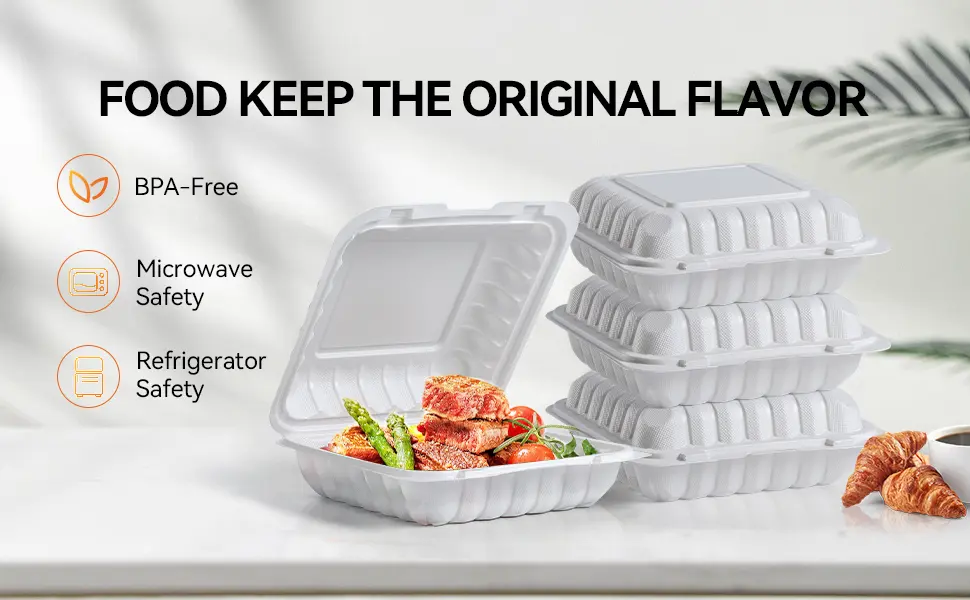
A common misconception is that "odor = toxic," however, this isn't always the case. The safety of the substance is what really counts. For example, BPA-free reusable takeout containers are devoid of the potentially hazardous chemical bisphenol A. It doesn't necessarily have to smell bad to be harmful to your health, as long as you select the correct substance.
3. Three Effective Methods to Completely Eliminate Plastic Odor
While the smell doesn't necessarily indicate toxicity, many people still find it unpleasant. The deodorizing process is actually quite simple, and the following three methods are highly practical.
Hot Water Soak Method
To get rid of any lingering smells, soak fresh takeout food containers in hot water for ten minutes or so. The heat dissipates the odor naturally by breaking down molecules. When processing large orders for new containers, restaurants and takeaway providers frequently employ this technique. This method is quick and easy for Chinese takeaway containers made of plastic.
Lemon or Baking Soda Cleaning Method
Lemon and baking soda are exceptionally effective at eliminating odors. Placing lemon slices in water inside the container or washing with a baking soda solution significantly reduces plastic smells. Compared to regular dish soap, this method is more natural and provides longer-lasting odor removal. It's ideal for both everyday plastic Chinese takeout containers and BPA-free reusable takeout containers used repeatedly over time.
Air Drying
The simplest method is to remove containers and air them out in a well-ventilated area. Air circulation quickly dissipates odors. This is especially effective for bulk-purchased BPA-free reusable takeout containers—leaving them unwrapped for a few days noticeably reduces lingering smells. This cost-free approach delivers surprisingly good results.

Where to Buy?
Yangrui offers a variety of BPA-free reusable takeout containers. These containers are certified by ISO9001, FDA, and other international standards. Customization is available, making them suitable for long-term partnerships with restaurants, supermarkets, and wholesalers.
Contact Information:
Phone: +86-159 8949 1653
Email: sales@yrpak.com
Email: sales@yrpak.com
References
- European Food Safety Authority (EFSA). “Scientific Opinion on the risks to public health related to the presence of bisphenol A (BPA) in foodstuffs.” EFSA Journal, 2015.
- U.S. Food and Drug Administration (FDA). “Update on Bisphenol A (BPA) for Use in Food Contact Applications.” 2022.
- PlasticsEurope. “Food Contact Plastics – Ensuring Safety for Consumers.” Industry Report, 2021.
- Packaging Insights. “Trends in Takeout Food Packaging: Safety, Sustainability and Consumer Demand.” 2023.
2. Can Plastic Food Containers with Odors Still Be Used?
Can containers with odors still be used? The answer depends on whether they're made of safe materials—not just what your nose detects.
Distinguishing Harmful from Harmless
Verifying whether the container is marked "food-grade" or "BPA-free" is an easy way to do this. These marks are usually present on takeout food containers made by legitimate producers. When initially opened, harmless containers could smell a little, but they don't emit any harmful chemicals. Unlabeled containers with unknown ingredients pose the greatest risk.
Common Testing Standards for Plastic Takeout Containers
Plastic containers must meet stringent safety regulations set by major industry standards such as the LFGB in Germany and the FDA in the United States. Even if a container has a little odor, it still passes all tests and is safe. Therefore, pay more attention to whether it has passed these tests than to odor.
Understanding the Relationship Between Odor and Safety
Odor and safety are not the same thing. A slight smell from a container is usually residual from production or packaging and will dissipate over time. What truly determines safety is whether it is BPA-free and has passed food-grade testing. So, stop judging usability solely based on “whether it has an odor.”

4. How to Choose Safe, Odor-Free Food Containers?
While eliminating odors is one aspect, selecting the right containers from the outset is even more crucial. Only by choosing the right products can you truly use them with peace of mind.
Prioritize BPA-Free Materials
Opting for BPA-free reusable takeout containers offers greater assurance. BPA can leach out at high temperatures, posing health risks. Choosing BPA-free materials minimizes this danger. Many brands now emphasize BPA-free credentials, making this a top consumer priority.
Select Products from Reputable Manufacturers with Food-Grade Certification
Procurement channels matter. While low-cost plastic Chinese takeout containers may seem economical, they often lack proper testing and pose hidden risks. Reputable manufacturers hold certifications like FDA, ISO, or LFGB, ensuring material safety. Brands like Yangrui adhere to strict production processes and comprehensive product testing, offering customers greater peace of mind.
Prioritize Long-Term Usability
Don't judge takeout containers solely by price. A quality takeout food container must be not only safe but also durable—capable of withstanding refrigeration and heating without warping. Superior long-term performance reduces procurement frequency, elevates service quality for food businesses, and boosts customer satisfaction.

What Are the Unique Properties of PS, PET, And PLA Takeout Food Boxes?
Can Plastic Take-Out Containers Go Directly in the Microwave? A Complete Guide to Safe Heating
Related Article

You searched for 4 oz Chinese take out boxes — but what you actually need may not be a paper box at all. The folded paper container with the wire handle looks iconic, but for 4 oz portions of sauce, dressing,
4 oz Chinese Take Out Boxes Alternative — Clear PP Portion Cups
Looking for plastic to-go containers with lids in bulk? Every container we ship includes a matching lid — not as an optional add-on,
Plastic To-Go Containers with Lids Wholesale | Bulk PP Food Boxes
SEND MESSAGE