



Are Disposable Portion Cups Suitable for Refrigeration or Freezing?
author: Iris
2025-12-24
I. Characteristics and Safety Levels of Common Plastic Disposable Portion Cup Materials
1.1 Classification and Basic Properties of Main Plastic Materials
Plastic disposable portion cups typically use four main materials: PET (polyethylene terephthalate), PP (polypropylene), PS (polystyrene), and PE (polyethylene). Their molecular structure, physical properties, and chemical stability differ significantly, directly determining their performance in low-temperature environments.
- PET: A semi-crystalline polymer with high mechanical strength, good transparency, and excellent chemical resistance. Its glass transition temperature (Tg) is approximately 70-80°C, and its melting temperature (Tm) is approximately 250-260°C. It exhibits some brittleness at low temperatures.
- PP: A semi-crystalline polymer with excellent chemical and heat resistance, a temperature range of -20°C to 100°C, and can withstand 120°C for short periods. It is the only plastic product that can be used in a microwave oven, but its low-temperature performance is relatively poor.
- PS: An amorphous resin with no distinct melting point, a melting temperature range of 120-180°C, high transparency (transmittance of 88-92%), but low mechanical strength and a hard, brittle texture. The long-term use temperature is only 60-80°C, and the embrittlement temperature is -30°C.
- PE: Divided into HDPE (high-density polyethylene) and LDPE (low-density polyethylene). HDPE has a temperature range of -40°C to 80°C, with a long-term use temperature of ≤70°C; LDPE has a wider temperature range, reaching -100°C, with a long-term use temperature of ≤60°C. Both have good low-temperature toughness and are not prone to brittle fracture.
1.2 Food Contact Safety Standards and Certifications
All plastic materials used for food packaging must comply with GB 4806.6-2016 "National Food Safety Standard - Plastic Resins for Food Contact" and GB 4806.7-2016 "National Food Safety Standard - Plastic Materials and Products for Food Contact," which specify the types of resins that can be used (including PE, PP, PET, PS, etc.) and limit the range of additives.
Food-grade plastics must pass 17 rigorous safety tests, including total migration (≤10mg/dm²), specific migration, and heavy metal content, to ensure that no harmful substances are released at temperatures between -20℃ and 120℃. The product must also be labeled "for food contact" or "for food packaging."
In the international market, compliance with FDA (U.S. Food and Drug Administration) standards and LFGB (German Food Contact Materials Standard) certification is also required to ensure that the materials do not contain harmful substances such as bisphenol A (BPA) and possess good sealing and temperature resistance.
Food-grade plastics must pass 17 rigorous safety tests, including total migration (≤10mg/dm²), specific migration, and heavy metal content, to ensure that no harmful substances are released at temperatures between -20℃ and 120℃. The product must also be labeled "for food contact" or "for food packaging."
In the international market, compliance with FDA (U.S. Food and Drug Administration) standards and LFGB (German Food Contact Materials Standard) certification is also required to ensure that the materials do not contain harmful substances such as bisphenol A (BPA) and possess good sealing and temperature resistance.

II. Performance Analysis in Refrigerated Environments
2.1 Physical Stability of Materials at Refrigerated Temperatures
The impact of refrigerated environments (typically 0-8℃) on plastic disposable portion cups is mainly reflected in changes in physical properties, with significant differences in performance among different materials:
- PET: Relatively stable in refrigerated environments, maintaining good mechanical properties and transparency at 0-4℃. While impact resistance may decrease by 30-50% at 0-5℃, it can still meet general refrigeration needs, thanks to its good dimensional stability and rigidity.
- PP: Presents a certain risk. Its glass transition temperature (Tg) is between -10℃ and 0℃, and the refrigeration temperature is close to the embrittlement critical point. Toughness decreases significantly, and in practical applications, it becomes extremely brittle after refrigeration and is easily broken by impact.
- PS: The embrittlement temperature is -30℃, so it will not become brittle in a refrigerated environment. However, its inherent hard and brittle characteristics still make it prone to breakage upon impact.
- PE: Performs best. HDPE is stable at -40℃ to 80℃, and LDPE has even better low-temperature resistance (up to -100℃), maintaining toughness at low temperatures and not easily becoming brittle.
2.2 Deformation and Changes in Sealing Performance Due to Refrigeration
Temperature changes cause thermal expansion and contraction, affecting the structural integrity and sealing effectiveness of containers. Different materials exhibit different behaviors:
- Deformation: PET has good dimensional stability and is not prone to significant deformation; PP may shrink slightly with temperature changes due to its molecular structure, but this usually does not affect its use; PE has good flexibility and generally has no deformation problems.
- Sealing Performance: Refrigeration may cause shrinkage and deformation of bottle caps or seals, and the increased elastic modulus of plastic at low temperatures may make it difficult for the cap to close tightly, increasing the risk of leakage. It is recommended to choose low-temperature elastic sealing materials such as silicone or thermoplastic elastomers (TPE). High-quality products will utilize snap-fit sealing designs and optimized cap threads and closure structures to ensure sealing performance and ease of use during refrigeration.
2.3 Impact on Sauce Preservation
In a refrigerated environment, the impact of plastic materials on sauce preservation is reflected in three aspects: gas permeability, moisture permeability, and chemical migration:
- Gas Permeability: PET has low gas permeability and good gas barrier properties, making it suitable for packaging sauces that need to be protected from air to prevent oxidation and spoilage; PE has relatively good gas permeability, suitable for preserving fresh items such as fruits and vegetables, and can regulate the gas environment inside the packaging.
- Moisture Permeability: At low temperatures, the moisture and gas permeability rates of various plastics are reduced by about half, and the permeability of organic vapors also decreases to varying degrees, which can better maintain the moisture content of the sauce and prevent drying.
- Chemical Migration: In a 4°C refrigerated environment, some plasticizers, such as phthalates in plastic bags, will still slowly migrate into food. Oily sauces (such as salad dressing and vinaigrette) will experience "flavor migration," where plasticizers dissolve in the oil and simultaneously adsorb volatile flavor substances from the sauce.
Furthermore, the impact of long-term refrigeration on sauce quality should not be ignored. After 7 days of refrigeration, vitamin C loss can reach 40%, psychrophilic bacteria (such as Listeria monocytogenes) will continue to multiply (with a mortality rate of 20% to 30%), and plastic containers may release bisphenol A (with a migration rate of up to 50 pg/kg), posing a health risk.

III. Performance Analysis in Freezing Environments
3.1 Freeze Resistance of Materials at -18℃ and Below
Freezing environments (typically -18℃ and below) pose a much greater challenge to plastic portion cups with lids than refrigeration, and the performance differences between different materials are significant:
- PET: Has significant limitations. As the temperature drops below 0℃, the molecular chain movement decreases significantly, making the material rigid and brittle; below -20℃, it is extremely prone to brittle fracture upon impact. The low-temperature embrittlement temperature is approximately -40℃ to -50℃, at which temperature range it completely loses toughness, and may crack due to impact or pressure between -20℃ and -40℃.
- PP: Poor low-temperature performance, with an embrittlement temperature of -30℃. Impact resistance decreases significantly below 0℃; as a crystalline plastic, molecular chain movement freezes at low temperatures, and impact strength plummets by more than 40% at -10℃. Below 0℃, it completely loses toughness and becomes hard and brittle. A regular PP box dropped from a height of 1 meter at -20℃ will show corner breakage after the 12th drop.
- PS: Performs the worst. It is inherently hard and brittle, with an embrittlement temperature of -30℃, and is prone to brittle cracking at low temperatures, making it completely unsuitable for freezing.
- PE: Performs excellently and is the preferred choice for freezing. HDPE maintains stable performance at -50℃ to -60℃, with a low embrittlement temperature of -70℃; LDPE has even better low-temperature resistance (can withstand -100℃), maintaining toughness and impact resistance at low temperatures.
In addition, special modifications can improve the low-temperature performance of materials. For example, adding 5%-8% POE (polyolefin elastomer) to PP can form an elastic network, achieving crack-free performance even when dropped at -30℃; modified PET with 20%-35% anhydrous transparent powder can increase impact strength by more than 30%.
3.2 Impact of Water Freezing Expansion on Containers and Pressure Resistance
When water freezes, its volume expands by approximately 9%, generating immense pressure, posing a significant threat to plastic sauce containers:
Experiments conducted by the Institute of Chemistry, Chinese Academy of Sciences, showed that when 500 ml of bottled water completely freezes, the 9% volume expansion generates an internal pressure exceeding 2.5 MPa in a sealed PET bottle (equivalent to the water pressure at a depth of 200 meters). The pressure generated by water freezing expansion is approximately 209 MPa, enough to burst a 10 mm thick stainless steel tank.
In sealed plastic bottles, if the bottle is overfilled or the material is too brittle, it can lead to bulging, deformation, or even rupture; carbonated beverages are even more dangerous, as low temperatures significantly reduce the solubility of carbon dioxide, causing a large amount of gas to be released during freezing, further increasing internal pressure and potentially causing an explosion.
To address this challenge, at least 2 inches (approximately 5 cm) of headspace should be left to accommodate expansion, and specialized freezer containers with pressure relief mechanisms and low-temperature resistance should be selected. Material pressure resistance varies significantly; PET becomes brittle and easily breaks at low temperatures, PP's pressure resistance decreases significantly below -18℃, while PE has the best pressure resistance due to its flexibility and impact resistance.
In sealed plastic bottles, if the bottle is overfilled or the material is too brittle, it can lead to bulging, deformation, or even rupture; carbonated beverages are even more dangerous, as low temperatures significantly reduce the solubility of carbon dioxide, causing a large amount of gas to be released during freezing, further increasing internal pressure and potentially causing an explosion.
To address this challenge, at least 2 inches (approximately 5 cm) of headspace should be left to accommodate expansion, and specialized freezer containers with pressure relief mechanisms and low-temperature resistance should be selected. Material pressure resistance varies significantly; PET becomes brittle and easily breaks at low temperatures, PP's pressure resistance decreases significantly below -18℃, while PE has the best pressure resistance due to its flexibility and impact resistance.
3.3 Effects of Repeated Freezing and Thawing Cycles
Repeated freezing and thawing cycles accumulate damage to plastic sauce containers, accelerating material aging and performance degradation, while also affecting sauce quality:
- Material aging: High and low temperature cycles generate thermal expansion and contraction stresses. As the number of cycles increases, internal stress accumulates, easily leading to internal microcracks; drastic temperature changes accelerate molecular chain breakage and oxidation reactions. During the high-temperature phase, molecular movement is faster, and oxygen easily penetrates, causing oxidation; during the low-temperature phase, the material loses toughness and becomes more brittle. In actual tests, after 50 freeze-thaw cycles at -80℃, some product bottle necks deformed and leaked, while well-designed models had a leakage rate of ≤0.3%.
- Sauce quality: Repeated freezing and thawing can cause ice crystals to damage the cell structure of the sauce. After thawing, the texture becomes soft, mushy, or watery, losing its original taste. High-moisture sauces (such as tomato paste and fruit sauces) experience cell rupture after freezing, resulting in significant texture changes upon thawing; dairy-based sauces (such as cream sauces and cheese sauces) are prone to oil-water separation and graininess after freezing, resulting in a rough texture after thawing. Furthermore, acidic sauces like ketchup can permanently stain almost all plastic containers, leaving traces even after cleaning.
- Chemical migration: High temperatures, freezing, or repeated use accelerate plastic aging, causing microplastics to detach and enter food; prolonged contact with oils and acidic foods (such as vinegar and lemon juice) accelerates the release of harmful substances. Repeated freezing and thawing should be avoided, or specially designed reusable containers should be used.

IV. Performance in Extreme Low-Temperature Environments
4.1 Performance Evaluation Below -20℃
In extremely low-temperature environments below -20℃, plastic sauce containers face more severe challenges, and material performance varies significantly:
- PET: Performs extremely poorly; impact strength decreases below 0℃, becoming brittle; easily fractures under impact below -20℃; may rupture due to impact or pressure between -20℃ and -40℃; embrittlement temperature is -40℃ to -50℃, completely losing toughness in this temperature range. However, the performance of specially modified PET can be improved, such as the PET cold chain packaging box developed by Hengxiangrong, which remains structurally stable and does not deform or crack after 72 hours of storage at -20℃, and only shows slight surface scratches after 30 drops from a height of 1 meter at -20℃.
- PP: Almost unusable below -20℃; the minimum tolerable temperature is approximately -15℃. Below this temperature, storage containers (especially thin-walled containers) may rupture due to slight external forces (such as handling and collisions). A regular PP box dropped from a height of 1 meter at -20℃ fractured at the corners on the 12th drop, completely losing toughness and becoming hard and brittle below 0℃.
- PS: Completely unsuitable for environments below -20℃; embrittlement temperature is -30℃, and at -20℃ it is at the edge of embrittlement, rupturing with even slight impact. PE: Maintains good performance below -20℃; HDPE remains stable at -50℃ to -60℃, with a brittle temperature of -70℃; LDPE has better low-temperature resistance (can withstand -100℃), and remains flexible at -20℃~-30℃, less prone to embrittlement and cracking.
4.2 Compatibility Considerations for Special Sauce Types
The compatibility of different sauces with plastic containers during freezing varies, requiring specific selection:
- High-acid sauces (such as ketchup, vinegar-based sauces): Easily stain plastic containers, and the acidic environment accelerates chemical migration. PET has some acid resistance, but long-term contact may lead to degradation; PP and PE have good acid resistance and are preferred.
- High-fat sauces (such as salad dressing, mayonnaise): Freezing easily causes stratification and texture changes, and "flavor migration" occurs (plasticizers dissolve in the oil, adsorbing volatile flavor substances from the sauce). Low-permeability PET is recommended to reduce flavor loss.
- Alcohol-containing sauces: Alcohol may react with some plastics, leading to decreased performance or the production of harmful substances. Chemically stable HDPE or specially treated PET should be selected.
- Sauces containing particles (such as chili sauce, nut butter): The texture hardens after freezing, and the particles easily cause localized stress concentration on the container, increasing the risk of cracking. Containers with thicker walls and good impact resistance are recommended.
4.3 Cumulative Effects of Long-Term Storage
The cumulative effects of long-term frozen storage have a profound impact on clear plastic portion cups and sauces:
- Material aging: Long-term freezing accelerates plastic aging; plasticizers still migrate slowly at low temperatures, leading to the material becoming brittle and hard; repeated temperature fluctuations cause stress concentration, ultimately leading to microcracks.
- Sauce quality: Long-term freezing causes water in the sauce to form large ice crystals, damaging the cell structure, resulting in severely damaged texture after thawing; although the rate of oxidation reactions decreases at low temperatures, it still proceeds slowly, leading to flavor loss and color changes.
- Chemical migration: In environments above 60℃, the rate at which plastic bags release plasticizers increases significantly, and the longer the service life of disposable plastic bags, the higher the risk; although the freezing temperature is low, long-term contact may still lead to the migration of harmful substances into the food. The following storage principles are recommended: Use dedicated freezer containers that are resistant to low temperatures and specially designed for freezing; avoid long-term storage and use within the shelf life; regularly inspect containers and replace them immediately if cracks or deformation are found; maintain a stable storage temperature and avoid frequent fluctuations.
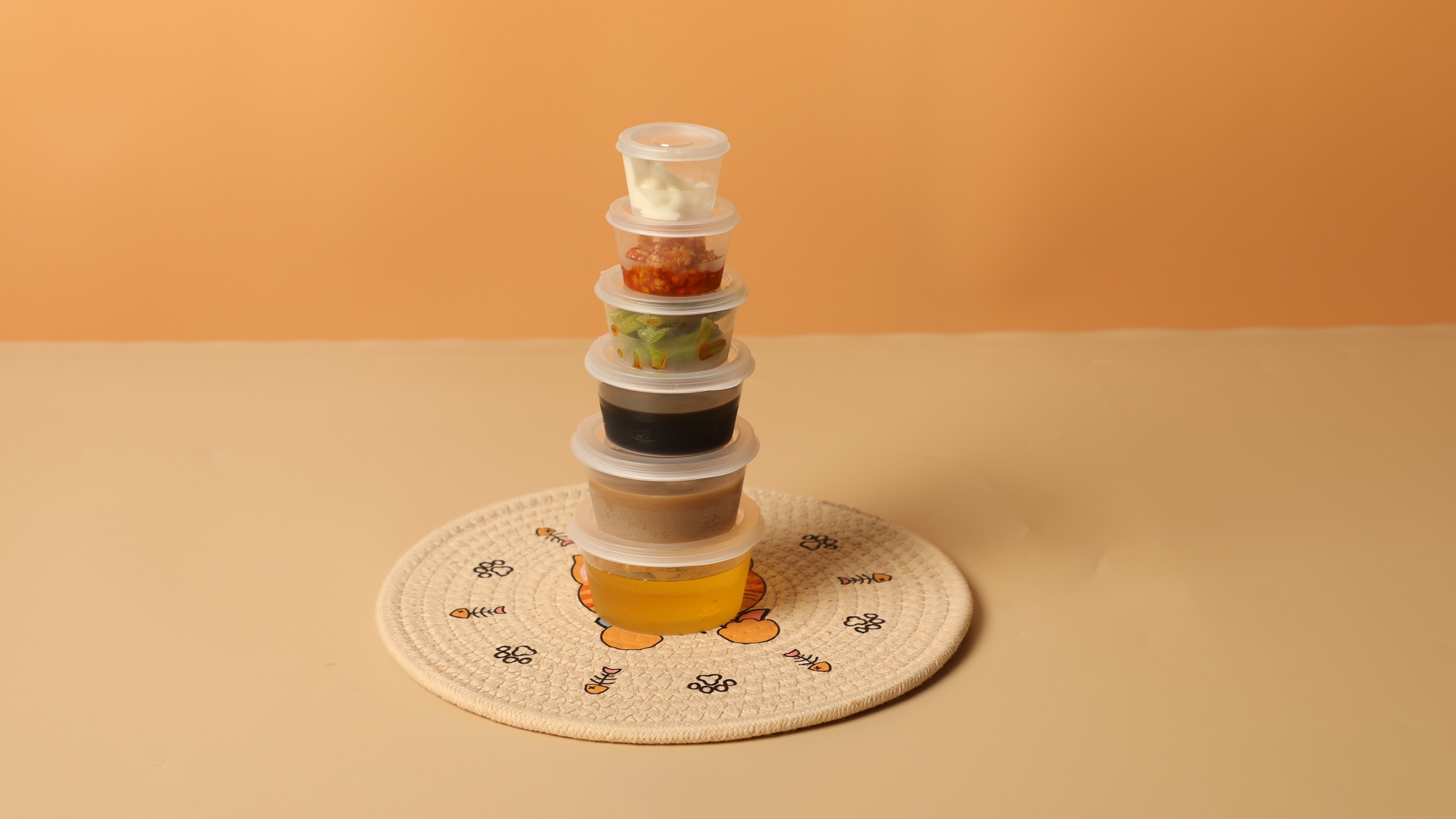
V. Material Selection Suggestions and Usage Guidelines
5.1 Material Selection Suggestions for Different Scenarios
Based on the analysis above, the following material selection suggestions are provided for different usage scenarios:
- Refrigeration scenario (0-8℃): PE is the first choice (especially HDPE, which has stable performance from -40℃ to 80℃ and good low-temperature toughness); PET is the second choice (maintains good mechanical properties and transparency under refrigeration, but impact should be avoided); avoid PP (refrigeration temperature is close to the embrittlement critical point, making it prone to brittleness).
- Freezing scenario (-18℃ and below): PE is the first choice (HDPE is resistant to -50℃ to -60℃, LDPE is resistant to -100℃); modified PET or modified PP is the second choice (toughening agents are added to improve low-temperature performance, but use with caution); avoid PS, ordinary PP, and PET (extremely prone to cracking).
- Repeated freezing and thawing scenarios: Dedicated freezer containers are the first choice (usually made of HDPE or special formula materials); avoid all ordinary plastic containers (repeated cycles accelerate aging and performance degradation).
- Special sauces: For high acidity, choose HDPE or acid-resistant materials; for high oil content, choose low-permeability PET; for alcohol-containing sauces, choose materials with good chemical inertness.
5.2 Safety Precautions for Use
To ensure safe refrigeration and freezing, the following precautions should be followed:
- Container selection points: Choose products marked "for food contact" or "for food packaging"; check the recycling symbol at the bottom, numbers 1 (PET), 2 (HDPE), 4 (LDPE), and 5 (PP) are food-grade; purchase from regular channels to ensure compliance with safety standards; check the integrity of the container, and stop using it immediately if there are cracks, deformation, or damage.
- Precautions for refrigeration: Control the temperature between 0-8℃; cool hot sauces to room temperature before refrigerating; leave space to avoid overfilling affecting the seal; regularly check the sealing performance and replace it promptly if there are problems; pay attention to the shelf life of the sauce and avoid long-term storage. Freezing Instructions: Maintain a temperature below -18℃; leave at least 2 inches (5 cm) of headspace to accommodate expansion during freezing; use specialized freezer containers, avoiding ordinary beverage bottles; do not freeze carbonated beverages or other gas-containing drinks to prevent explosion; handle with care to avoid impact and collision; pay attention to the shelf life of sauces when frozen.
- Thawing Instructions: Thaw in the refrigerator (slow thawing in the refrigerator compartment) or at room temperature (natural thawing in a clean environment, avoiding prolonged exposure); avoid repeated freezing and thawing; use as soon as possible after thawing and do not refreeze.
5.3 Quality Preservation Suggestions
To maximize the preservation of sauce quality during storage, the following measures are recommended:
- Pre-packaging treatment: Pack the sauce into containers only after it has completely cooled to avoid high temperatures accelerating plastic aging and chemical migration; chop granular sauces appropriately to reduce volume expansion during freezing; homogenize sauces that tend to separate before packaging.
- Optimizing storage conditions: Maintain a stable storage temperature, avoiding fluctuations; do not store with strong-smelling foods to prevent odor transfer; regularly check the storage environment to ensure the temperature meets standards; mark the storage date and follow the first-in, first-out principle.
- Precautions during use: Use clean and dry utensils to take the sauce to avoid contamination; use as soon as possible after opening; if further storage is required, seal and refrigerate; observe the appearance, smell, and texture of the sauce, and discontinue use immediately if any abnormalities are observed.
Therefore, in a refrigerated environment, PE performs best, followed by PET, while PP requires caution due to its proximity to the embrittlement temperature, and attention should be paid to the migration of plasticizers into oil-containing sauces. HDPE is recommended as the preferred choice, and refrigeration time should be controlled; in a frozen environment, PE is the preferred choice due to its excellent low-temperature resistance. Unmodified PET, PP, and PS are not suitable for freezing. Be aware of the pressure from water expansion during freezing, leave sufficient space, and choose appropriate materials; repeated freezing and thawing is a challenge for all materials, requiring the use of specialized freezer containers and avoiding unnecessary cycles.
In practical applications, the material and container should be selected based on the usage scenario, sauce type, and storage requirements, strictly following safety regulations and controlling storage conditions to ensure the quality and safety of the sauce. With the advancement of materials science, more safe and environmentally friendly food packaging materials will be developed, which is expected to provide consumers with a better product experience in the future. At the same time, consumers also need to raise their safety awareness and correctly choose and use plastic packaging containers to jointly create a safe and healthy food consumption environment.
In practical applications, the material and container should be selected based on the usage scenario, sauce type, and storage requirements, strictly following safety regulations and controlling storage conditions to ensure the quality and safety of the sauce. With the advancement of materials science, more safe and environmentally friendly food packaging materials will be developed, which is expected to provide consumers with a better product experience in the future. At the same time, consumers also need to raise their safety awareness and correctly choose and use plastic packaging containers to jointly create a safe and healthy food consumption environment.
What Risks Can Non-compliant Plastic Take-Out Containers Wholesale Pose?
Is It Safe to Use Round Plastic Bowls for Hot Soup?
Related Article

You searched for 4 oz Chinese take out boxes — but what you actually need may not be a paper box at all. The folded paper container with the wire handle looks iconic, but for 4 oz portions of sauce, dressing,
4 oz Chinese Take Out Boxes Alternative — Clear PP Portion Cups
Looking for plastic to-go containers with lids in bulk? Every container we ship includes a matching lid — not as an optional add-on,
Plastic To-Go Containers with Lids Wholesale | Bulk PP Food Boxes
SEND MESSAGE