



How AI is Transforming Disposable Food Container Production and Design?
author: Iris
2025-03-12
AI in Material Selection and Waste Reduction
One of the biggest challenges in food packaging is balancing durability, cost, and environmental impact. AI helps manufacturers analyze vast amounts of data to determine the best materials for bulk to go containers. It can:
- Predict material performance – AI simulations test different plastic and biodegradable materials for heat resistance, durability, and recyclability.
- Reduce raw material waste – By optimizing cutting patterns and injection molding processes, AI minimizes excess plastic use.
- Recommend eco-friendly alternatives – AI can evaluate biodegradable and compostable options that meet industry standards.
This means fewer wasted resources and more efficient production, which benefits both manufacturers and the environment.

Optimizing Container Design with AI
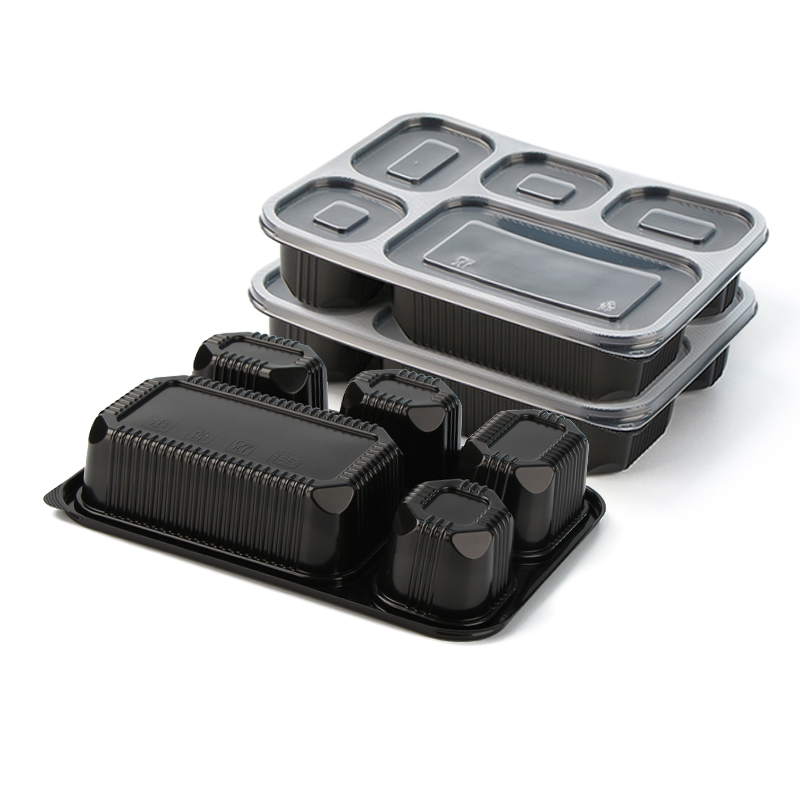
The design of wholesale plastic containers with lids isn’t just about aesthetics—it affects functionality, cost, and sustainability. AI-driven tools can:
- Create lightweight yet durable designs – AI generates optimal container shapes that maintain strength while using less material.
- Improve stackability – Better nesting and stacking reduce storage space and transportation costs.
- Enhance insulation and sealing – AI optimizes lid designs to prevent leaks and maintain food temperature longer.
For food businesses, this means bulk to go containers that are not only cost-effective but also perform better for customers.
AI-Powered Quality Control
Traditional quality control methods rely on human inspection, which can be slow and prone to error. AI improves this by:
- Using machine vision to detect defects in containers at high speed.
- Ensuring uniform thickness and sealing to prevent leaks.
- Reducing production errors, leading to fewer wasted products.
With AI-driven quality control, manufacturers can produce the best lunch box options with consistent quality, reducing recalls and customer complaints.

AI in Supply Chain and Customization
AI is also streamlining supply chains by predicting demand and optimizing production schedules. It helps:
- Forecast market trends – AI analyzes sales data to predict demand for specific types of bulk to go containers.
- Automate inventory management – Ensures factories have the right materials at the right time, reducing overstock and shortages.
- Enable mass customization – AI-powered design platforms allow businesses to order personalized food packaging with unique branding and shapes.
This means businesses can order wholesale plastic containers with lids tailored to their needs while reducing waste and excess inventory.
The Future of AI in Food Packaging
AI will continue to revolutionize food packaging by:
- Developing smart, self-sealing containers that react to temperature changes.
- Enhancing biodegradable materials through AI-assisted material science.
- Reducing carbon footprint with AI-optimized supply chains and energy-efficient production.
As AI technology advances, the industry will see more sustainable, cost-effective, and high-performance wholesale plastic containers with lids and bulk to go containers.

Where to Buy AI-Optimized Disposable Containers?
Looking for bulk to go containers that combine durability and sustainability? Huizhou Yangrui Printing & Packaging Co., Ltd. offers a wide range of wholesale plastic containers with lids designed with the latest industry innovations.
Contact us at: sales@yrpak.com or call us at: +86-159 8949 1653.
Contact us at: sales@yrpak.com or call us at: +86-159 8949 1653.
References
- Yam, K. L. (2009). The Wiley Encyclopedia of Packaging Technology (3rd ed.). Wiley.
- Coles, R., McDowell, D., & Kirwan, M. J. (2003). Food Packaging Technology. Blackwell Publishing.
- Marsh, K., & Bugusu, B. (2007). Food packaging—roles, materials, and environmental issues. Journal of Food Science, 72(3), R39-R55.
- Robertson, G. L. (2016). Food Packaging: Principles and Practice (3rd ed.). CRC Press.
2025 Disposable Food Container Industry Trend Report: Materials, Design, and Sustainability
The Future Trends of Eco-Friendly Food Containers
Related Article

Your food needs to be seen. Your customers need to heat it. Most containers force you to choose one or the other. Clear PP to-go containers are the only packaging that lets you do both without compromise — transparent enough to display fresh ingredients in a deli case, and microwave-safe enough that customers never need to transfer food to a different container.
Clear PP To-Go Containers — Showcase Your Food, Microwave Safe
Learn the 7 key factors for choosing a takeaway packaging wholesale supplier — compliance, pricing transparency, quality, delivery, custom branding, and long-term value. Includes evaluation scorecard and red flags checklist.
Meal Prep Boxes for Business: A Wholesale Buyer's Complete Guide

Learn the 7 key factors for choosing a takeaway packaging wholesale supplier — compliance, pricing transparency, quality, delivery, custom branding, and long-term value. Includes evaluation scorecard and red flags checklist.
How to Choose the Right Takeaway Packaging Wholesale Supplier: 7 Key Factors
As the food delivery, takeout, and quick-service restaurant (QSR) industries continue to grow globally, choosing the right disposable food container has become a critical decision for foodservice businesses. Safety, durability, cost efficiency, and compliance are no longer optional — they are essential.
Why Choose Yangrui Disposable Food Containers?
SEND MESSAGE