



Changes in the Global Disposable Lunch Box Market
author: Iris
2025-06-02
1. Changing Trends in the Global Disposable Lunch Box Market
From disposable plastics to degradable materials, from batch supply to personalized customization, the changes in recent years and the side reflection of the growth of the disposable lunch box market are closely related to the obvious regional differences and segmented development.
The Market Size Continues to Expand, With Asia Pacific and North America Leading the Way
According to data forecasts presented by multiple market research institutions, the global disposable lunch box market will maintain a compound annual growth rate of more than 5% in the next five years. In particular, the Asia-Pacific region has become the largest consumer area for takeaway food containers due to its dense population and rapid development of the takeaway economy. At the same time, the high acceptance of environmentally friendly materials and the demand for improved packaging functionality brought about by the North American market are driving the market expansion of high-value-added products.
Policy-Driven Acceleration of "Plastic Transformation"
In addition to people's growing awareness of the importance of environmental protection, the environmental protection policies of various governments are also profoundly affecting the market trend. For example, the EU has promoted the "Plastics Directive" to comprehensively restrict disposable plastic products, California and New York in the United States have introduced plastic ban bills, and China has promoted degradable plastic products since 2020. These policies have not only promoted the popularity of recycle plastic takeaway containers, which can better protect the earth's environment, but also accelerated the pace of degradable materials replacing traditional plastics.
The Rise of the Takeaway Economy and Instant Retail
With the rapid development of the times, the rise of new consumption models such as online ordering, instant delivery, and community group buying in various countries, consumers' demand for lunch boxes has gradually shifted from "can be loaded" to "good-looking, easy to use, and environmentally friendly". In today's increasingly serious environmental problems, consumers pay particular attention to environmental issues. Takeaway food containers are evolving towards stronger functionality, better sealing, and higher brand recognition, which is driving companies to continuously launch more segmented and higher-end product lines.


3. Upgrading of Customer Needs: From Price Orientation to Quality and Customization
As more and more customers become aware of environmental issues, the new generation of customers will not only pay attention to price, but also care about whether the product is environmentally friendly, whether the functions are diverse, and whether the packaging can reflect the brand tone.
Analysis of Customer Preferences in Different Markets (Europe, America, Asia, And the Middle East)
Today, the European and American markets focus on environmental certification and regulatory compliance, and more customer groups tend to choose high-quality products certified by BRC and FDA; while the Asian market is price sensitive and pays more attention to practicality and unit cost control; the Middle East market has performance requirements for takeaway food containers with a strong sense of heaviness and good sealing, and has unique requirements for color and cover design.
Trend of Design Diversification of Takeaway Food Containers
In today's market, designs such as grid structure, stackable design, special-shaped lid, leak-proof structure, etc., are emerging in an endless stream. These designs not only enhance the functionality of the product, but also improve the appearance value. For example, a lunch box with a partition function can accommodate both the main dish and the side dish, and is not easy to mix flavors, becoming a popular choice for fast food and bento takeout.
How Do Takeaway Food Container Suppliers Meet Customized Needs?
More and more buyers want to customize logos, colors, packaging styles, and even material structures. This requires suppliers to have the ability to quickly make samples, mass-produce in a short period of time, and have customization capabilities. For example, some takeaway food container suppliers provide personalized solutions such as 3D printing proofing services, customized masterbatch ratios, and customized pulp molds, which are more attractive to customer groups with high requirements for brands, and make it easier to build the influence of their own brands.

Where to Buy Disposable Eco-Friendly Lunch Boxes?
If you are looking for takeaway food containers suppliers with international certification and customized services, please contact:
Huizhou Yangrui Printing and Packaging Co., Ltd., is mainly engaged in MFPP biodegradable lunch boxes, plastic food containers, and customized takeaway packaging. Please contact us at sales@yrpak.com
References
- Allied Market Research. (2024). Takeaway Food Containers Market Outlook 2024–2030.
- European Commission. (2021). Directive on Single-Use Plastics.
- Plastics Today. (2023). Biodegradable Plastics in Foodservice Packaging: Market Insights.
- McKinsey & Company. (2023). The Future of Packaging: Sustainable, Smart, and Personalized.
- Statista. (2024). Online Food Delivery Market Forecast by Region.


2. Material Upgrade: The Direction of Transformation from Plastic to Environmental Protection
Environmental protection has changed from an "optional option" for enterprises to a "must-answer question", and the upgrade of lunch box materials has become a hot topic in the global supply chain.
Changes in Market Acceptance of Recycle Plastic Takeaway Containers
With the improvement of environmental awareness and various environmental protection policies introduced by governments, consumers are increasingly willing to accept recycle plastic takeaway containers. Especially in markets with strict environmental regulations, such as Europe and the United States, recycled plastic containers are gradually replacing some virgin plastics. Although the production cost of recycled plastics is slightly higher, its market share is steadily increasing year by year through technological improvements and policy subsidies.
Degradable Materials (PLA, Pulp, CPLA) Are Gradually Becoming Popular
New materials, such as PLA (polylactic acid), pulp molding, CPLA (crystalline polylactic acid), etc. are favored by the market for their biodegradable properties. Not only are they gradually approaching traditional plastics in terms of functionality, but they are also easier to obtain environmental certifications such as BPI and OK compost, becoming the new favorite of high-end take-out food containers. Although their current cost is relatively high, with large-scale production and technological breakthroughs, their cost-effectiveness is gradually improving.
Impact of Material Upgrade on the Supply Chain
Material upgrade not only means that suppliers adjust their raw material procurement channels, but also involves a series of system changes such as production line transformation, mold update, and employee training, which is also a challenge and opportunity for suppliers. At the same time, more and more buyers require suppliers to have environmentally friendly material processing capabilities and relevant certification qualifications, which puts a higher threshold on global takeaway food container suppliers.


4. Supply Chain Globalization and New Opportunities for Brand Overseas Expansion
In the post-epidemic era, the global supply chain is undergoing reconstruction, and "Made in China + brand overseas expansion" has become a new window of opportunity.
International Distribution Pattern of Takeaway Food Container Suppliers
Although China is still the main manufacturing center of takeaway food containers in the world, with the rise in labor and transportation costs and the emergence of tariff issues, more and more companies have begun to deploy emerging manufacturing locations such as Vietnam, India, and Indonesia. At the same time, some brands in Europe and the United States have begun to return to local production in small batches to shorten the delivery cycle. A new model of "local manufacturing + overseas collaboration" has been formed.
How to Enter the International Market with the Help of the Certification System?
International buyers are paying more and more attention to relevant certifications. For example, ISO9001, BRC, FDA, SGS, LFGB, and other system certifications have become admission tickets. These certificates not only reflect the factory's production standardization capabilities but also enhance customer trust. Factories with certifications are more likely to participate in large-scale brand projects and government procurement contracts.
How Do Chinese Factories Lay Out Their Brands Overseas?
Based on the stability of the supply chain and the advantages of cost-effectiveness, Chinese factories can use Alibaba and other B2B platforms to achieve international order docking. At the same time, we enhance brand exposure and make a name for ourselves through English websites, professional exhibitions, social media content marketing, and other means.

New South Wales Leads the Charge in Combating Plastic Pollution: A Deep Dive into Plastics Plan 2.0 and the Role of Take-Out Food Plastic Containers
Why Is Certification so Important in International Trade?
Related Article

Your food needs to be seen. Your customers need to heat it. Most containers force you to choose one or the other. Clear PP to-go containers are the only packaging that lets you do both without compromise — transparent enough to display fresh ingredients in a deli case, and microwave-safe enough that customers never need to transfer food to a different container.
Clear PP To-Go Containers — Showcase Your Food, Microwave Safe
Learn the 7 key factors for choosing a takeaway packaging wholesale supplier — compliance, pricing transparency, quality, delivery, custom branding, and long-term value. Includes evaluation scorecard and red flags checklist.
Meal Prep Boxes for Business: A Wholesale Buyer's Complete Guide

Learn the 7 key factors for choosing a takeaway packaging wholesale supplier — compliance, pricing transparency, quality, delivery, custom branding, and long-term value. Includes evaluation scorecard and red flags checklist.
How to Choose the Right Takeaway Packaging Wholesale Supplier: 7 Key Factors
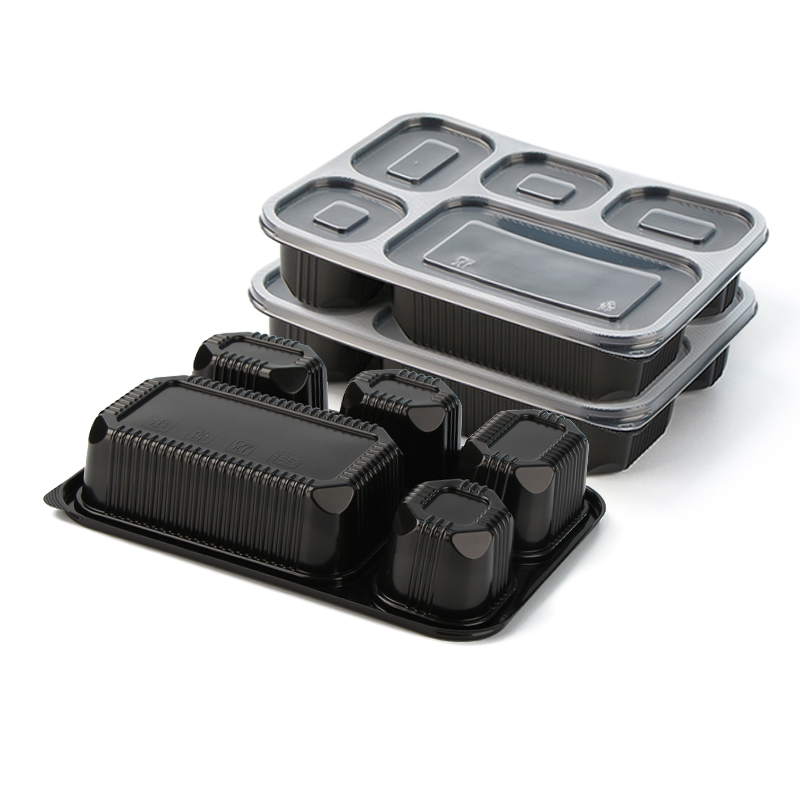
As the food delivery, takeout, and quick-service restaurant (QSR) industries continue to grow globally, choosing the right disposable food container has become a critical decision for foodservice businesses. Safety, durability, cost efficiency, and compliance are no longer optional — they are essential.
Why Choose Yangrui Disposable Food Containers?
SEND MESSAGE